


On this page
Key takeaways
- The best core exercises train your core to resist movement (planks, dead bugs, Pallof presses) as well as create it (leg raises, rollouts).
- A balanced core routine covers four jobs: resisting arching, resisting twisting, bending forward and supporting your lower back.
- Two or three core sessions a week, at the end of your workout, is plenty for most people.
- Progress like any other muscle: more reps, longer holds or a harder variation.
- Core training builds strength, not a flat stomach on its own. Visible abs come from lowering body fat.
Crunches aren’t bad, but they only train one part of what your core does. The best core exercises also teach your trunk to stay stable while your arms and legs move, to resist twisting and to support your lower back. That’s the strength that carries over to lifting heavier, running faster and moving well day to day.
Below are 12 of the best core exercises from our library, grouped by what they train, plus a 5-minute follow-along core finisher, a progression ladder and a sample workout you can add to any training plan.
Muscles your core includes
- Abs
- Obliques
- Lower back
- Glutes
- Upper back
5-minute core finisher
5-minute core finisher
No equipment. Do 1–2 rounds at the end of your workout. Keep every rep slow and controlled.
-
 Deadbug
Press your lower back into the floor the whole time.
0:40
-
 Bird-Dog Crunch
Reach long, then bring elbow to knee. Switch sides halfway.
0:40
-
 Beast Hold
Knees an inch off the floor, back flat.
0:30
-
 Side-to-Side Plank
Rotate slowly from side to side, hips high.
0:40
-
 Leg Lowers
Only lower as far as you can keep your back flat.
0:40
-
 Boat Hold
Bend your knees to make it easier.
0:30
-
 Marching Plank
Lift one foot at a time without letting your hips sway.
0:40
-
 Prone Back Extension
Lift your chest gently and squeeze your glutes.
0:40
What your core actually does
Your core is more than your six-pack muscle. It includes your rectus abdominis, the obliques on your sides, the deep muscles that brace your spine and the muscles along your lower back. Together, they have four main jobs:
- Resist arching (anti-extension): keeping your lower back from sagging, like in a plank.
- Resist twisting and side-bending (anti-rotation): keeping your trunk stable when force pulls you sideways, like carrying a heavy bag in one hand.
- Bend and curl (flexion): curling your trunk or lifting your legs, like a crunch or leg raise.
- Support your back (extension): holding your spine upright and strong, like in a deadlift.
A good core routine includes all four. Research comparing core exercises backs up variety: a systematic review found that different exercises worked different core muscles best, with free-weight exercises producing the most activity in the six-pack, outer obliques and lower back, and stability exercises working the inner obliques hardest.

Crunch-only vs. balanced core training
| Crunches only | Balanced core training | |
|---|---|---|
| What it trains | Mostly curling your trunk forward | Resisting arching and twisting, curling and supporting your back |
| Carries over to lifting | A little | A lot: bracing for squats, deadlifts and presses |
| Obliques and lower back | Barely trained | Trained directly |
| Easy to progress | Mostly by adding more reps | Harder variations, longer holds and added weight |
Anti-extension exercises
These moves teach your abs to stop your lower back from arching. They’re the foundation of a strong, stable core.
1. Deadbug
The best place to start. Lying on your back, you slowly lower the opposite arm and leg while keeping your lower back pressed into the floor. It teaches you to brace without holding your breath.

2. Plank to pike
From a plank, you lift your hips up into a pike and lower back down with control. It trains your abs, hip flexors and shoulders together and is a step up from a static plank.
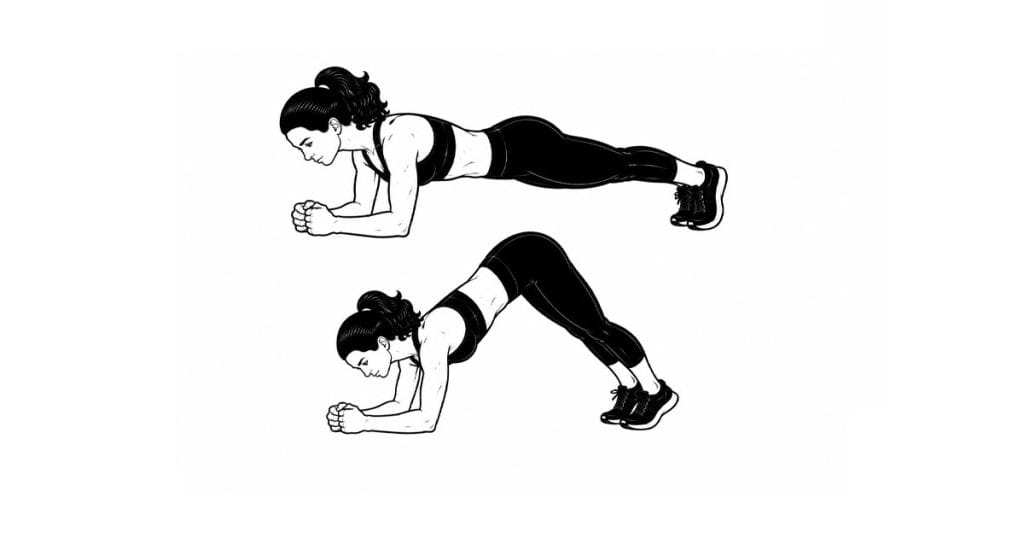
Plank to Pike
- Target
- Abs/Core
- Equipment
- Bodyweight
- Pattern
- Anti-Extension
- Level
- Intermediate
3. Barbell rollout
One of the hardest and most effective core exercises. You roll a barbell (or ab wheel) forward from your knees and pull it back without letting your hips sag. A study of abdominal exercises found that ab wheel rollout variations produced some of the highest abdominal and oblique activity of all the moves tested.
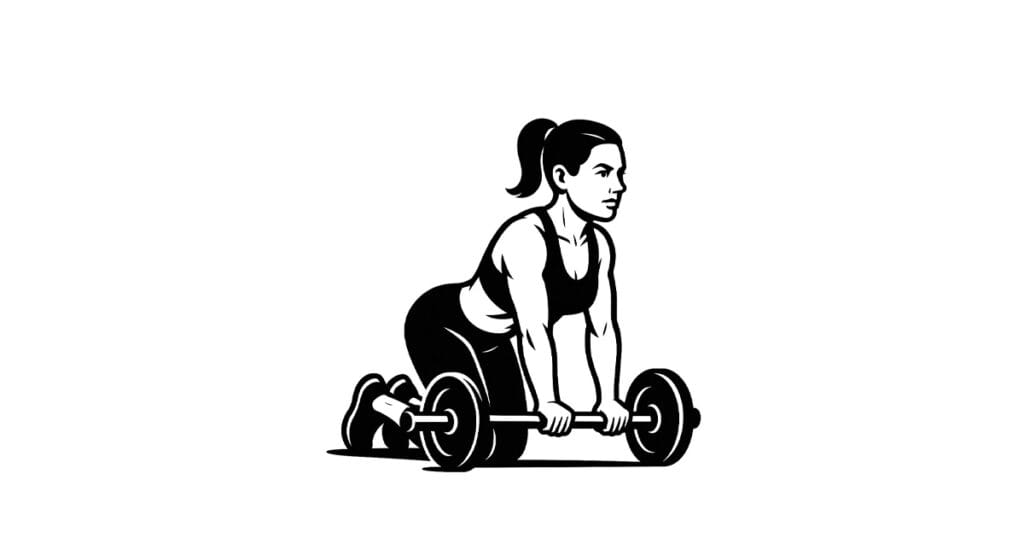
Barbell Rollout
- Target
- Abs/Core
- Equipment
- Barbell, Plate
- Pattern
- Anti-Extension
- Level
- Intermediate
4. Leg lowers
Lying on your back, you slowly lower straight legs toward the floor and lift them back up. The challenge is keeping your lower back flat, so only lower as far as you can control.
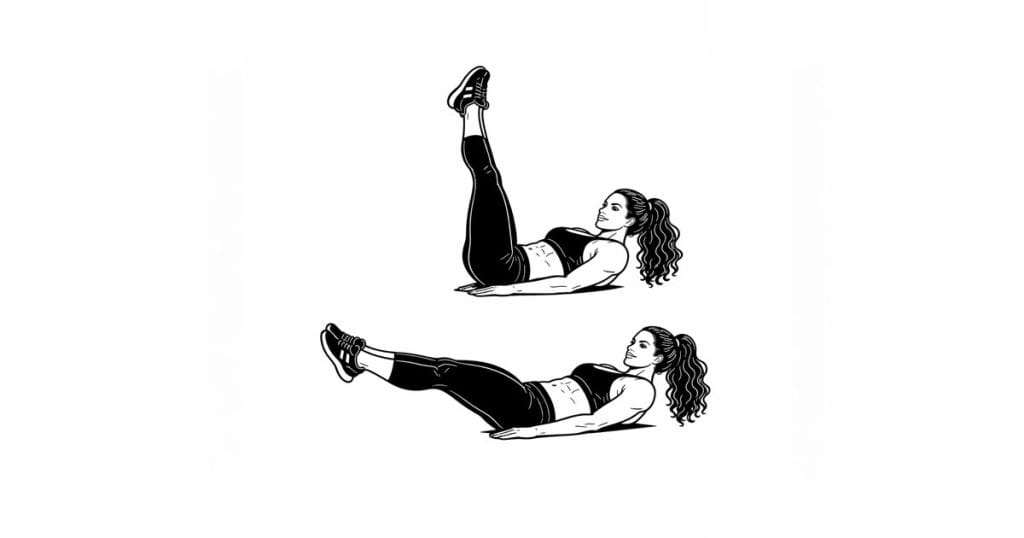
Leg Lowers
- Target
- Abs/Core
- Equipment
- Bodyweight
- Pattern
- Anti-Extension
- Level
- Beginner
Anti-rotation and side exercises
Your obliques and deep core muscles work hard to stop your body twisting or bending sideways. These exercises train exactly that.

5. Bird-dog crunch
On all fours, you reach one arm and the opposite leg out long, then draw your elbow and knee together under your body. It builds control and balance and is gentle on your back.
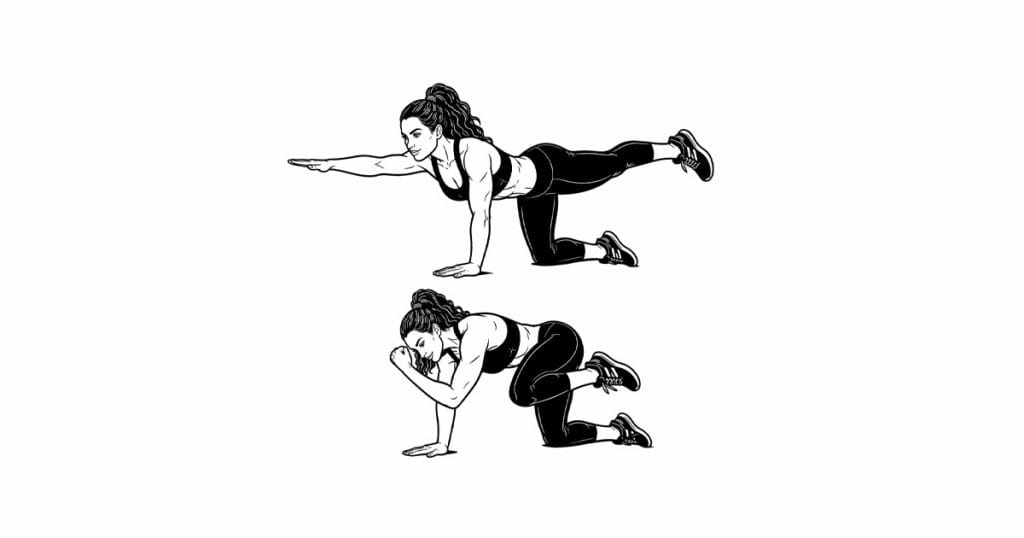
Bird-Dog Crunch
- Target
- Abs/Core
- Equipment
- Bodyweight
- Pattern
- Anti-Rotation
- Level
- Beginner
6. Cable Pallof press
Standing side-on to a cable, you press the handle straight out and resist the pull trying to twist you. It looks easy, but it’s one of the best ways to train anti-rotation strength.
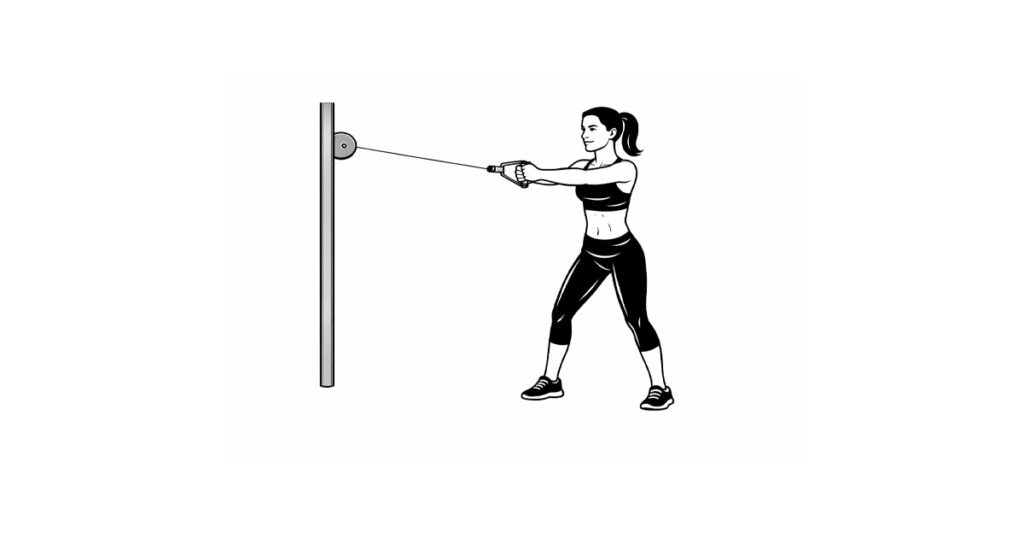
Cable Pallof Press
- Target
- Abs/Core
- Equipment
- Cable
- Pattern
- Anti-Rotation
- Level
- Intermediate
7. Side-to-side plank
You rotate from a front plank into a side plank on each side. It works your obliques and shoulders and adds movement to a standard plank.
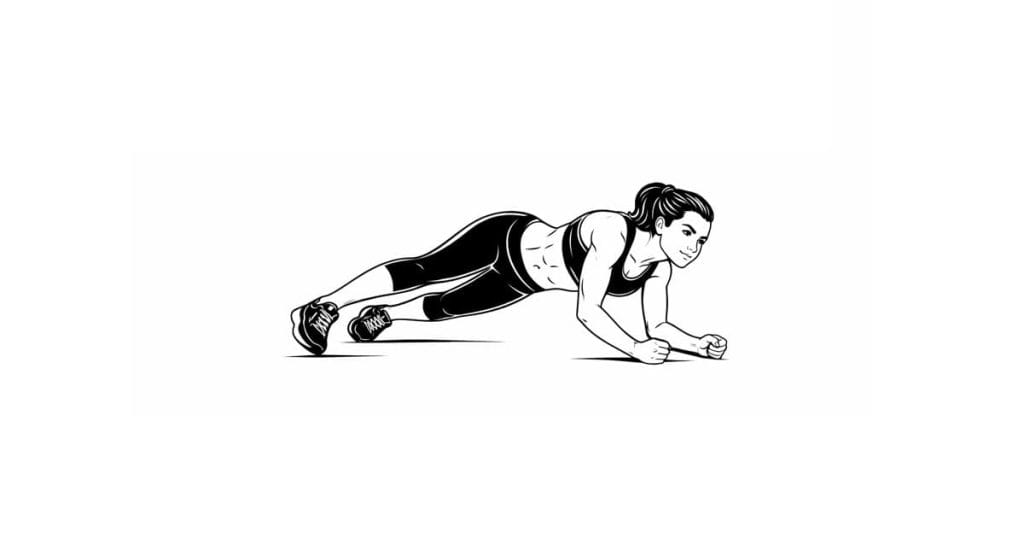
Side-to-Side Plank
- Target
- Abs/Core
- Equipment
- Bodyweight
- Pattern
- Anti-Rotation
- Level
- Intermediate
Flexion exercises
These moves curl your trunk or lift your legs. They’re the closest to a crunch, but harder and more effective.
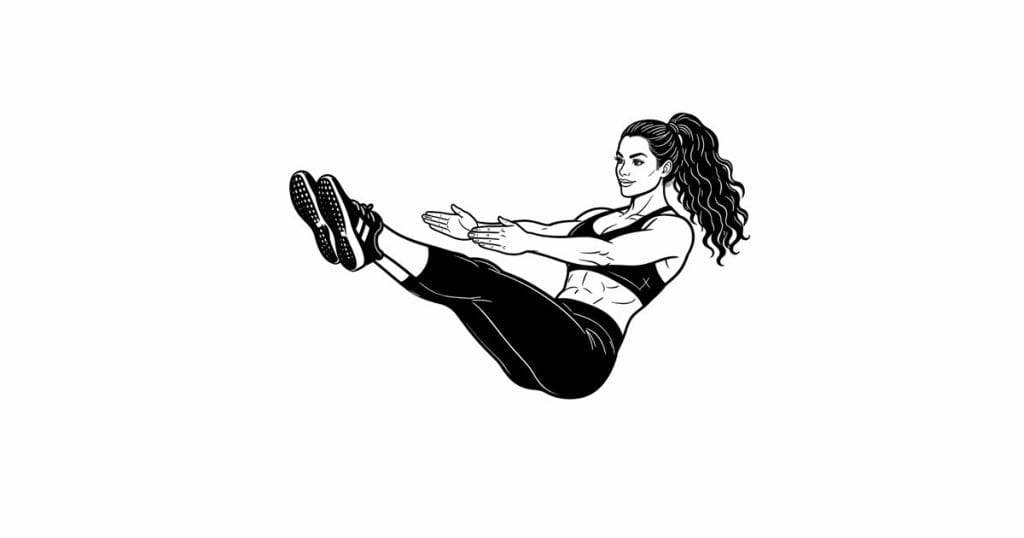
8. Boat hold
Sitting on the floor, you lean back and lift your legs to balance in a V shape. Bend your knees to make it easier, or straighten your legs to make it harder.
9. Hanging knee raise
Hanging from a bar, you curl your knees up toward your chest. In the same study, hanging knee-ups were among the exercises that worked the abs and obliques hardest. Once you can do clean sets of 12, move up to the hanging leg raise.

Hanging Knee Raise
- Target
- Abs/Core
- Equipment
- Bodyweight, Pull-Up Bar
- Pattern
- Other
- Level
- Intermediate
Back and loaded core exercises
A strong core needs a strong back, and some of the best core training happens with weights in your hands.

10. Prone back extension
Lying face down, you gently lift your chest off the floor using your back and glutes. It’s a simple, equipment-free way to strengthen the muscles along your spine.
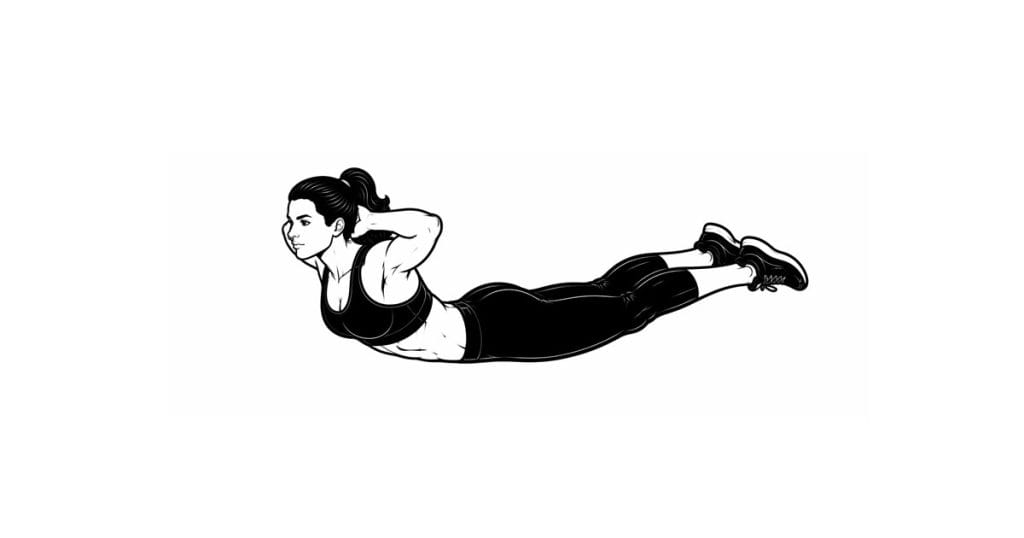
Prone Back Extension
- Target
- Lower Back
- Equipment
- Bodyweight
- Pattern
- Other
- Level
- Beginner
11. Dumbbell farmer’s carry
Pick up two heavy dumbbells and walk tall. Your whole core works to keep you upright and steady, and your grip and upper back get stronger too. Try carrying a weight in just one hand for an extra oblique challenge.

Muscles worked
- Abs Secondary
- Obliques Secondary
- Forearms Secondary
- Glutes Secondary
- Front delts Secondary
- Rear delts Secondary
- Traps Secondary
- Primary
- Secondary
- Stabilizer
12. Dumbbell halo
You circle a dumbbell around your head while keeping your ribs down and your trunk still. It trains your core to stay stable while your shoulders move.

How to progress your core training
Core strength ladder
Start at the step where you can do 3 controlled sets. Move up when the target feels easy.
- Deadbug Move up at 3 × 10 each side
- Marching Plank Move up at 3 × 30 seconds
- Plank to Pike Move up at 3 × 10
- Barbell Rollout Move up at 3 × 10 from your knees
- Hanging Leg Raise The top step: aim for 3 × 10
Mark where you are on the ladder and come back to it as you get stronger.
Sample core workout
Add this to the end of two or three workouts a week. It covers all four core jobs in about 15 minutes.
Balanced core workout
Do this 2–3× a week at the end of your session.| Exercise | Sets | Reps | Rest |
|---|---|---|---|
| Barbell Rollout | 3 | 8–10 | 60 sec |
| Cable Pallof Press | 3 | 10 each side | 45 sec |
| Hanging Knee Raise | 3 | 10–12 | 60 sec |
| Dumbbell Farmers Carry | 3 | 30–40 m | 60 sec |
| Prone Back Extension | 2 | 12–15 | 45 sec |
Training at home? Swap the rollout for plank to pike, the Pallof press for side-to-side plank and the hanging knee raise for boat holds. Want a full plan around it? See our guide to the best workout split, and warm up first with our 7-minute dynamic warm-up.
- Breathe out and brace before each rep
- Move slowly and stay in control
- Keep your ribs down and lower back neutral
- Stop each set while your form is still good
- Let your lower back sag or arch in planks and rollouts
- Pull on your neck during curls and raises
- Swing your legs on hanging exercises
- Hold your breath through long sets
Frequently asked questions
What is the best core exercise?
There isn’t one best exercise, because your core has several jobs. A good mix is an anti-extension move (deadbug or rollout), an anti-rotation move (Pallof press), a flexion move (hanging knee raise) and a back exercise or loaded carry.
How often should I train my core?
Two or three times a week is plenty for most people. Your core also works hard during squats, deadlifts and overhead presses, so short, focused core sessions at the end of your workouts are enough.
Will core exercises give me a flat stomach?
Core exercises make your abs stronger, but they won’t burn the fat on top of them on their own. Visible abs come from lowering your overall body fat through your diet and training. Our guide to how many calories to eat to lose fat can help.
Are planks enough for a strong core?
Planks are a great start, but they only train one job: resisting arching. Add anti-rotation moves like the Pallof press, flexion moves like hanging knee raises and back work to build a balanced core.
Are crunches bad for you?
No. Crunches are a reasonable exercise for the front of your abs. They just shouldn’t be the only core exercise you do, because they don’t train stability, rotation or your lower back.
Can I train my core at home without equipment?
Yes. Deadbugs, bird-dog crunches, planks, leg lowers, boat holds and back extensions all need just your bodyweight. The 5-minute core finisher above uses no equipment at all.
The bottom line
- Train all four core jobs: resisting arching, resisting twisting, curling and supporting your back.
- Two or three short core sessions a week is enough for most people.
- Progress with harder variations, and remember that visible abs come from lower body fat.
Sources (2)
- Escamilla RF, Babb E, DeWitt R, et al. Electromyographic analysis of traditional and nontraditional abdominal exercises: implications for rehabilitation and training. Physical Therapy. 2006;86(5):656–671. Link
- Oliva-Lozano JM, Muyor JM. Core muscle activity during physical fitness exercises: a systematic review. International Journal of Environmental Research and Public Health. 2020;17(12):4306. Link
This article is for general education, not medical advice. If you have pain or an injury, check with a doctor or physical therapist before starting a new exercise.


