Leg lowers are a fundamental core strengthening exercise that focus on building abdominal control, stability, and endurance through slow and controlled movement. This exercise emphasizes anti-extension strength, meaning the core must actively resist the tendency of the lower back to arch as the legs move away from the body. This makes it highly effective for developing deep core stability and improving overall movement control.
The primary muscle group targeted during leg lowers is the abdominal region, particularly the rectus abdominis, which works to stabilize the spine and prevent excessive extension of the lower back. The hip flexors assist in controlling the movement of the legs, while the quadriceps help maintain straight leg positioning throughout the exercise, contributing to overall tension and control.
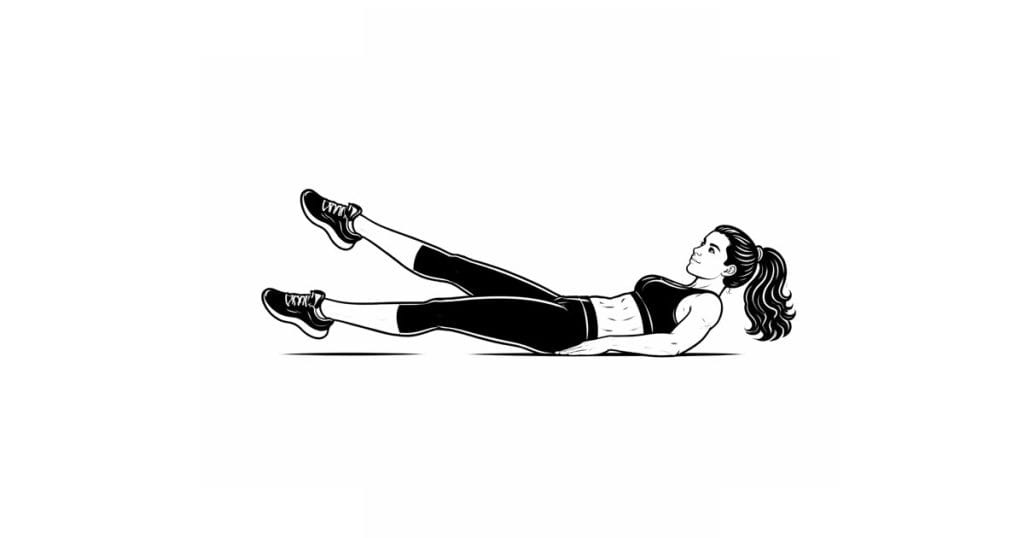
The movement begins with the individual lying flat on their back with both legs extended upward. The arms can rest at the sides or be placed under the hips for additional support. Before initiating the movement, the core must be fully engaged by pressing the lower back firmly into the floor. This step is essential for maintaining proper spinal alignment and ensuring the abdominal muscles are doing the work.
From this position, both legs are slowly lowered toward the ground in a controlled manner. As the legs descend, the core must remain actively engaged to resist the pull of gravity and prevent the lower back from lifting off the floor. The range of motion should only extend as far as proper alignment can be maintained, prioritizing control over depth.
Once the lowest controlled position is reached, a brief pause can be maintained before the legs are raised back to the starting position. The upward phase should be performed with the same level of control, avoiding momentum and ensuring continuous engagement of the abdominal muscles throughout the movement.
One of the key benefits of leg lowers is their ability to improve core stability by training the body to resist unwanted spinal movement. This helps build a strong foundation for more advanced exercises and supports safer movement patterns. The exercise also enhances body awareness, as it requires consistent attention to alignment and control.
In addition to stability, leg lowers are effective for building muscular endurance. The sustained tension placed on the core during both the lowering and lifting phases challenges the muscles over time, improving their ability to maintain contraction during prolonged activity.
The exercise is highly adaptable and can be modified to suit different fitness levels. Adjusting range of motion or leg positioning allows individuals to tailor the difficulty while still maintaining proper form and effectiveness.
Common mistakes include allowing the lower back to arch, lowering the legs too far, or using momentum to complete the movement. These errors reduce core engagement and increase the risk of strain, particularly in the lower back. Maintaining strict control and proper alignment is essential for achieving optimal results.
From a safety perspective, individuals should focus on controlled movement and stop if they feel discomfort in the lower back. Adjusting the range of motion or using additional support can help maintain proper form while reducing strain.
Overall, leg lowers are a highly effective and accessible core exercise that promote strength, stability, and control. Their emphasis on controlled movement and spinal alignment makes them a valuable addition to any routine focused on improving core performance and overall movement quality.