


On this page
Key takeaways
- A dynamic warm-up uses active, controlled movements to raise your body temperature and get your joints and muscles ready to train.
- This 10-move routine takes about 7 minutes and needs no equipment. Press Start below and follow along.
- Save long static stretches for after your workout. Long holds right before heavy or explosive training can slightly reduce performance.
- Before heavy lifts, finish with 2–3 lighter ramp-up sets of your first exercise.
- Start each move small and slow, then build up the range and speed.
A good dynamic warm-up is the fastest way to feel better in your first working set. Instead of holding stretches, you move through the positions you’re about to train in, raising your heart rate, loosening your hips and shoulders, and waking up the muscles you’re about to use.
Below is a 10-move routine you can follow along with in about 7 minutes. After it, we’ll explain why warming up works, how dynamic and static stretching compare, and how to ramp up before heavy lifts.
Your 7-minute dynamic warm-up
7-minute dynamic warm-up
No equipment. Press Start and follow the timer. Move smoothly and build up range as you go.
-
 Jumping Jacks
Easy pace to get your heart rate up.
0:45
-
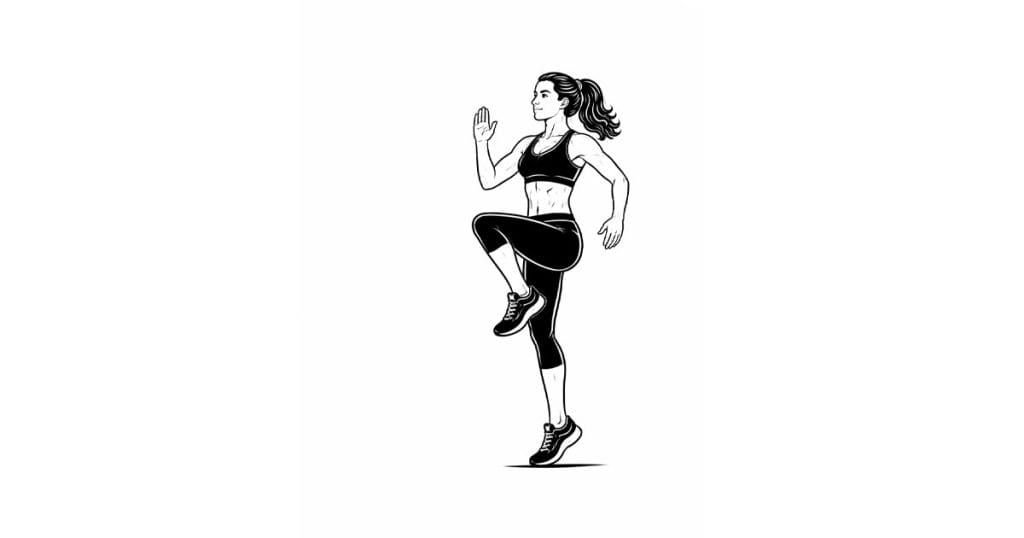
 High Knees
Drive your knees to hip height, stay light on your feet.
0:30
-
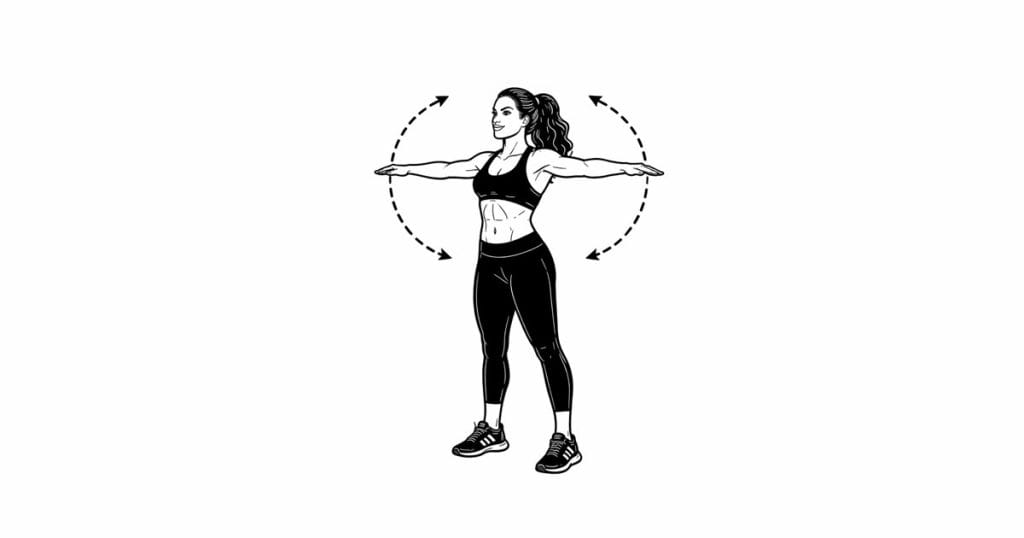
 Arm Circles
15 seconds forward, 15 seconds backward. Start small, finish big.
0:30
-
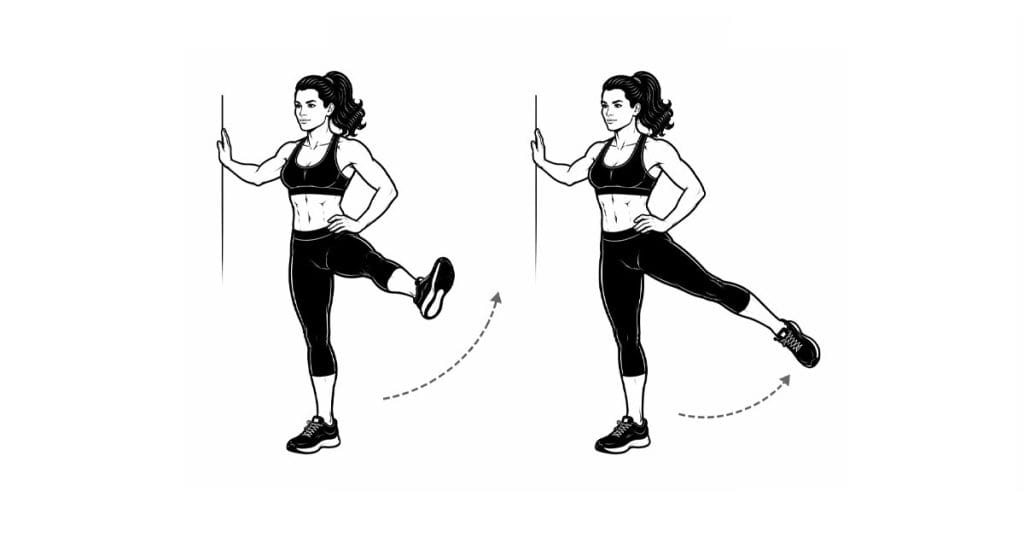
 Leg Swings
20 seconds each leg, front to back. Hold a wall for balance.
0:40
-
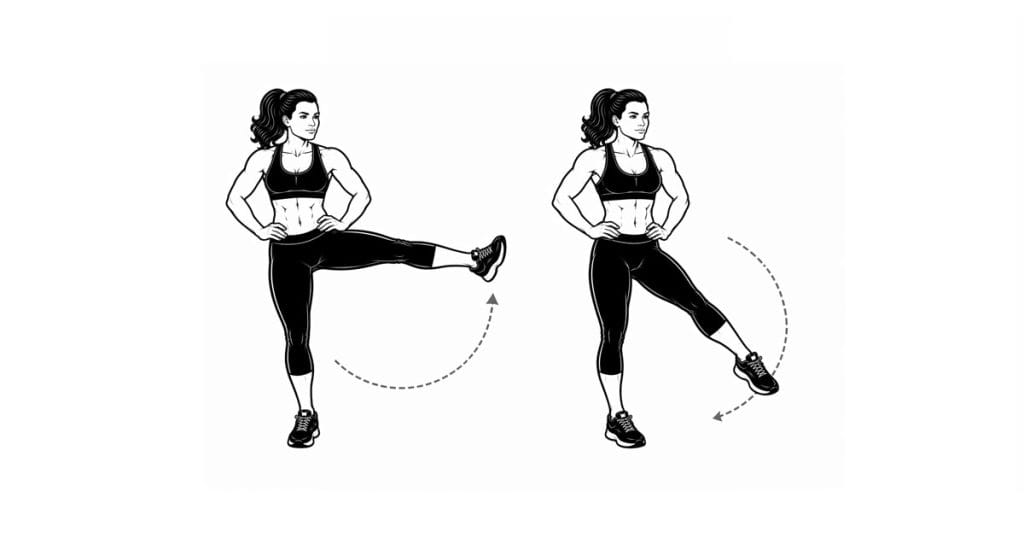
 Leg Circles
Slow, controlled circles. Switch legs halfway.
0:30
-
 Inchworm
Walk your hands out to a plank, then walk your feet back in.
0:45
-
 Crawling Lunges
Long steps, chest up, alternate legs.
0:45
-
 Carioca
30 seconds each direction. Let your hips rotate.
1:00
-
 Lateral A Skips
Quick, light skips moving sideways. Switch direction halfway.
0:40
-
 Frog Walk
Stay low and move slowly to finish.
0:30
Short on space? Do each move on the spot instead of travelling. Training upper body today? Add 30 seconds of plank to pike to wake up your shoulders and core.
Why warm up before you train?
Warming up isn’t just a habit coaches insist on. A systematic review of warm-up research found that warming up improved performance in most of the studies it examined, with very few showing any downside.

A good warm-up helps you:
- Raise your body temperature, so your muscles contract more easily and your joints feel less stiff.
- Move through full range before you add load, so your first working sets feel smoother.
- Practise the patterns you’re about to train, like hinging, lunging and rotating.
- Switch your focus to training, which makes it easier to hit your first sets with good form.
Dynamic vs. static stretching before a workout
Static stretching means holding a stretch still, usually for 30 seconds or more. Dynamic stretching means moving in and out of a stretch with control. Both have a place, but they suit different times.

Which to do before training?
| Dynamic stretching | Long static stretching | |
|---|---|---|
| What it is | Controlled movement through a range, like leg swings | Holding a stretch still for 30–60 seconds or more |
| Effect on performance | Neutral or slightly better | Long holds can cause a small, short-term drop in strength and power |
| Body temperature | Raises it | Little change |
| Best time | Before training | After training or as its own flexibility session |
A research review on stretching found that long static holds right before activity can cause a small, temporary drop in strength and power, while dynamic stretching tends to have no negative effect or a slight benefit. Short static stretches (under about 30 seconds) inside a full warm-up are unlikely to hurt, so if one spot feels tight, a brief hold is fine.
The 10 warm-up moves explained
The routine moves from easy to more demanding: first raising your heart rate, then opening your shoulders and hips, then moving through full range, and finally getting you ready to move quickly.
1. Jumping jacks
A simple way to raise your heart rate and body temperature. Keep the pace easy; this is a warm-up, not a workout.

Muscles worked
- Abs Secondary
- Obliques Secondary
- Calves Secondary
- Glutes Secondary
- Quads Secondary
- Front delts Secondary
- Rear delts Secondary
- Primary
- Secondary
- Stabilizer
2. High knees
Wakes up your hip flexors, calves and core while keeping your heart rate up. Stay tall and land softly on the balls of your feet.
3. Arm circles
Loosens your shoulders before any pressing, pulling or overhead work. Start with small circles and gradually make them bigger in both directions.
4. Leg swings
Takes your hips through a big range in a controlled way and warms up your hamstrings and hip flexors. Hold onto a wall or rack, keep your torso still and let the swing grow over each rep.
5. Leg circles
Moves your hip joint in every direction, which helps before squats, lunges and anything with side-to-side movement. Keep the circles slow and smooth.
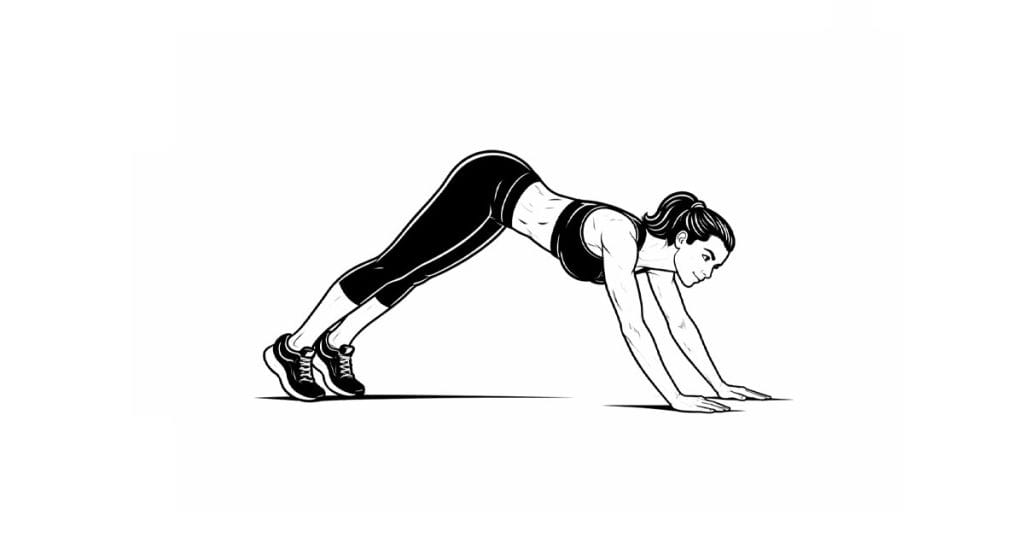
6. Inchworm
Stretches your hamstrings and calves while asking your shoulders and core to support you in a plank. Bend your knees as much as you need to keep your hands flat.
7. Crawling lunges
Opens up your hips and works your legs through a deep lunge position. Ideal before squats, deadlifts or any leg day.

8. Carioca
A sideways crossover drill that gets your hips rotating and your feet moving quickly. Start slow until the footwork feels natural, then pick up the pace.

Muscles worked
- Hip abductors Secondary
- Abs Secondary
- Obliques Secondary
- Adductors Secondary
- Calves Secondary
- Glutes Secondary
- Hamstrings Secondary
- Quads Secondary
- Primary
- Secondary
- Stabilizer
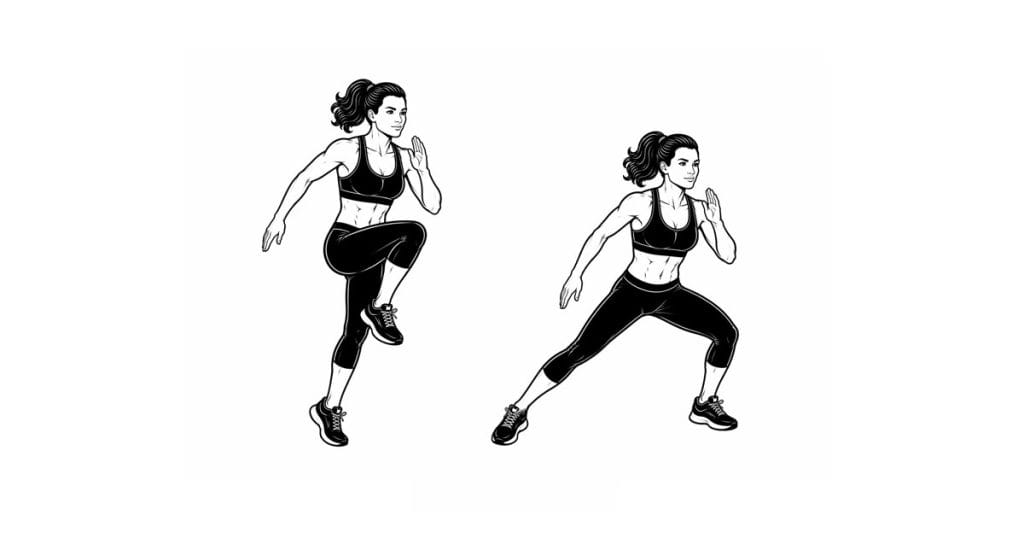
9. Lateral A skips
Light, quick skips that prepare your ankles, calves and hips for faster or more athletic work. Great before sprints, jumps or sports.
Lateral A Skips
- Target
- Hip Flexors
- Equipment
- Bodyweight
- Pattern
- Gait
- Level
- Intermediate
10. Frog walk
A low, slow squat walk that finishes the routine by working your quads, glutes and inner thighs in a deep position. Keep your chest up and take small steps.

Finish with ramp-up sets before heavy lifts
The routine above gets your whole body ready. Before heavy lifts, also do a few lighter sets of your first exercise, adding weight each time. For example, if your working sets are 100 kg (225 lb) on the squat:
- Empty bar for 8–10 reps
- About 50% of your working weight for 5 reps
- About 70% for 3 reps
- About 85–90% for 1–2 reps, then start your working sets

These sets practise the exact movement you’re about to load, without tiring you out. For lighter accessory exercises, one easy set is usually enough.
- Keep every move smooth and controlled
- Start with a small range and build up
- Match the warm-up to what you’re training today
- Keep it short: 5–10 minutes is plenty
- Hold long static stretches right before heavy or explosive work
- Bounce hard into the end of a stretch
- Warm up so hard you’re tired before your first set
- Skip ramp-up sets before heavy lifts
Not sure what to train after your warm-up? Our free AI Workout Builder can plan your session, and our guide to how often you should work out helps you plan your week.
Frequently asked questions
How long should a warm-up be?
For most workouts, 5–10 minutes is enough. That’s long enough to raise your body temperature and move through the ranges you’ll train in, without tiring you out. Add a few ramp-up sets before heavy lifts.
Is static stretching bad before lifting?
Not necessarily. Long static holds (around 60 seconds or more per muscle) right before training can cause a small, short-term drop in strength and power. Short holds inside a full warm-up are unlikely to make a difference. Save longer stretching for after your workout.
What is the difference between a dynamic and a static warm-up?
A dynamic warm-up uses controlled movement, like leg swings and lunges, to raise your body temperature and prepare your joints. A static warm-up means holding stretches still. Dynamic warm-ups are generally the better choice right before training.
Do I need to warm up before cardio?
Yes, but it can be simple. Start your run, ride or row at an easy pace for 5 minutes and build up gradually. Add a few of the moves above, like leg swings and high knees, before faster or harder sessions.
Can I do this warm-up at home?
Yes. Every move here uses just your bodyweight. If you’re short on space, do the travelling moves like carioca and crawling lunges on the spot.
Does warming up prevent injuries?
Warming up prepares your body for the work ahead and is a sensible part of every session, but no warm-up can guarantee you won’t get hurt. Good technique, sensible progression and enough recovery matter too.
The bottom line
- Spend 5–10 minutes on a dynamic warm-up before every workout.
- Keep long static stretching for after training.
- Before heavy lifts, add a few lighter ramp-up sets of your first exercise.
Sources (2)
- Fradkin AJ, Zazryn TR, Smoliga JM. Effects of warming-up on physical performance: a systematic review with meta-analysis. Journal of Strength and Conditioning Research. 2010;24(1):140–148. Link
- Behm DG, Chaouachi A. A review of the acute effects of static and dynamic stretching on performance. European Journal of Applied Physiology. 2011;111(11):2633–2651. Link
This article is for general education, not medical advice. If you have pain or an injury, check with a doctor or physical therapist before starting a new exercise.


