Crawling lunges are a dynamic lower-body exercise that combines strength, coordination, and mobility into a continuous movement pattern. This variation of the traditional lunge involves stepping forward repeatedly in a controlled, crawling-like motion, making it an effective exercise for building strength and improving movement efficiency. Crawling lunges are commonly used in functional training, athletic conditioning, and general fitness routines due to their ability to engage multiple muscle groups while promoting stability and control.
The primary muscle group targeted during crawling lunges is the quadriceps. As you step forward and lower into each lunge, the quadriceps work to control knee flexion and extend the leg to return to a standing position. This repeated loading helps build strength and endurance in the front of the thighs, which is essential for movements such as walking, running, and climbing.
Secondary muscles play a significant role in supporting the movement. The glutes are heavily involved in driving the body forward and stabilizing the hips, while the hamstrings assist with hip extension and control during the descent. The core muscles work continuously to maintain balance and upright posture, and the hip flexors are engaged as the legs transition between steps. This full-body involvement makes crawling lunges a highly functional exercise.
One of the key benefits of crawling lunges is improved coordination and balance. Because the movement requires continuous forward motion and weight shifting, it challenges your ability to control your body in space. This can enhance overall movement quality and reduce the risk of injury.
Crawling lunges also help develop unilateral strength. Each leg works independently during the exercise, which can help address muscle imbalances and improve symmetry. This is particularly important for athletes and individuals looking to enhance performance in activities that require single-leg strength.
Another advantage is increased mobility and range of motion in the hips and knees. The deep lunge position encourages flexibility and joint movement, which can improve overall lower-body function. This makes crawling lunges a valuable addition to both strength and mobility routines.
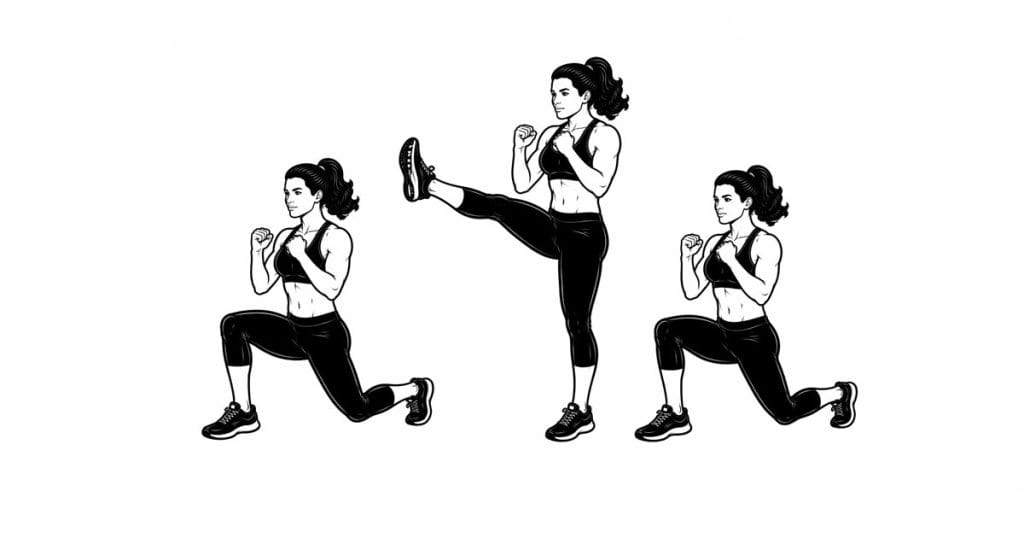
To perform crawling lunges, step forward into a lunge position and lower your body with control. Push through the front foot to bring the back leg forward into the next step, continuing in a smooth, crawling pattern. Focus on maintaining proper alignment and control throughout the movement.
Proper technique is essential for maximizing the benefits of this exercise. Keep your chest upright, your core engaged, and your knees aligned with your toes. Avoid rushing through the movement, as control is key to both effectiveness and safety.
Common mistakes include allowing the knees to collapse inward, taking uneven steps, and leaning too far forward. These errors can reduce the effectiveness of the exercise and increase the risk of strain.
From a safety perspective, it is important to maintain proper alignment and avoid excessive stress on the joints. Start with a comfortable range of motion and gradually increase depth as your strength and mobility improve.
Overall, crawling lunges are a versatile and effective exercise for building lower-body strength, improving coordination, and enhancing mobility. Their dynamic nature makes them a valuable addition to a wide range of fitness routines.