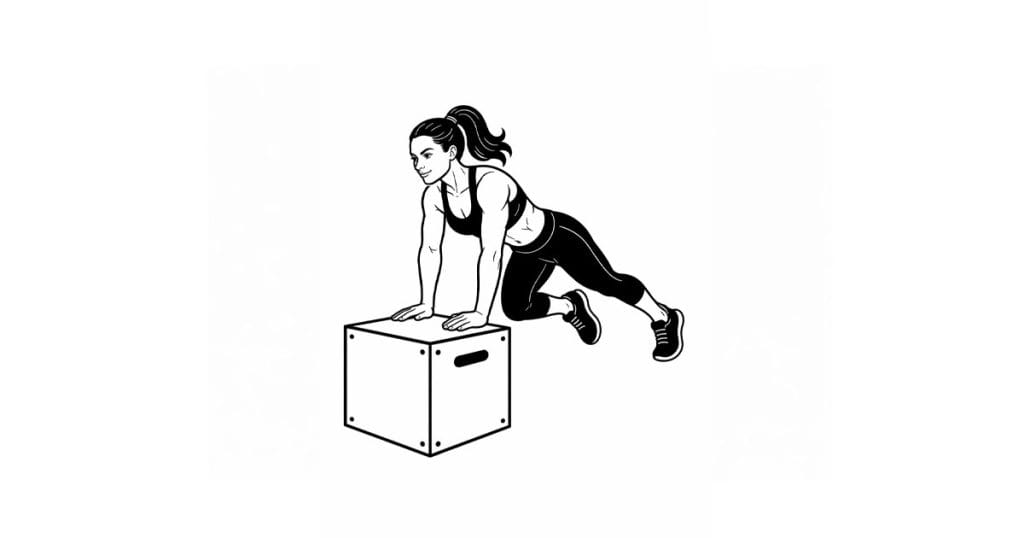
The Stability Ball Feet-Elevated Plank is an advanced core stabilization exercise that strengthens the abdominal muscles while improving shoulder stability, balance, and total-body control. Unlike a traditional forearm plank performed with the feet on the floor, this variation places the feet or shins on top of a stability ball while the forearms remain on the ground. The unstable support surface forces the core to work continuously to prevent movement in every direction, making the exercise highly effective for developing functional core strength, postural control, and muscular endurance.
The primary muscle group targeted during the Stability Ball Feet-Elevated Plank is the abs and core. The rectus abdominis, transverse abdominis, and deep spinal stabilizers work together to resist lumbar extension and maintain a neutral spine throughout the hold. Rather than producing movement, these muscles function to stabilize the trunk, building anti-extension strength that transfers to athletic performance, resistance training, and everyday activities.
Several secondary muscle groups contribute throughout the exercise. The shoulders stabilize the upper body as body weight is supported through the forearms, while the chest helps maintain shoulder girdle stability. The lower back muscles work isometrically to support the spine, and the glutes help stabilize the pelvis and prevent the hips from sagging. The quads remain engaged to keep the legs straight and maintain a rigid body position from head to heels.
One of the greatest benefits of the Stability Ball Feet-Elevated Plank is improved anti-extension core strength. Throughout the exercise, the abdominal muscles work continuously to prevent the lower back from arching while maintaining proper posture. This type of core training strengthens the muscles responsible for protecting the spine and improving force transfer between the upper and lower body during lifting, running, jumping, and other athletic movements.
Another major benefit is enhanced shoulder stability and muscular endurance. Supporting your body weight through your forearms while balancing your feet on an unstable surface requires constant adjustments from the shoulders and upper back. This continuous stabilization improves shoulder control, joint stability, and endurance during weight-bearing exercises.
The exercise also develops balance, coordination, and body awareness. Every small movement of the stability ball requires rapid corrections from the core and surrounding stabilizers to maintain alignment. These continuous adjustments improve neuromuscular coordination, movement efficiency, and overall body control while reinforcing proper posture.
To perform the Stability Ball Feet-Elevated Plank, begin in a forearm plank position with your elbows directly beneath your shoulders and your feet or shins resting on top of a stability ball. Extend your legs fully and brace your core before lifting into the plank position. Keep your body in a straight line from your head to your heels while maintaining a neutral neck position.
Press firmly through your forearms, engage your glutes, and prevent the stability ball from rolling unnecessarily. Hold the position for the desired amount of time while breathing steadily and keeping your hips level. Finish the exercise by lowering your knees to the floor with control.
Proper technique is essential for maximizing results. Maintain full-body tension throughout the hold, keep your core braced, and avoid excessive movement of the stability ball. Focus on quality posture rather than simply increasing the duration of the exercise. Slow, controlled breathing will help maintain abdominal pressure and improve overall stability.
Common mistakes include allowing the hips to sag, lifting the hips too high, shrugging the shoulders, holding the breath, or allowing the stability ball to move excessively. These errors reduce core activation and place unnecessary stress on the shoulders and lower back. Maintaining a straight body position and controlling the ball throughout the exercise will maximize both safety and effectiveness.
From a safety standpoint, the Stability Ball Feet-Elevated Plank is best suited for intermediate and advanced individuals who have already mastered a standard forearm plank. Beginners should first develop sufficient core and shoulder stability before progressing to this variation. If maintaining proper alignment becomes difficult, shorten the hold time or return to a traditional forearm plank until adequate strength has been developed.
Overall, the Stability Ball Feet-Elevated Plank is an excellent exercise for strengthening the core, improving anti-extension strength, enhancing shoulder stability, and developing total-body control. Its combination of instability and an elevated foot position makes it a highly effective progression for building functional strength, improving balance, and reinforcing proper movement mechanics.