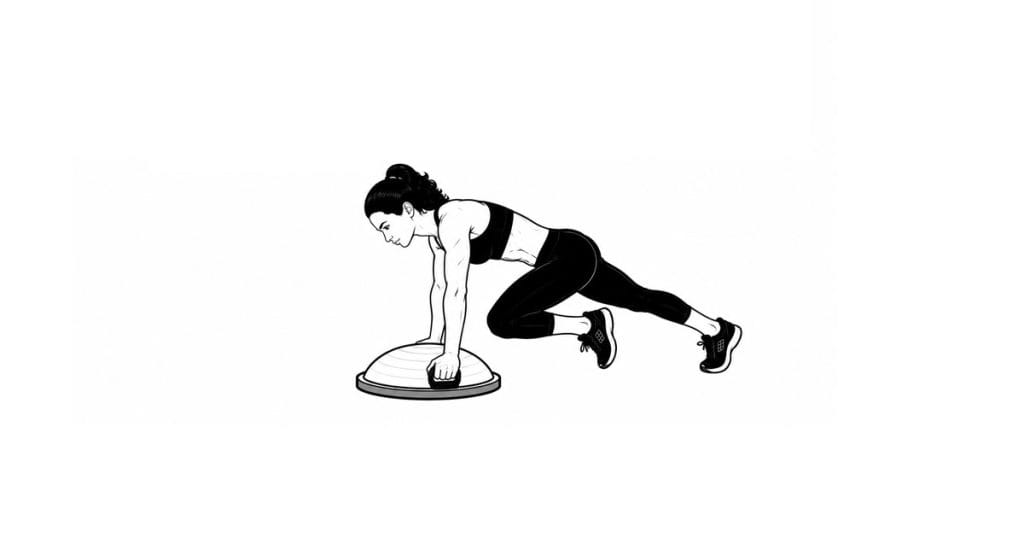
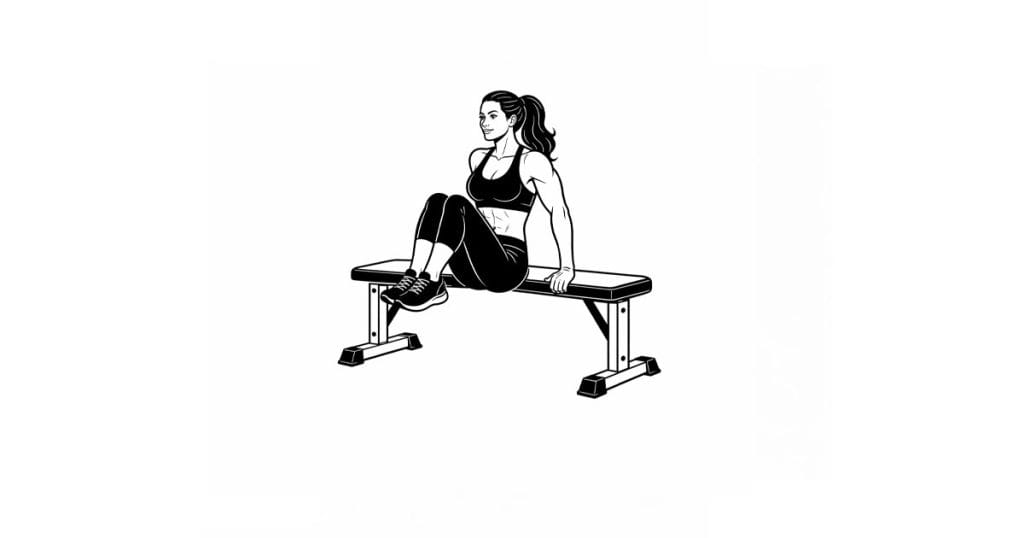
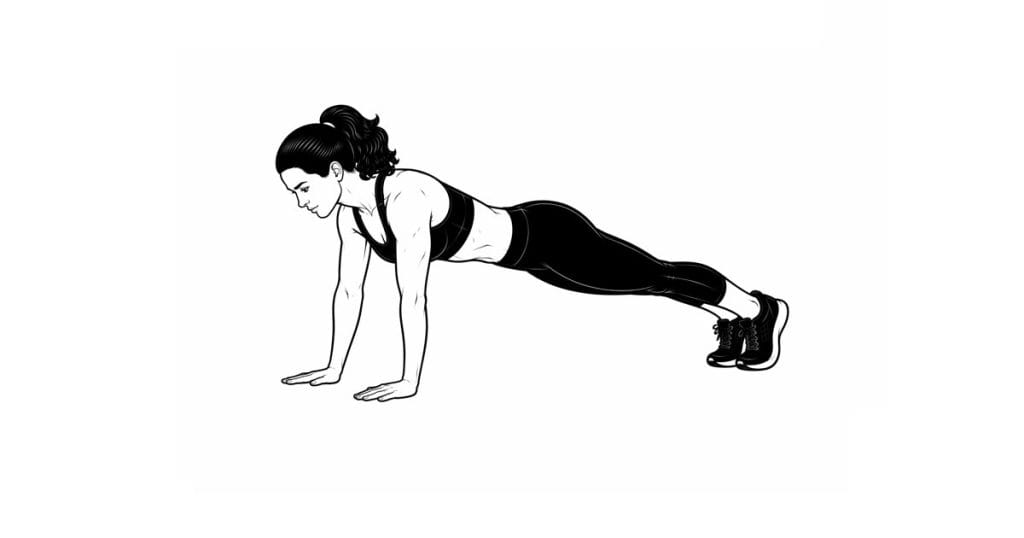
The Stability Ball Knee Tuck is a dynamic core exercise that combines a high plank with controlled knee flexion using a Swiss ball. The exercise begins with the hands planted on the floor and the lower legs supported on the ball. From this position, the knees are pulled toward the chest, causing the ball to roll forward beneath the legs. The legs are then extended to return to the starting plank position. This movement challenges the abdominal muscles while also requiring significant stability through the shoulders, arms, hips, and trunk.
The abs and deeper core muscles are the primary muscles worked during the Stability Ball Knee Tuck. These muscles help control the position of the pelvis and spine while the legs move toward and away from the torso. The hip flexors contribute as the knees are drawn toward the chest, while the shoulders, chest, and triceps work isometrically to support the upper body. Because the Swiss ball can move in multiple directions, the exercise also requires continuous stabilization to prevent unwanted movement of the hips and trunk.
To perform the Stability Ball Knee Tuck, begin by placing a Swiss ball behind you and positioning your hands on the floor approximately shoulder-width apart. Carefully place your shins or lower legs on top of the ball and extend your body into a high plank. Your shoulders should remain positioned over your wrists, your arms should be straight, and your body should form a relatively straight line from your head through your hips and legs. Brace your abdominal muscles before beginning the movement.
From the plank position, bend your knees and pull them toward your chest. As your knees move forward, the Swiss ball will roll along your lower legs toward your ankles or feet depending on your starting position and range of motion. Keep your upper body stable and avoid allowing your shoulders to shift excessively backward. Continue pulling the knees forward until you reach a controlled range of motion while maintaining stability through the trunk and shoulders.
After reaching the tucked position, slowly extend your knees and push the ball backward until your legs are straight again. Return to a strong plank position without allowing your hips to drop or your lower back to arch. The return phase should be performed with the same level of control as the knee tuck. Extending the legs too quickly can cause the ball to roll away from the body and increase stress on the lower back.
One of the main challenges of the Stability Ball Knee Tuck is maintaining spinal and pelvic control while the base of support moves. As the legs extend away from the torso, the abdominal muscles must resist excessive extension through the lower back. This anti-extension demand makes the exercise effective for developing core strength and improving the ability to maintain trunk position while the limbs are moving.
The unstable surface also increases the coordination demands of the exercise. Unlike a standard plank performed with both the hands and feet on the floor, the Swiss ball moves as the knees bend and straighten. The shoulders and arms must stabilize the upper body while the core controls the pelvis and the legs guide the ball. This creates a coordinated movement that challenges several areas of the body without requiring external resistance.
A common mistake is allowing the hips to sag when returning to the extended plank position. This often occurs when the legs are extended farther than the core can control. Keeping the abdominal muscles braced and limiting the range of motion can help maintain a stronger spinal position. Another common mistake is pulling the knees forward too quickly and relying on momentum rather than muscular control. The ball should roll smoothly in both directions without bouncing or sudden changes in speed.
Shoulder position is also important during the Stability Ball Knee Tuck. The hands should remain firmly planted, and the shoulders should generally stay over the wrists. Excessive shifting can make the exercise less stable and place unnecessary stress on the upper body. Keeping the arms straight and pressing firmly into the floor creates a strong foundation for the movement.
Overall, the Stability Ball Knee Tuck is an effective bodyweight core exercise for strengthening the abdominal muscles, training anti-extension control, and improving coordination between the upper and lower body. The moving Swiss ball increases the stability demands compared with a traditional plank, while the repeated knee tuck adds dynamic movement through the hips. When performed with controlled technique, it provides a challenging way to develop core strength, shoulder stability, and total-body control.