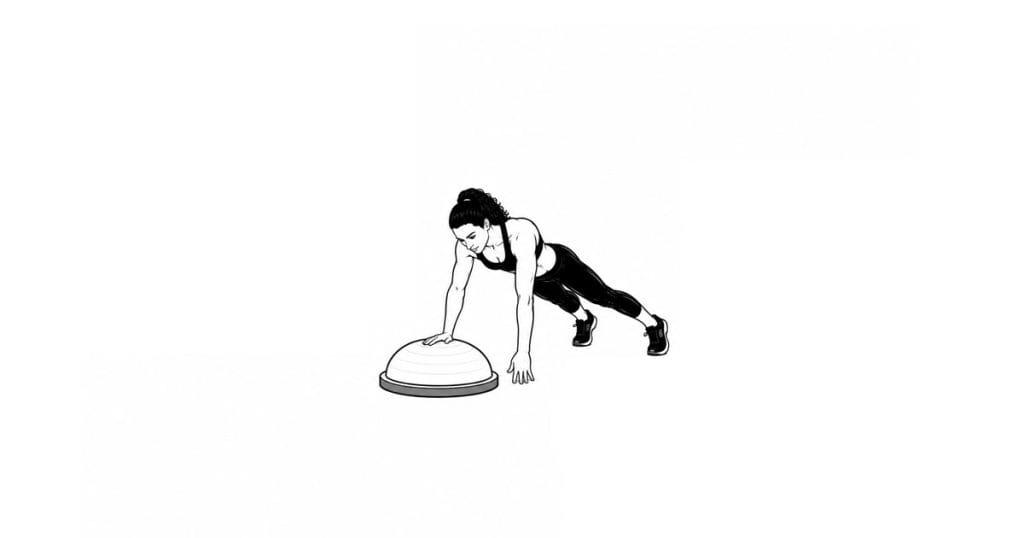
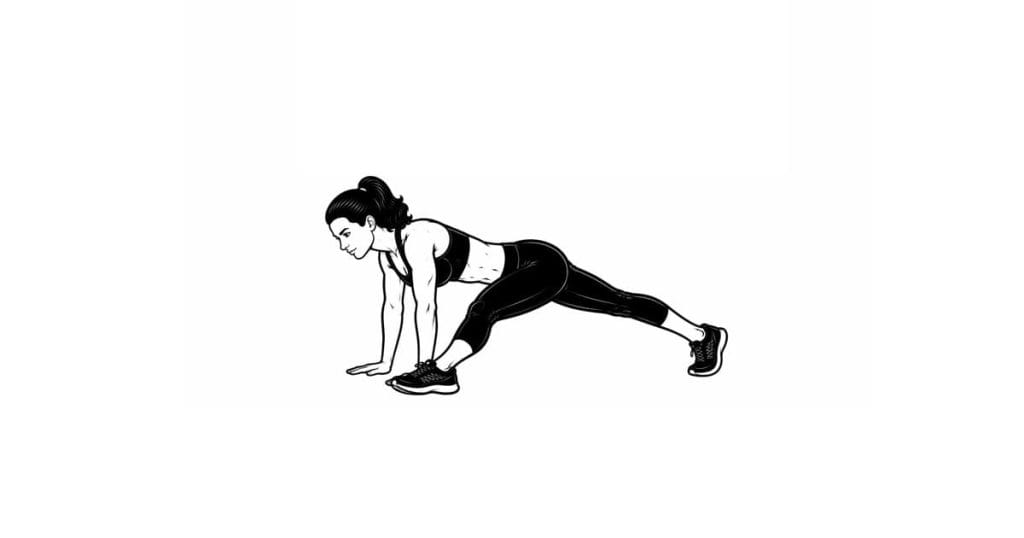
The Stability Ball Body Saw is a dynamic core stabilization exercise that challenges the abdominal muscles to resist spinal extension while the body moves forward and backward from a forearm plank position. With the forearms supported on a stability ball and the toes remaining on the floor, the exercise creates an unstable environment that requires continuous core engagement and total-body control. Unlike a stationary plank, the Body Saw changes the distance between the shoulders and the support point, progressively increasing the leverage placed on the abdominal muscles and creating a demanding anti-extension challenge.
The primary muscle group targeted during the Stability Ball Body Saw is the abs and core. The rectus abdominis, transverse abdominis, and deep core stabilizers work continuously to prevent excessive extension of the lumbar spine as the body moves backward. As the shoulders travel farther from the elbows, the abdominal muscles must generate greater tension to maintain a neutral spinal position and keep the torso rigid.
Several secondary muscle groups contribute to the exercise. The shoulders stabilize the upper body while the forearms control the movement of the stability ball. The chest assists with shoulder girdle stability, while the lower back works isometrically to maintain proper spinal alignment. The glutes remain engaged to stabilize the pelvis, and the legs help maintain a rigid position from the hips through the heels.
One of the greatest benefits of the Stability Ball Body Saw is its ability to develop anti-extension core strength. As the body shifts backward and the arms move farther in front of the shoulders, the leverage against the abdominal muscles increases. The core must resist the natural tendency of the lower back to arch, making the exercise considerably more demanding than a stationary forearm plank.
Another major benefit is improved shoulder stability and upper-body control. Because the forearms are supported on a movable stability ball, the shoulders must constantly make small adjustments to control the ball. This continuous stabilization develops shoulder endurance and strengthens the connection between the upper body and trunk.
The exercise also improves balance, coordination, and proprioception. The stability ball can move in multiple directions, requiring continuous neuromuscular adjustments throughout every repetition. Learning to control the ball while maintaining a rigid trunk improves body awareness and the ability to stabilize the spine during dynamic movement.
To perform the Stability Ball Body Saw, place your forearms on top of a stability ball with your elbows positioned beneath your shoulders. Extend your legs behind you with your toes on the floor and lift into a strong forearm plank. Brace your core, squeeze your glutes, and establish a straight line from your head to your heels before beginning the movement.
Slowly push through your forearms so the stability ball rolls slightly forward while your body shifts backward. Allow your shoulders to move farther behind your elbows while maintaining a rigid torso and neutral spine. Continue only as far as you can control without allowing your lower back to arch or your hips to change position.
Once you reach your controlled end range, reverse the movement by pulling through your forearms and engaging your abdominal muscles to bring the ball and body back toward the starting position. Your body should move as one rigid unit rather than bending through the hips or waist. Continue moving forward and backward in a smooth, controlled sawing motion.
Proper technique is essential for maximizing abdominal activation. Keep your ribs controlled, glutes engaged, and spine neutral throughout every repetition. The range of motion should be determined by your ability to maintain proper alignment rather than how far you can move. A shorter, controlled body saw is more effective than a larger movement performed with poor posture.
Common mistakes include allowing the lower back to arch, raising the hips excessively, bending at the waist, allowing the stability ball to move side to side, or using momentum to rock through the exercise. Moving too far backward is another common error that can cause the core to lose tension. Slow, deliberate movement should remain the priority.
Breathing should remain steady throughout the exercise. Avoid holding your breath while attempting to stabilize the body. Controlled breathing combined with continuous abdominal bracing helps maintain trunk stiffness while reducing unnecessary tension through the neck and shoulders.
Overall, the Stability Ball Body Saw is an excellent exercise for strengthening the abdominal muscles, developing anti-extension core stability, improving shoulder control, and enhancing total-body coordination. The combination of an unstable stability ball and progressively changing leverage makes it an effective progression from the traditional forearm plank for individuals looking to develop greater functional core strength and spinal control.