
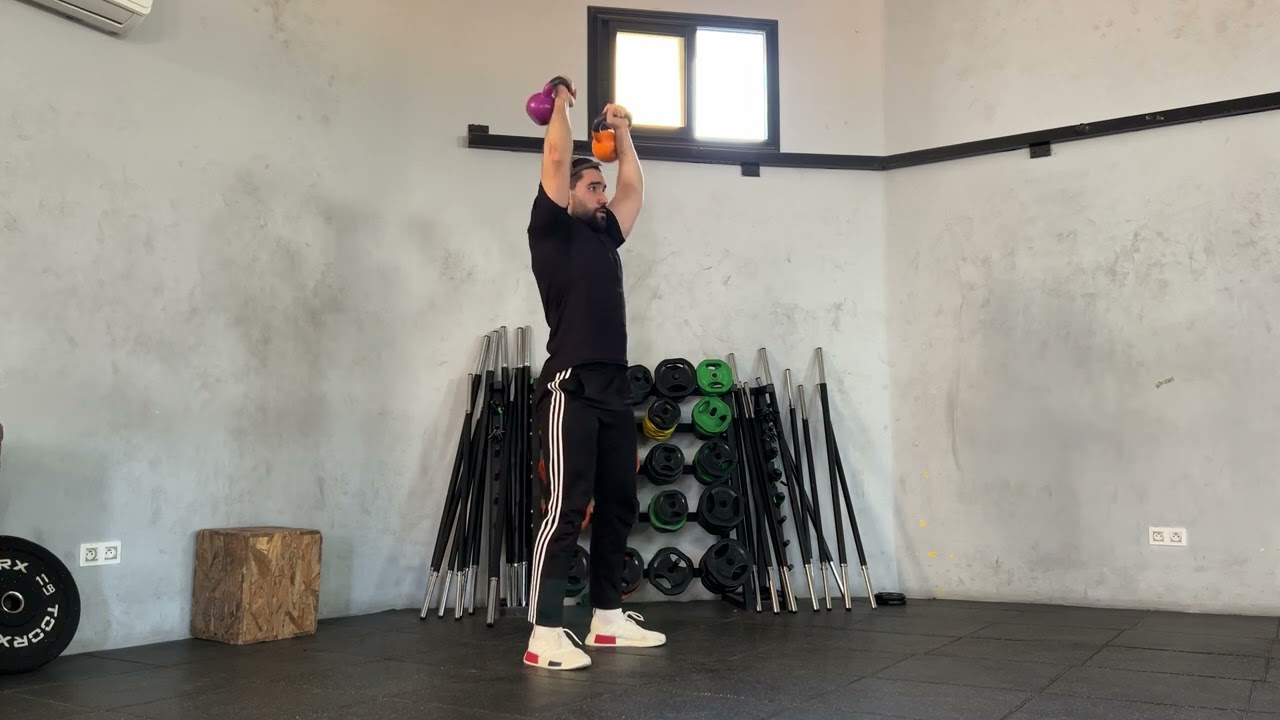
The Double Kettlebell Push Press is a compound upper-body power exercise that combines an explosive leg drive with an overhead shoulder press. The movement primarily targets the shoulders while engaging the triceps, quadriceps, glutes, calves, traps, upper back, and core. By using two kettlebells simultaneously, the exercise develops overhead pressing power, full-body coordination, shoulder stability, and the ability to transfer force from the lower body into the upper body.
Unlike a strict kettlebell shoulder press, which relies primarily on upper-body strength, the Double Kettlebell Push Press uses a controlled knee dip followed by an explosive extension of the legs. This movement generates momentum that helps drive both kettlebells overhead. The shoulders and triceps then complete the press and stabilize the weights in the overhead position.
To perform the Double Kettlebell Push Press, begin standing with your feet approximately hip-width to shoulder-width apart. Hold one kettlebell in each hand and bring both weights into the front rack position. Keep your elbows close to your torso and allow the kettlebells to rest comfortably against your forearms and upper body.
Maintain an upright posture with your chest lifted and your head neutral. Engage your abdominal muscles and keep your ribs aligned over your pelvis. Distribute your weight evenly across both feet, maintaining contact through your heels and the front portions of your feet. Establish a stable rack position before beginning the movement.
Initiate the push press by bending your knees slightly while keeping your torso upright. This controlled movement is called the dip. Your hips should remain relatively underneath your shoulders rather than shifting excessively backward. Avoid turning the dip into a deep squat or leaning forward as your knees bend.
Once you reach the bottom of the dip, immediately extend your knees and hips explosively. Push firmly through your feet to generate upward force. The power produced by your lower body helps accelerate the kettlebells upward from the rack position. Maintain abdominal tension to transfer this force efficiently through your torso.
As the kettlebells begin moving upward, press both weights overhead. Extend your elbows while allowing your shoulders to move naturally into the overhead position. Move your head slightly backward if necessary to provide a clear path for the kettlebells, then return it to a neutral position as the weights reach overhead.
Continue pressing until your arms reach a comfortable extended position. Finish standing tall with your hips and knees extended and both kettlebells balanced above your shoulders. Keep your wrists relatively straight and avoid excessive lower-back arching or rib flaring.
Pause briefly at the top to establish control. Your shoulders should remain stable, your abdominal muscles engaged, and your feet firmly planted. The kettlebells should remain balanced overhead without drifting excessively forward or backward.
To complete the repetition, lower both kettlebells smoothly into the front rack position. Bend your elbows under control and allow the weights to settle against your forearms. A slight knee bend can help absorb the returning load. Reestablish your posture before beginning another repetition.
The shoulders are the primary muscles involved in the Double Kettlebell Push Press. The deltoids contribute to raising and stabilizing the arms overhead. The triceps assist by extending the elbows during the pressing phase, while the traps and upper-back muscles support shoulder blade movement and overhead stability.
The quadriceps and glutes play an important role in generating the explosive force needed to initiate the movement. The quadriceps extend the knees, while the glutes contribute to hip extension. The calves assist with force production and ankle stability as the body drives upward.
The abdominal muscles help maintain a stable torso during the dip, drive, and overhead press. Proper core engagement limits excessive spinal movement and allows force generated by the legs to transfer efficiently into the kettlebells. The forearms contribute to grip strength and wrist control throughout the exercise.
One common mistake is performing an excessively deep dip. A deep knee bend can slow the transition into the upward drive and reduce the explosive nature of the movement. Instead, use a short, controlled dip followed immediately by powerful leg extension.
Another common mistake is leaning forward during the dip. This shifts the kettlebells away from an efficient pressing path and can make overhead balance more difficult. Keep your torso upright, maintain balanced foot pressure, and drive vertically through your legs.
Pressing too early with the arms can also reduce the contribution of the lower body. Allow the leg drive to initiate the upward movement before completing the press with your shoulders and triceps. The movement should feel coordinated rather than like two separate actions.
Excessive lower-back arching is another technique error. This often occurs when the kettlebells are too heavy or shoulder mobility is limited. Maintain abdominal tension, control your rib position, and avoid leaning backward to force the weights overhead.
The Double Kettlebell Push Press differs from the Double Kettlebell Strict Press because it uses leg drive to assist the overhead movement. It also differs from the Double Kettlebell Push Jerk because the push press finishes with the legs extended rather than using a second knee bend to receive the weights overhead.
Overall, the Double Kettlebell Push Press is an effective exercise for developing shoulder power, triceps strength, lower-body explosiveness, and full-body coordination. When performed with appropriate resistance, a controlled vertical dip, explosive leg drive, and stable overhead positioning, it provides a challenging way to improve the ability to generate and control force during overhead pressing movements.


