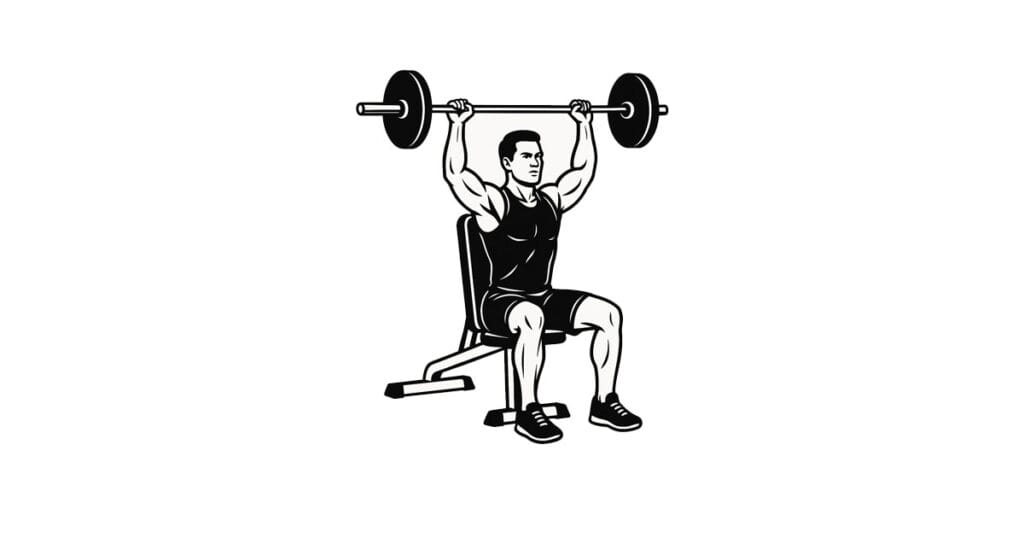
The Barbell Push Press is a dynamic compound exercise that builds explosive overhead strength, power, and coordination. Unlike a strict overhead press that relies solely on the upper body, the push press incorporates leg drive, enabling lifters to move heavier weights more efficiently. The lift begins with the barbell resting in the front rack position across the shoulders. After a controlled dip at the knees and hips, the lifter explosively extends through the legs and hips to generate upward momentum, with the arms finishing the press into a full overhead lockout.
This combination of lower-body drive and upper-body pressing makes the push press a highly effective exercise for athletes, weightlifters, and strength trainees. It primarily targets the shoulders and triceps while also recruiting the legs, glutes, calves, and core to provide stability and power. Proper execution demands timing and body control, along with strong core engagement to maintain posture and avoid excessive arching in the lower back.
Common mistakes include leaning forward during the dip, pressing before fully utilizing leg drive, or catching the bar overhead without stability. To ensure safety and effectiveness, lifters should warm up thoroughly, start with manageable loads, and maintain proper overhead mechanics.
The Barbell Push Press is widely used in Olympic weightlifting, CrossFit, and athletic training because it develops raw pressing strength as well as speed and explosive power. By bridging the gap between the strict press and advanced overhead lifts like the jerk, it serves as both a fundamental strength builder and a skill-transfer movement for more complex lifts. When performed correctly, it improves overhead power, functional strength, and athletic performance.