The Bosu Boat Hold is an advanced core stability exercise that combines the traditional boat pose with the instability of a BOSU trainer. Sitting on the dome creates an unstable surface that forces the abdominal muscles and stabilizers to work continuously to maintain balance. This makes the exercise more challenging than a standard floor-based boat hold while improving coordination, balance, and trunk control.
The primary muscles targeted during the Bosu Boat Hold are the abs and core, particularly the rectus abdominis, transverse abdominis, and other deep stabilizing muscles. These muscles work isometrically to keep the torso stable and prevent the spine from extending as you hold the position. The constant need to stabilize on the BOSU increases overall core activation throughout the exercise.
The hip flexors are heavily involved because they help hold the legs in the elevated position. The obliques contribute by resisting unwanted side-to-side movement, while the lower back muscles work alongside the abdominals to maintain proper posture. Together, these muscle groups create a stable trunk capable of resisting movement from multiple directions.
One of the biggest benefits of the Bosu Boat Hold is improved core endurance. Unlike dynamic abdominal exercises that involve repeated movement, this exercise requires the muscles to remain under constant tension for an extended period. This develops the endurance needed for everyday activities, athletic performance, and maintaining good posture.
The unstable surface also enhances proprioception and balance. Small adjustments are required throughout the hold to remain centered on the BOSU, helping improve body awareness and neuromuscular control. These qualities can transfer to other strength exercises and functional movement patterns.
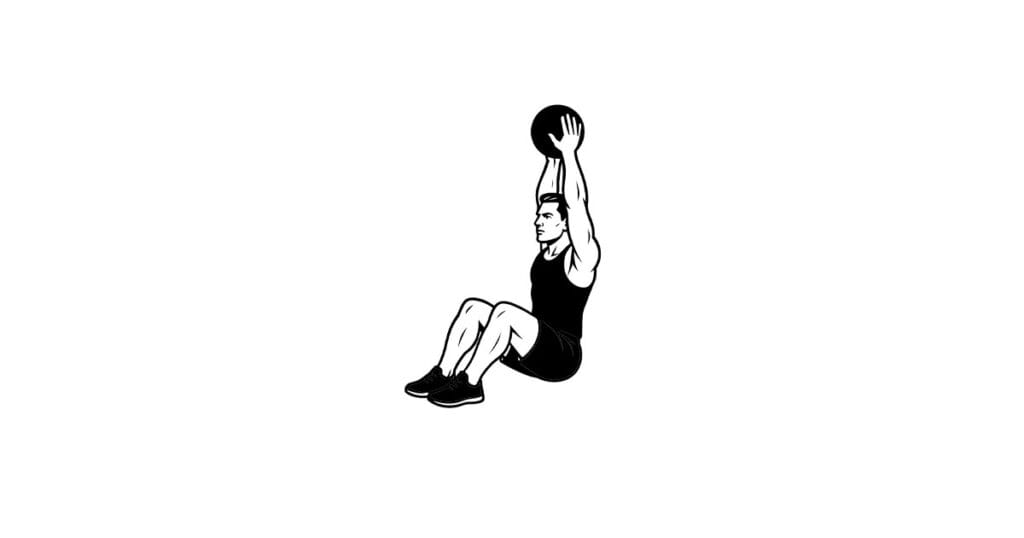
To perform the exercise, sit in the center of the BOSU with your knees bent and feet on the floor. Lean back slightly while keeping your chest lifted and your spine neutral. Brace your core before lifting both feet from the floor until your shins are parallel with the ground. Extend your arms forward to assist with balance.
Once balanced, maintain the position by keeping your torso steady and your core fully engaged. More advanced individuals can increase the difficulty by straightening the legs into a full V-sit while maintaining the same upright posture. Throughout the exercise, breathe normally and avoid holding your breath.
Proper technique is essential for maximizing the benefits of the Bosu Boat Hold. The goal is to stabilize through the trunk rather than relying on momentum or excessive movement. Keep the chest lifted, shoulders relaxed, and neck neutral while resisting the urge to round the lower back.
One of the most common mistakes is collapsing through the spine as fatigue sets in. This reduces abdominal activation and places unnecessary stress on the lower back. Another frequent error is holding the breath, which increases tension without improving stability. Maintaining slow, controlled breathing helps support proper core function.
For individuals who struggle to maintain balance, keeping the knees bent provides a more manageable starting position. As core strength and stability improve, gradually progressing to straighter legs can increase the challenge without sacrificing technique.
Overall, the Bosu Boat Hold is an effective exercise for strengthening the core, improving balance, and developing trunk stability. Its combination of isometric tension and instability makes it an excellent choice for building abdominal endurance and enhancing overall core control.