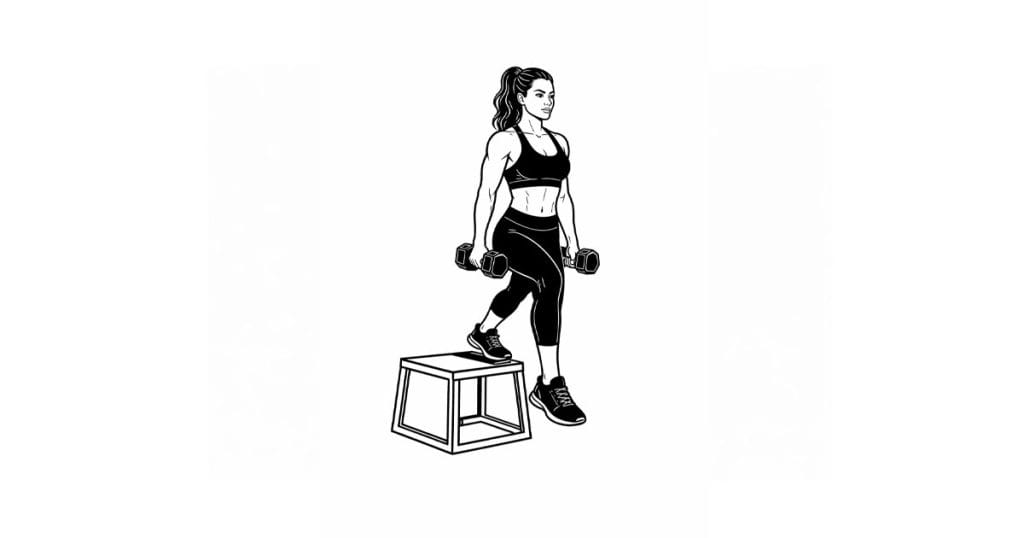
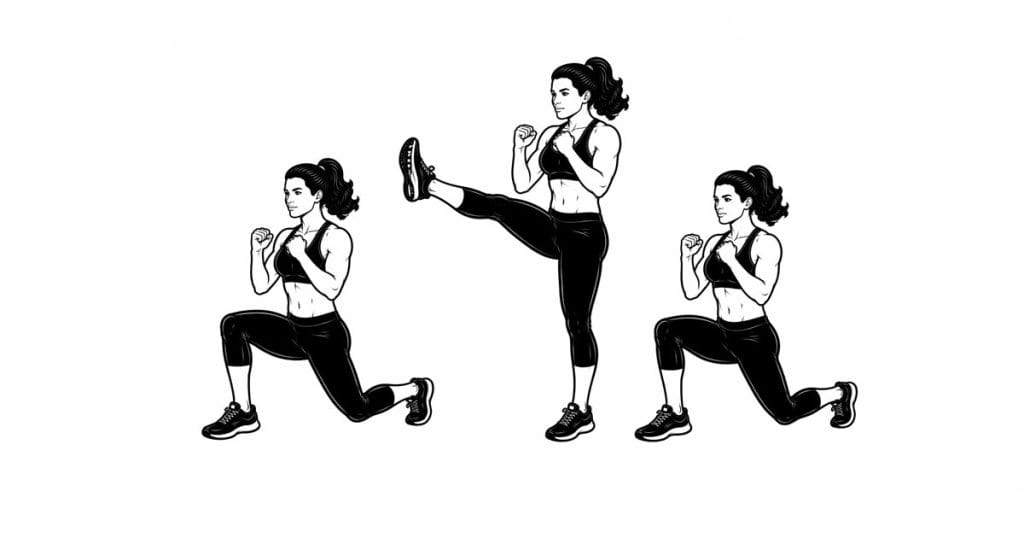
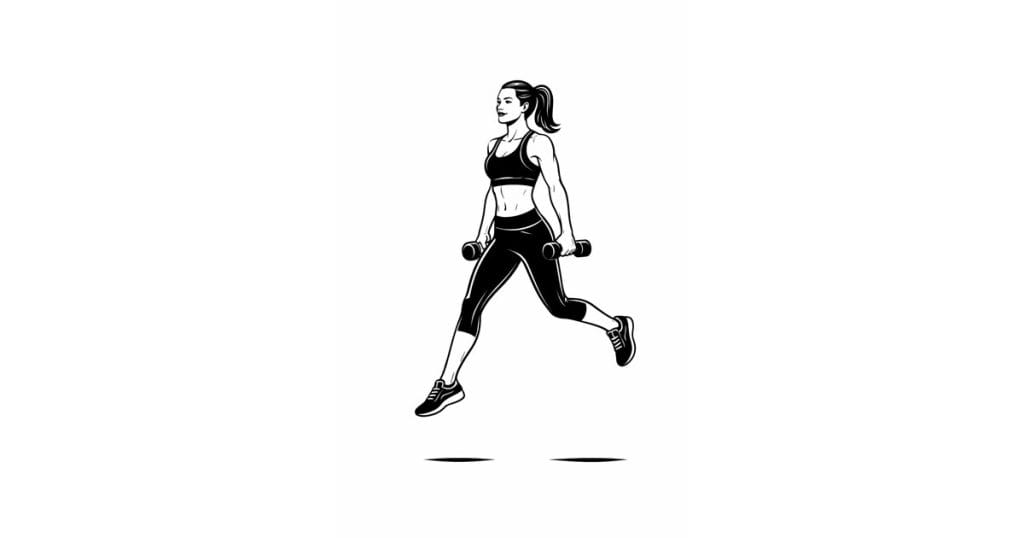
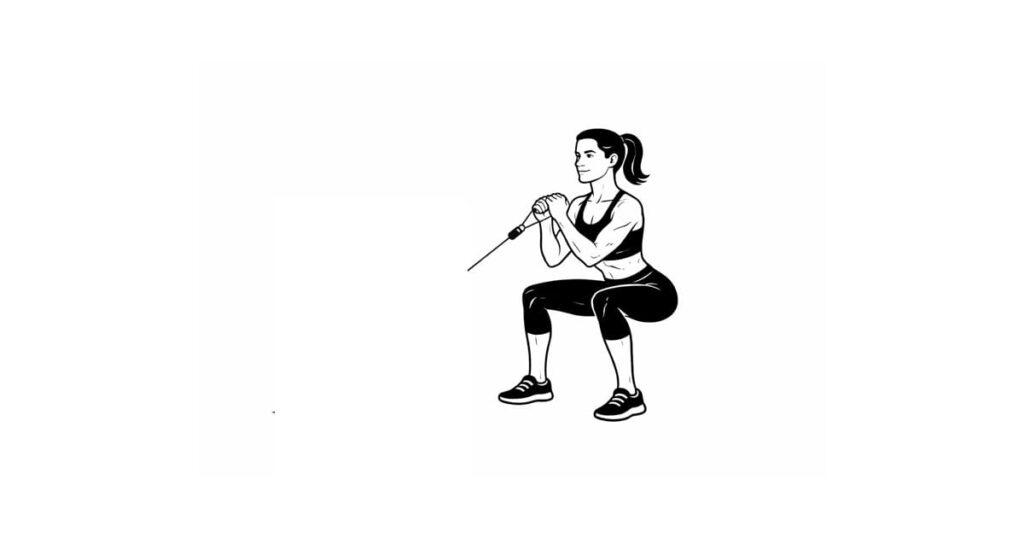
The Seated Box Jump is an advanced plyometric exercise designed to develop explosive lower body power by removing the stretch reflex and forcing the muscles to generate force from a dead stop. Unlike traditional box jumps, where the athlete dips and immediately jumps, this variation begins from a seated position, eliminating preloading and increasing the demand on pure concentric strength and power output.
The primary muscles targeted in seated box jumps are the quadriceps, with significant contribution from the glutes, hamstrings, and calves. The core also plays an important role in stabilizing the torso during the explosive movement and landing phase. Because the exercise requires rapid force production without momentum, it is particularly effective for improving starting strength and athletic explosiveness.
To perform the movement, the individual begins seated on a bench with feet planted firmly on the ground and positioned slightly behind the knees. This positioning allows for a more effective push-off angle. The torso remains upright, and the arms are prepared to swing forward during the jump. From this static position, the individual leans slightly forward and explosively drives through the feet, extending the hips, knees, and ankles to propel the body onto the box.
Arm swing plays a key role in generating upward momentum, helping to increase jump height and efficiency. Upon takeoff, the goal is to move explosively and decisively, minimizing hesitation. The landing phase is equally important, requiring the individual to absorb force through the hips and knees while maintaining balance and control. A soft, controlled landing reduces stress on the joints and improves overall movement quality.
One of the key benefits of seated box jumps is their ability to improve rate of force development. Since there is no preloading or countermovement, the muscles must generate force rapidly from a static position. This makes the exercise highly relevant for athletes who need to produce power quickly, such as in sprinting, jumping, or directional changes.
Additionally, seated box jumps help reinforce proper jumping mechanics by encouraging full extension of the lower body. The exercise promotes coordination between the upper and lower body, as the arms and legs must work together to achieve optimal performance.
Proper technique is critical for maximizing the benefits of this exercise. Emphasis should be placed on explosive intent, full extension through the hips, and controlled landings. Using an appropriate box height is essential to ensure safety and maintain proper form throughout the movement.
Common mistakes include rocking excessively to generate momentum, landing with stiff legs, or selecting a box height that compromises technique. These errors can reduce the effectiveness of the exercise and increase the risk of injury.
From a safety perspective, it is important to use a stable surface and to step down after each repetition rather than jumping down. This helps minimize unnecessary impact on the joints.
Overall, the Seated Box Jump is a powerful tool for developing lower body explosiveness, improving athletic performance, and enhancing neuromuscular efficiency. It is best suited for individuals with a solid foundation in strength and movement mechanics who are looking to advance their power training.