Plank with hip extension is a powerful bodyweight exercise that combines core stabilization with targeted glute activation. This movement builds on the traditional high plank by adding a controlled leg lift, which increases the demand on the posterior chain while challenging balance and coordination. It is an effective way to strengthen the glutes while reinforcing proper core engagement and spinal alignment.
The primary muscle group targeted in this exercise is the glutes. As you lift one leg at a time, the gluteus maximus is responsible for extending the hip and controlling the movement. This makes plank with hip extension a valuable exercise for improving glute strength, which plays a key role in posture, movement efficiency, and lower body power.
Secondary muscles include the abs and core, hamstrings, shoulders, and lower back. The core muscles, including the rectus abdominis and transverse abdominis, work to stabilize the torso and prevent unwanted movement. The hamstrings assist with hip extension, while the shoulders and triceps support the upper body in the plank position. The lower back contributes to maintaining alignment, though it should not be the primary driver of the movement.
One of the key benefits of plank with hip extension is its ability to train the glutes while reinforcing core stability. Many exercises isolate either the glutes or the core, but this movement integrates both, making it more functional and efficient. The anti-rotation and anti-extension demands of the plank ensure that the core remains engaged while the leg moves, improving overall body control.
Another advantage is improved balance and coordination. Since one leg is lifted at a time, the body must resist shifting or rotating, which challenges stability. This can translate to better performance in activities that require single-leg strength and control.
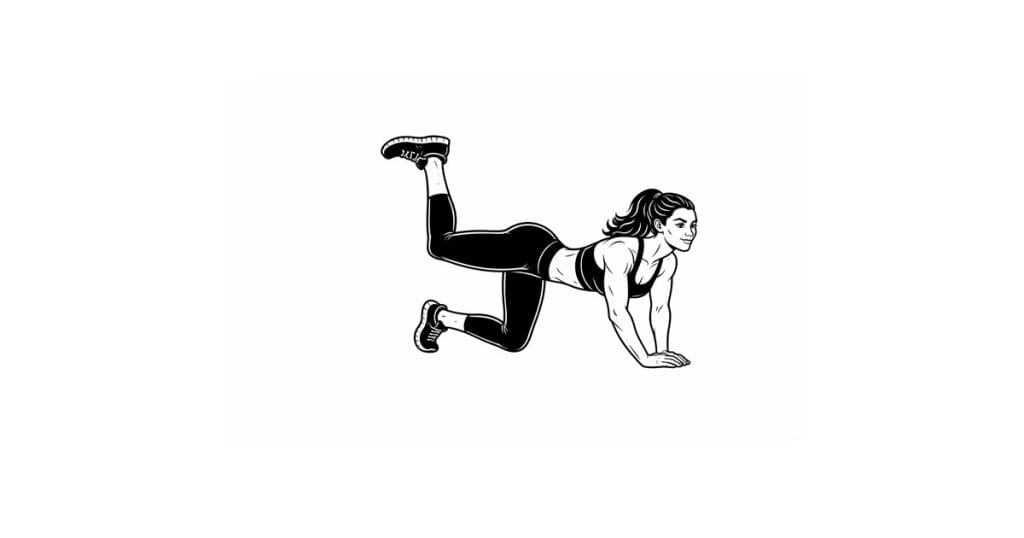
To perform plank with hip extension correctly, start in a strong high plank position with your hands under your shoulders and your body in a straight line. Engage your core and glutes before initiating the movement. Lift one leg slightly off the ground by extending through the hip, keeping the leg straight and the hips level.
Pause briefly at the top, then lower the leg back to the starting position. Alternate sides, maintaining control throughout the movement. The lift should be small and controlled, focusing on muscle activation rather than height.
Proper technique is essential for maximizing the benefits of this exercise. Avoid arching the lower back or lifting the leg too high, as this shifts the workload away from the glutes and onto the lower back. Keeping the movement controlled ensures that the correct muscles are engaged.
Common mistakes include rotating the hips, rushing through repetitions, and failing to maintain a stable plank position. These errors can reduce effectiveness and increase the risk of strain. Slowing down the movement and focusing on alignment can help correct these issues.
From a safety perspective, maintaining core engagement is critical to protect the lower back. Performing the exercise on a stable surface and using a controlled range of motion can help reduce the risk of injury. If needed, the exercise can be modified by reducing the height of the leg lift or performing shorter sets.
Overall, plank with hip extension is a versatile and effective exercise for building glute strength, improving core stability, and enhancing overall body control. Its combination of strength and stability makes it a valuable addition to any bodyweight training routine.