The Pilates 100, commonly referred to as “The Hundred,” is a foundational core exercise designed to activate the abdominal muscles, improve breathing control, and build endurance. It is one of the most recognizable movements in Pilates and is often used at the beginning of a session to warm up the body and engage the core. Despite its simplicity, the Pilates 100 is highly effective for strengthening the deep abdominal muscles and improving overall core stability.
The primary muscle group targeted during the Pilates 100 is the abs and core. The exercise emphasizes sustained abdominal contraction, particularly in the transverse abdominis and rectus abdominis. By maintaining a lifted upper body position and controlled leg placement, the core is continuously engaged to stabilize the spine and prevent excessive movement.
Secondary muscles include the hip flexors, which help hold the legs in position, and the obliques, which contribute to overall trunk stability. The shoulders also play a supporting role as they maintain arm position and control the rhythmic pumping motion.
One of the key benefits of the Pilates 100 is its ability to improve core endurance. Unlike short, explosive movements, this exercise requires sustained tension over time, which helps build muscular stamina. This makes it particularly beneficial for improving posture, spinal support, and overall movement efficiency.
Another major benefit is enhanced breathing coordination. The structured breathing pattern—inhale for five counts and exhale for five counts—encourages deeper, more controlled breathing. This not only improves lung capacity but also helps reinforce the connection between breath and movement, which is a fundamental principle in Pilates training.
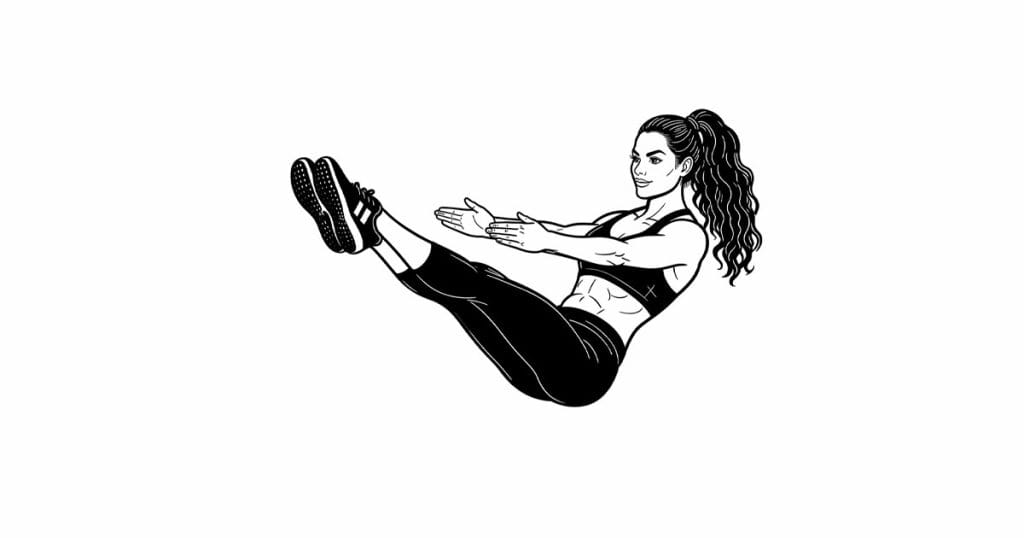
The Pilates 100 is also highly adaptable. Beginners can modify the exercise by keeping their feet on the floor or holding their legs in a bent tabletop position. More advanced variations involve lowering the legs closer to the ground or increasing the intensity of the arm pumps. This versatility makes it suitable for a wide range of fitness levels.
To perform the Pilates 100, lie on your back with your legs extended and arms by your sides. Lift your head, neck, and shoulders off the ground, then raise your legs to a challenging but controlled position. Begin pumping your arms up and down while following a consistent breathing pattern until you reach a total of 100 arm pumps.
Proper technique is essential for maximizing effectiveness. Focus on keeping your lower back pressed into the floor and maintaining a stable torso. The movement should come from controlled arm pulses rather than large, uncontrolled swings.
Common mistakes include arching the lower back, holding the breath, and placing unnecessary strain on the neck. These issues can reduce the effectiveness of the exercise and increase the risk of discomfort or injury.
From a safety perspective, it is important to listen to your body and adjust the exercise as needed. Keeping the legs higher or bending the knees can reduce strain on the lower back, while supporting the head can help alleviate neck tension.
Overall, the Pilates 100 is a highly effective core activation exercise that improves strength, endurance, and breathing control. Its simplicity, versatility, and effectiveness make it a staple in Pilates routines and a valuable addition to any core-focused workout.