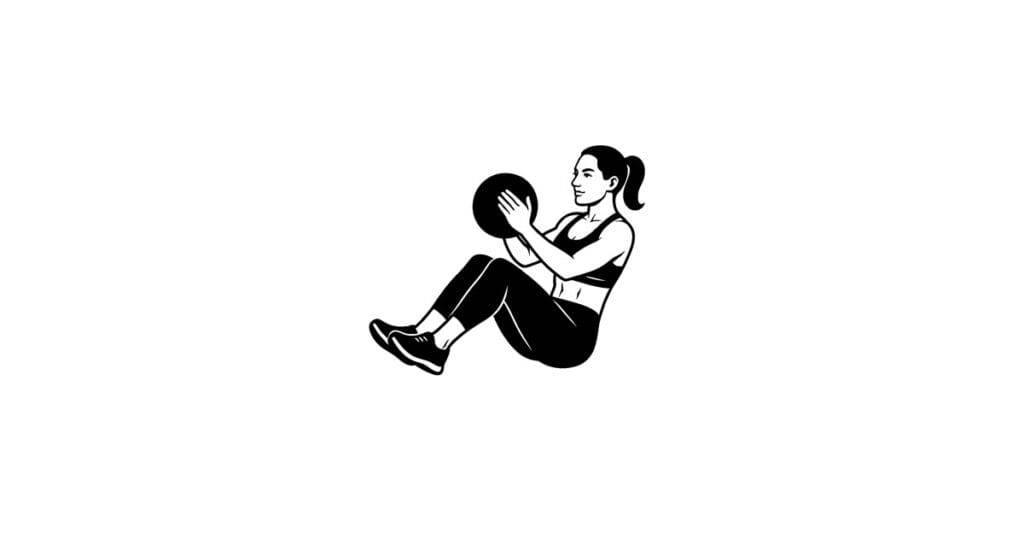
The Medicine Ball Reverse Crunch is an effective core-strengthening exercise that primarily targets the lower portion of the abdominals while also engaging the hip flexors and obliques. By placing a medicine ball between the knees or shins, the movement increases resistance and demands greater stability from the core, making it significantly more challenging than a standard reverse crunch. This variation is ideal for those looking to improve abdominal strength, enhance pelvic control, and build a more defined midsection.
During the exercise, the focus is on lifting the hips off the ground using the abdominal muscles, not by swinging the legs or relying on momentum. This controlled, isolation-focused motion ensures deep core engagement and reinforces proper technique. The added resistance of the medicine ball improves muscle recruitment and requires deliberate control during both the upward contraction and the slow eccentric lowering phase. This slow descent is crucial for strengthening the core, improving spinal stability, and reducing compensation from surrounding muscles.
The continuous need for bracing makes the Medicine Ball Reverse Crunch a foundational exercise for developing strength that carries over into compound lifts, athletic movements, and daily functional tasks. The resistance from the ball also challenges the hip flexors in a controlled manner, enhancing overall core integration and coordination. This makes it valuable for athletes, fitness enthusiasts, and anyone looking to intensify their abdominal training with a safe but demanding variation.
A key benefit of this movement is its ability to improve mind-muscle connection with the lower abs, an area many individuals struggle to activate effectively. Keeping tension on the ball naturally engages the inner thighs, helping stabilize the pelvis and maintain proper alignment throughout the motion. This ensures that the abdominal muscles, not the lower back or hip flexors, remain the primary drivers of the reverse crunch.
The Medicine Ball Reverse Crunch is also a versatile progression from bodyweight reverse crunches. It can be incorporated into strength circuits, core-focused sessions, warm-ups requiring abdominal activation, or conditioning routines. With minimal equipment required, it is accessible in both gym and home workout settings. When performed with proper form, it helps teach controlled posterior pelvic tilt, supports spinal health, and contributes to balanced abdominal development.
Overall, the Medicine Ball Reverse Crunch is an excellent addition to any core routine, offering increased strength, stability, and muscular definition while promoting a more functional and resilient midsection.