The Dumbbell Figure 8 is a dynamic core-focused exercise that involves passing a dumbbell between the legs in a continuous figure eight pattern. This movement challenges coordination, balance, and core stability while also engaging the lower body and upper body muscles. It is commonly used to improve functional strength, movement control, and overall body awareness.
The primary muscles targeted in the Dumbbell Figure 8 are the core muscles. These muscles are responsible for stabilizing the torso and controlling rotational movement. The continuous motion of passing the dumbbell from one hand to the other requires constant engagement of the core to maintain balance and posture.
Secondary muscles include the glutes and hamstrings, which help support the hip hinge position and maintain stability in the lower body. The shoulders and forearms are also involved as they guide the dumbbell through the figure eight pattern and maintain grip throughout the movement.
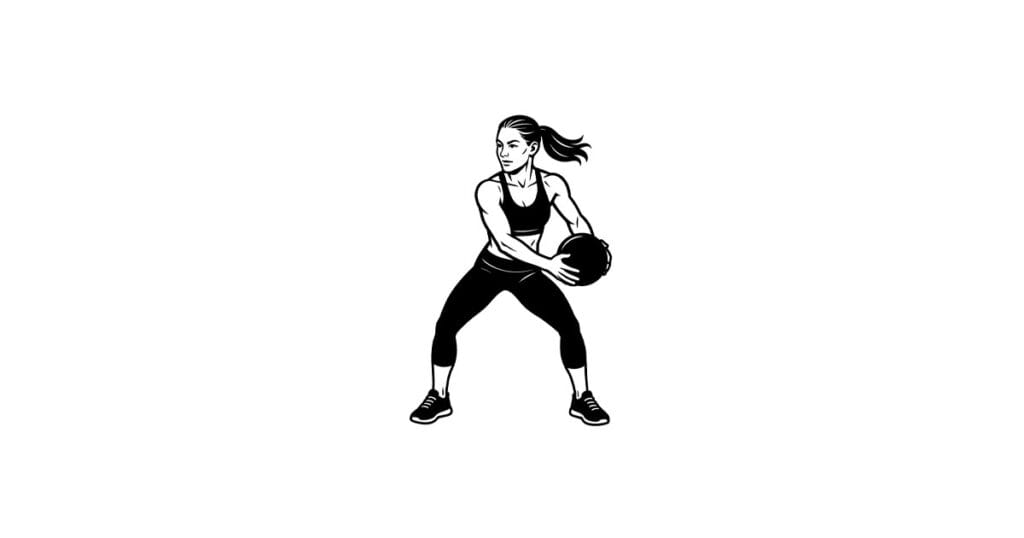
To perform the Dumbbell Figure 8, the exerciser begins in a wide stance with knees slightly bent and hips pushed back into a partial hinge position. The dumbbell is held in one hand, and the movement starts by passing it between the legs from front to back.
As the dumbbell moves behind the body, it is transferred to the opposite hand. The exerciser then brings the dumbbell around the outside of the leg and back to the front, continuing the circular motion. This creates a smooth and continuous figure eight pattern.
The movement should be controlled and rhythmic, with a focus on maintaining balance and stability. The torso should remain steady, and the core should stay engaged throughout the exercise.
One of the main benefits of the Dumbbell Figure 8 is improved coordination. The constant hand-to-hand transfer and movement around the legs require timing and control, helping develop better overall movement patterns.
Another advantage is increased core engagement. The rotational and stabilizing demands of the exercise challenge the abdominal muscles in a dynamic way, improving both strength and endurance.
The exercise also promotes functional strength, as it mimics real-world movements that involve coordination between the upper and lower body.
Proper technique is essential for maximizing results. The back should remain neutral, and the movement should be controlled rather than rushed. Keeping the dumbbell close to the body helps maintain balance and reduces unnecessary strain.
Common mistakes include moving too quickly, rounding the back, and using excessive weight. These errors can reduce effectiveness and increase the risk of discomfort or injury.
The Dumbbell Figure 8 is suitable for individuals of all fitness levels. Beginners can start with a lighter weight and slower pace, while more advanced individuals can increase speed or resistance.
Overall, the Dumbbell Figure 8 is an effective exercise for improving core strength, coordination, and functional movement. Its dynamic nature makes it a valuable addition to any workout focused on stability and control.