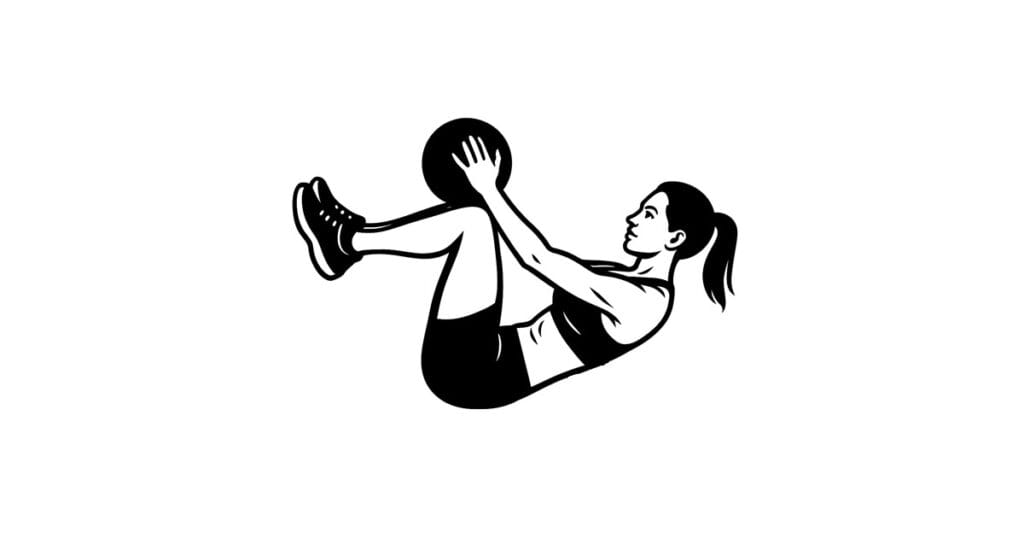
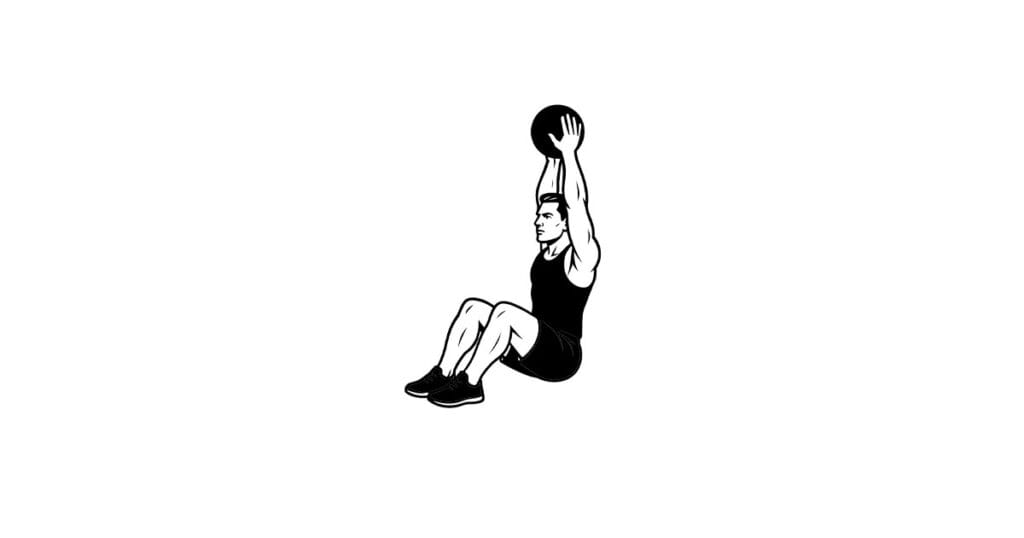
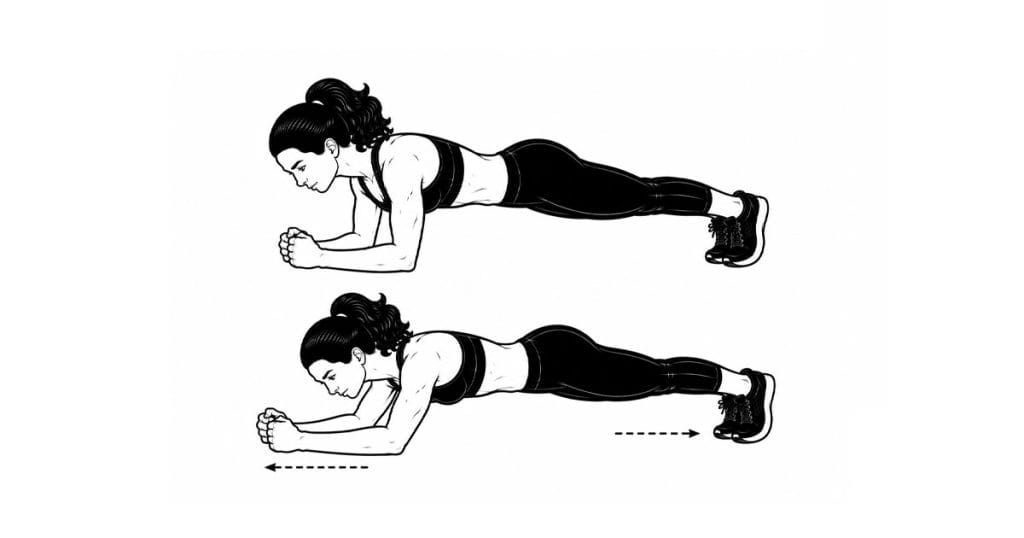
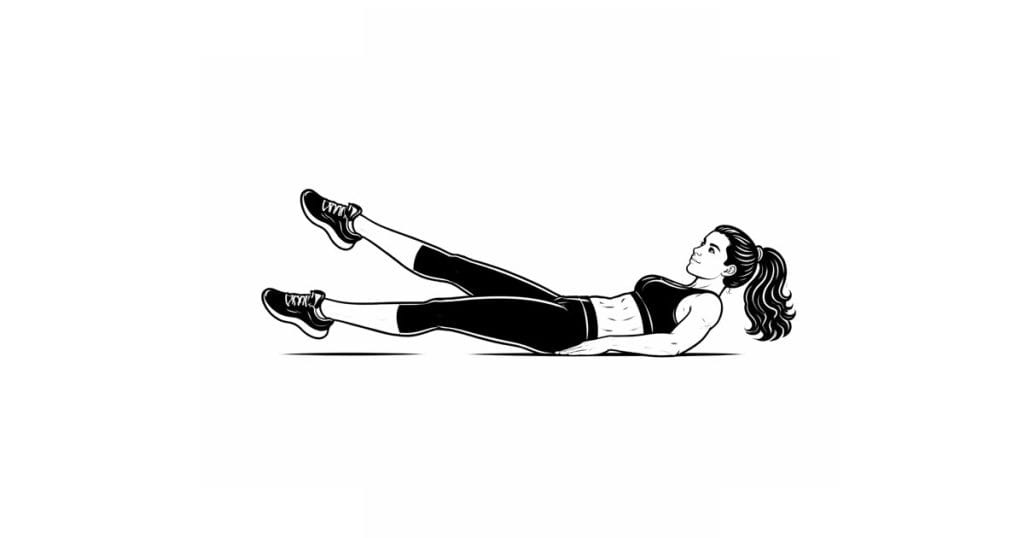
The BOSU Lateral Hand Walk-Overs (Dome Side) are an advanced upper-body stability exercise that combines a high plank with controlled lateral hand movement across the rounded surface of a BOSU trainer. Instead of stepping with the feet, you move your hands one at a time over the unstable dome while maintaining a rigid plank position. This dynamic movement challenges the core, shoulders, and upper body to resist rotation, making it highly effective for improving stability, coordination, balance, and functional strength.
The primary muscle group targeted during the BOSU Lateral Hand Walk-Overs (Dome Side) is the abs and core. The rectus abdominis, transverse abdominis, and deeper stabilizing muscles work continuously to prevent the spine from extending or rotating as body weight shifts from one arm to the other. The anti-rotation demands make this exercise especially effective for developing functional core strength and trunk stability.
Secondary muscles include the shoulders, chest, triceps, and glutes. The shoulders and rotator cuff muscles stabilize the upper body throughout each hand transition, while the chest and triceps support the body’s weight and assist with pressing as the hands move across the BOSU. The glutes remain engaged to maintain pelvic alignment and help keep the body in a straight line from head to heels.
One of the primary benefits of the BOSU Lateral Hand Walk-Overs (Dome Side) is improved core stability under movement. Every hand placement shifts the body’s center of gravity, forcing the core to resist rotation and maintain spinal alignment. This develops anti-rotation strength that transfers well to sports, lifting, and everyday activities.
Another major benefit is enhanced shoulder stability and coordination. The unstable BOSU surface requires the shoulders to constantly make small adjustments, improving joint stability, proprioception, and neuromuscular control. This helps strengthen the stabilizing muscles that support healthy shoulder function.
The exercise also improves balance and body awareness. Maintaining a strong plank while moving laterally across an unstable surface challenges the entire kinetic chain, encouraging better coordination between the upper body, core, and lower body.
To perform the BOSU Lateral Hand Walk-Overs (Dome Side), place the BOSU on a stable, non-slip surface with the dome facing upward. Begin in a high plank beside the BOSU with both hands on the floor directly beneath your shoulders and your body forming a straight line from head to heels. Brace your core and squeeze your glutes before beginning the movement.
Place the hand closest to the BOSU onto the center of the dome, followed by the opposite hand so both hands are positioned on top of the BOSU. Continue by stepping the first hand onto the floor on the opposite side, followed by the second hand. Reverse the movement and continue walking your hands laterally back and forth across the BOSU while keeping your torso as stable as possible.
Proper technique is essential for maximizing results. Keep your hips level, avoid excessive side-to-side movement, and maintain a neutral spine throughout every repetition. Move one hand at a time using slow, controlled placements rather than relying on speed or momentum.
Common mistakes include allowing the hips to sway, arching the lower back, rushing the hand transitions, placing the hands too close to the edge of the BOSU, or shrugging the shoulders toward the ears. These errors reduce core activation and increase stress on the shoulders. Maintaining full-body tension and deliberate movement helps ensure proper muscle engagement.
From a safety standpoint, this exercise is best suited for individuals who have already mastered a standard high plank and possess good shoulder stability. Perform the movement on a stable surface and prioritize control over speed. If maintaining proper alignment becomes difficult, reduce the number of repetitions or rest before continuing.
Overall, the BOSU Lateral Hand Walk-Overs (Dome Side) are an excellent exercise for strengthening the core, shoulders, chest, triceps, and glutes while improving balance, coordination, and upper-body stability. Their combination of dynamic movement and unstable-surface training makes them a valuable addition to functional fitness, athletic conditioning, and advanced core workouts.