
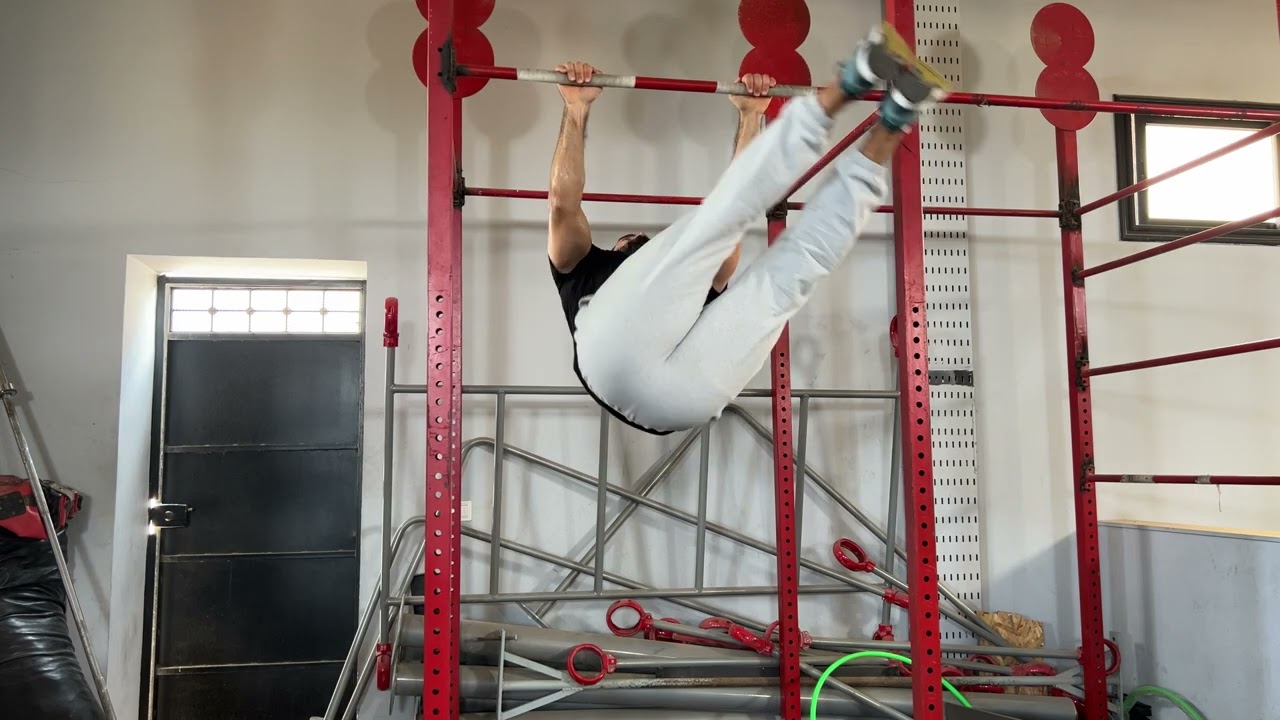
Windshield Wipers are an advanced hanging core exercise performed from a pull-up bar by raising the legs and rotating them from side to side in a controlled arc. The movement resembles the motion of windshield wipers moving across a windshield, which gives the exercise its name. The obliques are the primary muscle group worked, while the abs, hip flexors, forearms, shoulders, lats, and upper back contribute to maintaining the elevated leg position and stabilizing the body. Windshield Wipers require substantial core strength, rotational control, grip strength, shoulder stability, and coordination.
The obliques play a major role during Windshield Wipers because they help rotate and control the pelvis as the legs travel from one side to the other. The abdominal muscles maintain trunk tension and help keep the legs elevated, while the hip flexors assist with holding the thighs toward the torso. Because the body remains suspended from a bar, the forearms must maintain a strong grip while the shoulders, lats, and upper back stabilize the upper body.
To perform Windshield Wipers, grip a secure pull-up bar slightly wider than shoulder-width with your palms facing away from you. Hang beneath the bar with your arms extended and your shoulders active. Brace your abdominal muscles and raise your legs toward the bar. Keep your legs together and your knees as straight as your strength and mobility comfortably allow. Establish control in this elevated position before beginning the rotational portion of the exercise.
From the elevated position, rotate your legs slowly toward one side. The movement should come from controlled rotation through the core and pelvis rather than simply allowing the legs to fall sideways. Keep your hands firmly attached to the bar and maintain tension through your shoulders and upper back. Your upper body should remain as stable as possible while the lower body moves.
Move the legs only as far toward the side as you can maintain control. The exact range of motion can vary depending on core strength, mobility, and body control. Avoid forcing the feet toward an extreme position if doing so causes the torso to swing or the lower back to become uncomfortable. A controlled range is more important than reaching a specific angle.
Use your obliques and abdominal muscles to reverse the movement and bring your legs back through the center. Continue rotating toward the opposite side using the same controlled motion. Keep the legs together throughout the transition and avoid allowing gravity to rapidly pull them from one side to the other. The movement should resemble a smooth arc rather than an uncontrolled swing.
Maintaining the elevated leg position is one of the major challenges of Windshield Wipers. The abs and hip flexors must work continuously to prevent the legs from dropping as they move from side to side. If the legs repeatedly fall toward the floor between rotations, the exercise becomes less controlled and the intended rotational challenge is reduced.
Keeping the knees relatively straight increases the lever length and makes the movement more demanding. Excessive knee bending shortens the lever and changes the difficulty of the exercise. However, the knees should not be forced completely straight if mobility limitations prevent comfortable positioning. The priority should remain controlled rotation with consistent core tension.
Momentum is one of the most common mistakes during Hanging Windshield Wipers. Rapidly throwing the legs from one side to the other can produce enough momentum to continue the movement without requiring the obliques to control the full range. It can also cause the entire body to swing beneath the bar. Perform each rotation deliberately and control both the movement toward the side and the return through the center.
Shoulder stability is also important. Keep the shoulders active rather than hanging passively while the lower body rotates. The lats and upper back help stabilize the torso and provide a strong connection between the body and the pull-up bar. Avoid allowing the shoulders to repeatedly shrug toward the ears as the legs change direction.
Grip strength can become a limiting factor because the hands and forearms must support the entire body throughout the exercise. Maintain consistent grip pressure and avoid continuing if the hands begin slipping or grip fatigue prevents safe control. The rotational movement can make maintaining a secure grip more challenging than during a stationary hang.
The lower back should remain controlled throughout the exercise. Excessive rotation without adequate abdominal tension can place unnecessary stress on the lumbar region. The movement should be produced through coordinated rotation of the pelvis and trunk while the core remains engaged. Avoid allowing the legs to move farther than the torso can safely control.
Windshield Wipers are considerably more challenging than basic hanging knee raises or leg raises because they combine an elevated leg position with side-to-side rotation. The exercise demands strength in multiple planes while the body remains suspended from the bar. Proper execution depends on maintaining tension rather than simply achieving a large rotational range.
Overall, Windshield Wipers are an advanced bodyweight exercise for strengthening the obliques, abs, hip flexors, and supporting upper-body muscles. They also challenge grip strength, shoulder stability, rotational control, and coordination. When performed with active shoulders, elevated legs, a braced core, controlled rotation, minimal swinging, and a secure grip, Windshield Wipers provide an effective challenge for advanced core strength and hanging body control.


