
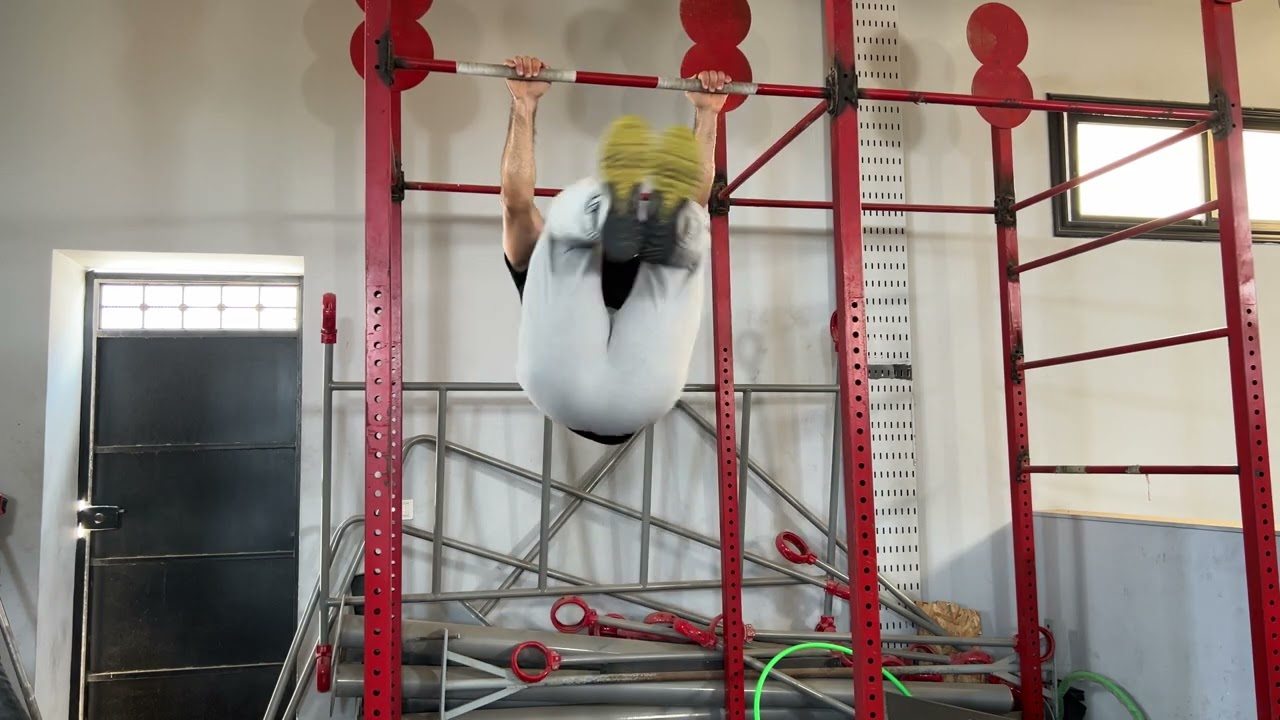
Bent-Knee Windshield Wipers are a hanging core exercise performed from a pull-up bar by raising the knees, keeping them bent, and rotating them from side to side in a controlled arc. The movement is a shortened-lever variation of straight-leg Windshield Wipers, making it more accessible while still providing a significant rotational core challenge. The obliques are the primary muscle group worked, while the abs, hip flexors, forearms, shoulders, lats, and upper back contribute to maintaining the elevated knee position and stabilizing the body throughout the exercise.
The obliques play a major role during Bent-Knee Windshield Wipers because they help rotate and control the pelvis as the knees travel from one side to the other. The abdominal muscles maintain trunk tension and help prevent uncontrolled movement through the lower back. The hip flexors assist with keeping the thighs elevated toward the torso. Because the exercise is performed while hanging, the forearms maintain the grip while the shoulders, lats, and upper back stabilize the upper body.
To perform Bent-Knee Windshield Wipers, grip a secure pull-up bar slightly wider than shoulder-width with your palms facing away from you. Hang beneath the bar with your arms extended and your shoulders active. Brace your core and raise your knees toward your torso. Keep the knees bent and together throughout the movement. Establish control in this elevated position before beginning the side-to-side rotation.
From the starting position, rotate your bent knees slowly toward one side. Allow the pelvis to rotate with the legs rather than simply moving the knees sideways from the hips. Keep your upper body as stable as possible and maintain tension through your shoulders and upper back. Move only as far as you can maintain control without allowing your body to swing excessively beneath the bar.
Use your obliques and abdominal muscles to reverse the movement and bring your knees back toward the center. Continue rotating toward the opposite side using the same controlled motion. Keep the knees together and maintain approximately the same amount of knee flexion throughout the repetition. Return through the center under control rather than allowing momentum to carry the legs from side to side.
Keeping the knees elevated is an important part of the exercise. Allowing them to repeatedly drop toward the floor between rotations reduces the continuous demand on the core and changes the movement. The abs and hip flexors should remain engaged to support the thighs while the obliques control the rotational component.
The bent-knee position distinguishes this exercise from the straight-leg Windshield Wiper. Bending the knees shortens the lever created by the legs, reducing the amount of torque the core must control. This generally makes Bent-Knee Windshield Wipers less demanding than the straight-leg variation while preserving the same basic side-to-side rotational pattern. The shorter lever can also make it easier to maintain control and minimize unwanted swinging.
Pelvic movement is essential for effective execution. A common mistake is moving the knees from side to side without allowing the pelvis and trunk to rotate. This can turn the exercise into primarily a hip movement rather than a controlled rotational core exercise. Think about guiding the knees with the pelvis while maintaining abdominal tension throughout the arc.
Momentum is another common problem. Quickly throwing the knees toward one side and allowing them to swing toward the other can reduce the muscular control required from the obliques. It can also create increasingly large body swings beneath the bar. Perform each change of direction deliberately, using the core to slow the knees before reversing the movement.
Shoulder stability remains important throughout the exercise. Keep the shoulders active instead of hanging completely passively from the joints. The lats and upper back help stabilize the torso and create a strong connection between the body and the pull-up bar. Avoid repeatedly shrugging the shoulders toward the ears as the knees rotate.
Grip strength is also challenged because the hands and forearms support the entire body for the duration of the exercise. Keep the hands securely wrapped around the bar and maintain consistent grip pressure. Stop the exercise if grip fatigue prevents you from safely controlling the hanging position.
The lower back should remain controlled throughout each repetition. Rotating farther than the core can manage may cause excessive movement through the lumbar region. Use a range of motion that allows the pelvis and torso to rotate smoothly without pain or loss of abdominal tension. A smaller controlled arc is preferable to a larger range created through momentum.
Bent-Knee Windshield Wipers can also help develop the coordination needed for more demanding hanging rotational movements. Maintaining the bent-knee position reduces the lever length while still requiring the athlete to coordinate grip, shoulder stability, abdominal tension, hip positioning, and side-to-side pelvic rotation.
Overall, Bent-Knee Windshield Wipers are an effective bodyweight exercise for strengthening the obliques and abs while challenging the hip flexors, grip, shoulders, lats, and upper back. The bent-knee position provides a more manageable alternative to straight-leg Windshield Wipers without removing the rotational core demand. When performed with active shoulders, elevated knees, controlled pelvic rotation, minimal swinging, and a secure grip, Bent-Knee Windshield Wipers provide an effective challenge for rotational core strength and hanging body control.


