The Single Leg Box Jump is an advanced plyometric exercise designed to develop explosive lower body power, balance, and unilateral strength. Unlike traditional box jumps that use both legs, this variation challenges one leg at a time, increasing the demand on coordination, stability, and force production. It is particularly effective for athletes and individuals looking to improve performance in movements that rely on single-leg power, such as sprinting, cutting, and jumping.
The primary muscle group targeted during the Single Leg Box Jump is the quadriceps, which are responsible for extending the knee and generating upward force. The glutes and hamstrings play a crucial role in hip extension, while the calves contribute to ankle plantarflexion during takeoff. The core muscles are heavily engaged to stabilize the torso and maintain balance throughout the movement, especially during landing.
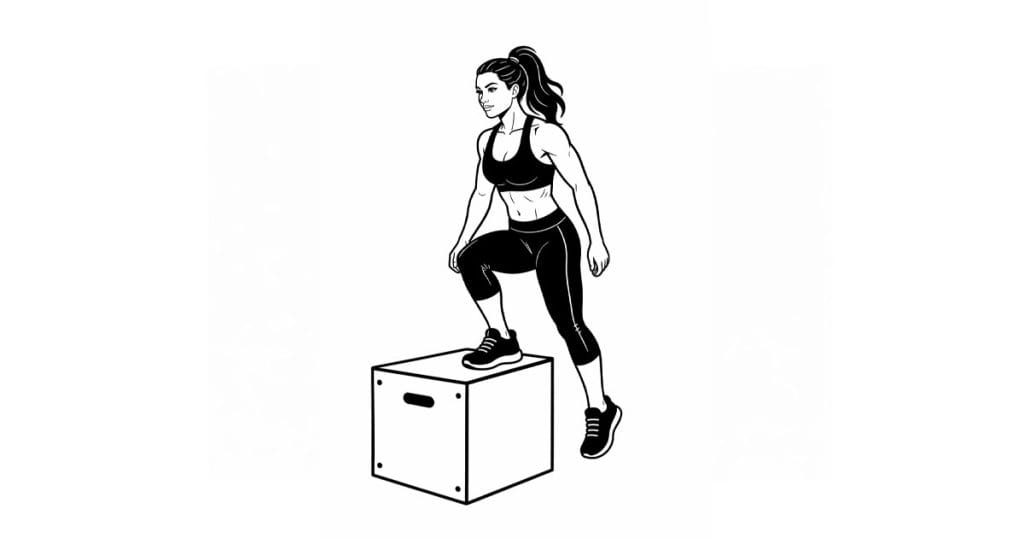
To perform the exercise, begin by standing in front of a box on one leg, with the opposite leg lifted slightly off the ground. Maintain an upright posture and engage your core to stabilize your body. From this position, perform a slight dip by bending the working leg, then explosively drive through the foot to jump onto the box.
Use your arms to assist with momentum by swinging them upward as you jump. This helps generate power and improves coordination. Focus on fully extending your hip, knee, and ankle during takeoff to maximize height and efficiency.
As you land on the box, do so softly on the same leg. Bend your knee and hip to absorb the impact while keeping your balance. Ensure your knee tracks in line with your toes and does not collapse inward. A controlled and stable landing is essential for both performance and safety.
One of the key benefits of the Single Leg Box Jump is its ability to improve unilateral strength and address imbalances between legs. Training each side independently helps enhance overall performance and reduces the risk of injury caused by asymmetry.
This exercise also improves neuromuscular coordination and proprioception. The balance and control required during the movement challenge the nervous system, helping to improve joint stability and body awareness.
Additionally, the Single Leg Box Jump enhances explosive power and athletic performance. The ability to generate force quickly from a single leg is crucial for many sports and functional movements.
Proper technique is essential for maximizing results and minimizing injury risk. Focus on controlled takeoff and landing, maintaining alignment, and using an appropriate box height. Start with a lower box to build confidence and control before progressing.
Common mistakes include using the non-working leg for assistance, landing with stiff joints, and allowing the knee to collapse inward. These errors can reduce effectiveness and increase stress on the joints.
Safety considerations include using a stable box and stepping down after each repetition instead of jumping down. This helps reduce impact and maintain control.
Overall, the Single Leg Box Jump is a powerful exercise for developing unilateral strength, improving balance, and enhancing explosive performance. When performed correctly, it provides significant benefits for athletic development and functional movement.