One Arm Lat Pulldown

Muscle Lats
0:00
/
0:00

How to do the One Arm Lat Pulldown

The One Arm Lat Pulldown is an effective unilateral back exercise designed to strengthen and develop the latissimus dorsi while improving balance, coordination, and symmetry between both sides of the body. Unlike the traditional lat pulldown, which works both arms simultaneously, this single-arm variation isolates each side independently, helping to correct muscular imbalances and enhance the mind-muscle connection.

By focusing on one arm at a time, lifters can achieve a deeper stretch and stronger contraction through a full range of motion. The movement begins with the arm extended overhead and finishes with the elbow pulled tightly to the torso, ensuring maximum engagement of the lats. Supporting muscles, including the biceps, shoulders, and core stabilizers, assist in maintaining proper control and stability throughout the motion.

This exercise is particularly beneficial for athletes and strength trainees aiming to build a balanced, V-shaped back and improve overall pulling strength. It also reinforces scapular control, which is crucial for performance in compound lifts like pull-ups and rows. Maintaining strict form, avoiding excessive torso rotation and momentum, is key to preventing shoulder strain and ensuring effective lat activation.

Beginners should start with light resistance to master the movement pattern, while experienced lifters can increase load for greater hypertrophy and strength gains. The One Arm Lat Pulldown not only enhances back width and definition but also supports postural alignment and functional upper-body performance, making it a valuable addition to any strength or bodybuilding routine.
Primary Muscle
Lats
Secondary Muscles
BicepsShouldersUpper Back
Equipment
Machine
Difficulty
Intermediate
1

Setup Instructions

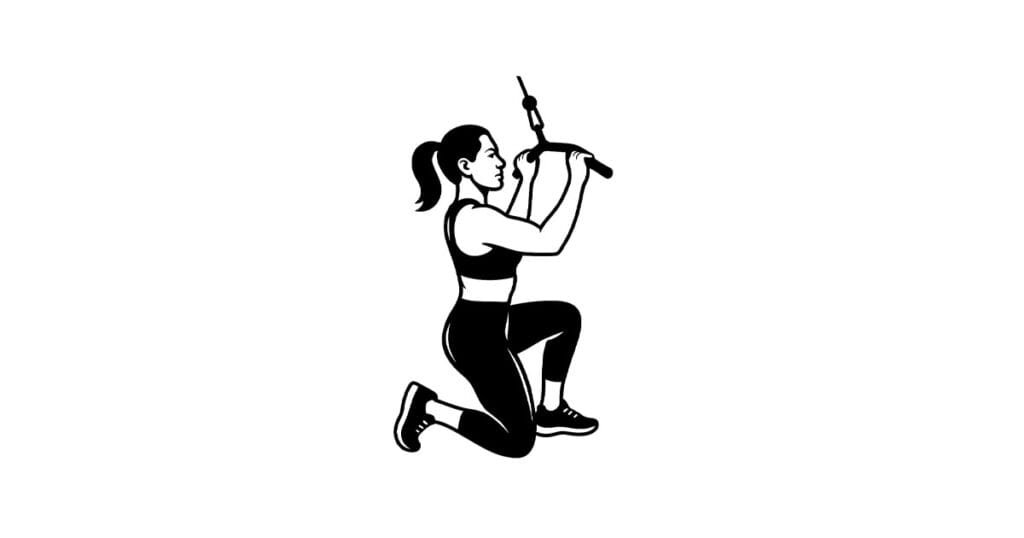
  • Attach a single handle to the top pulley of a cable machine.
  • Sit on a bench or seat positioned directly under the pulley.
  • Adjust the knee pad, if available, to secure your legs and prevent lifting during the pull.
  • Grasp the handle with one hand using a neutral or underhand grip, depending on comfort and target engagement.
  • Lean slightly back with your chest up and shoulders retracted, keeping your arm fully extended overhead.
2

Coaching Cues

  • Keep your core braced to avoid twisting your torso during the movement.
  • Initiate each rep by driving your elbow down and back rather than pulling with your hand.
  • Maintain a smooth, steady pace—avoid jerking or using momentum.
  • Squeeze your lat at the bottom of each repetition for maximum contraction.
  • Exhale as you pull the handle down, and inhale on the return.
3

Execution Steps

  • Begin by engaging your lats and pulling the handle down toward your upper chest in a controlled motion.
  • Keep your elbow close to your side as you pull and focus on driving the movement from your back rather than your biceps.
  • Pause briefly at the bottom of the movement when your hand is near shoulder level and your lat is fully contracted.
  • Slowly return the handle to the starting position, allowing your arm to extend fully while maintaining shoulder control.
  • Repeat for the desired number of repetitions before switching to the opposite arm.
4

Common Mistakes

  • Using excessive momentum or leaning too far back.
  • Allowing the shoulder to roll forward at the top of the movement.
  • Failing to control the eccentric (return) phase.
  • Over-gripping the handle and relying too much on the biceps.
  • Twisting the torso to assist with the pull instead of isolating one side.
5

Safety Notes

  • Use a manageable weight to maintain strict form throughout the movement.
  • Avoid hyperextending your shoulder joint at the top of the motion.
  • Keep the spine neutral and avoid excessive arching or rounding.
  • If you experience shoulder discomfort, reduce the load or range of motion.
  • Perform equal repetitions on both sides to prevent muscular imbalances.
6

Also Known As

  • Single Arm Lat Pulldown
  • Unilateral Lat Pulldown

This website uses cookies to enhance your browsing experience and ensure the site functions properly. By continuing to use this site, you acknowledge and accept our use of cookies.

Accept All Accept Required Only