The Medicine Ball Thruster is a dynamic full-body exercise that blends a powerful squat with an overhead press to develop strength, coordination, and explosive total-body power. By integrating both lower- and upper-body movement into a single fluid sequence, this exercise challenges multiple muscle groups at once while reinforcing efficient force transfer through the entire kinetic chain. It is a highly effective choice for building strength, enhancing conditioning, and improving athletic movement patterns.
The movement begins in a strong athletic stance with the medicine ball held securely at chest height. As you lower into the squat, the quads, glutes, and hamstrings work to control the descent while the core stabilizes the torso to maintain an upright posture. Proper squatting mechanics, such as driving the knees outward, keeping the chest lifted, and maintaining a neutral spine, ensure a solid foundation for the explosive phase of the exercise.
The upward drive from the squat initiates the powerful transition into the press. Force is generated from the legs and transferred through the core before reaching the upper body. This timing is critical: the arms should press the ball overhead only after the hips and knees have fully extended. This sequencing promotes coordinated movement and prevents premature shoulder involvement, allowing the lower body to contribute efficiently to the lift.
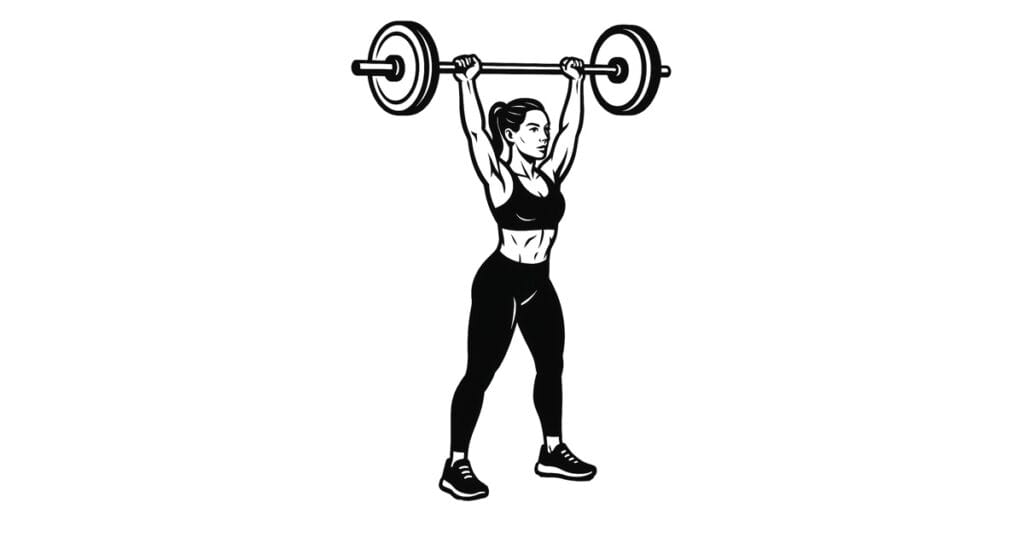
As the ball reaches overhead, the shoulders and triceps take on the primary workload while the core continues to brace, preventing excessive arching through the lower back. The overhead position challenges stability and balance, especially during higher-repetition sets. Maintaining control at the top reinforces proper alignment and reduces the risk of compensatory movement patterns.
Lowering the ball back to the chest should be deliberate and controlled, setting up a smooth transition into the next repetition. The Medicine Ball Thruster rewards fluidity and rhythm; each rep should feel like one continuous motion powered by strong leg drive and stabilized by an engaged core. Rushing through the movement reduces effectiveness and increases the likelihood of technical errors.
Because it recruits large muscle groups and integrates upper- and lower-body strength, the exercise elevates heart rate quickly and challenges both muscular and cardiovascular endurance. This makes the thruster a versatile option for strength circuits, metabolic conditioning, functional fitness workouts, and athletic training sessions. Its efficiency allows you to train strength and conditioning simultaneously in a compact, highly effective movement.
The Medicine Ball Thruster also reinforces functional movement patterns used in everyday life, such as lifting an object and pressing it overhead. This enhances body awareness, coordination, and practical strength that translates beyond the gym.
Selecting the right load is essential. A ball that is too heavy may compromise squat depth or overhead stability, while one that is too light may diminish power output. A moderate, manageable weight allows for explosive mechanics, controlled transitions, and consistent form.
Overall, the Medicine Ball Thruster is a powerful compound exercise that builds strength, power, and total-body coordination. When performed with proper technique and intentional pacing, it becomes a highly valuable tool for developing athleticism, improving movement efficiency, and enhancing functional fitness.