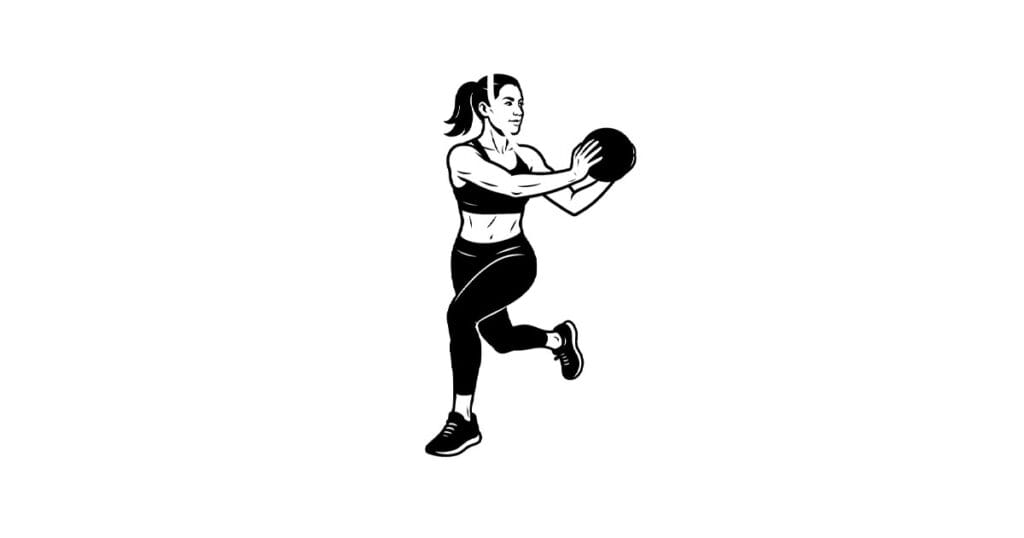
The Medicine Ball Lift Chop is a rotational strength exercise that targets the core, especially the obliques, while also engaging the shoulders, hips, and upper back. This diagonal lifting movement develops functional rotational power, making it valuable for athletes and individuals seeking to improve movement efficiency in daily activities. The Lift Chop teaches the body to generate force from the ground up, coordinating the lower body, torso, and upper body in one fluid, integrated motion.
This exercise emphasizes controlled rotation, helping improve core stability and mobility at the same time. As the ball travels from a low starting position near the hip up to the opposite shoulder, the lifter must resist excessive lower-back extension and rely on the core to drive the movement. This strengthening effect is beneficial for supporting the spine during dynamic tasks and reducing injury risk. The diagonal pathway of the ball also trains cross-body coordination, which is essential in sports like tennis, baseball, golf, and any activity involving rotational power.
The Medicine Ball Lift Chop enhances postural strength by requiring the lifter to maintain an upright torso while moving the load across the body. This encourages proper spinal alignment and reinforces bracing mechanics used in lifting, twisting, and reaching movements. Holding the medicine ball forces the upper body to contribute to the motion, improving shoulder stability and upper-back activation without placing excessive strain on the joints. Performed explosively, the exercise builds power; performed slowly, it builds control and stability.
Because the Lift Chop requires integrated movement across multiple muscle groups, it is ideal for functional training circuits, core workouts, and warm-ups. It prepares the body for more intense rotational tasks by activating deep core muscles like the transverse abdominis as well as surface muscles such as the obliques and rectus abdominis. The exercise can also be scaled easily by adjusting stance, tempo, or medicine ball weight.
Overall, the Medicine Ball Lift Chop provides a dynamic way to strengthen the core while enhancing rotational control, balance, and coordination. Its diagonal movement pattern mimics natural human motion and transfers directly to both athletic performance and everyday physical tasks, making it a versatile and highly effective exercise for functional strength development.