Medicine Ball Crunch

Muscle Abs/Core
0:00
/
0:00

How to do the Medicine Ball Crunch

The Medicine Ball Crunch is a simple yet highly effective core-strengthening exercise designed to increase abdominal engagement by adding resistance to the traditional crunch. Using a medicine ball allows for progressive overload, making the movement more challenging and effective for developing the rectus abdominis—the primary muscle responsible for spinal flexion. Unlike a full sit-up, which relies heavily on hip flexor involvement, the crunch isolates the upper portion of the abdominal wall, making it ideal for targeted core training.

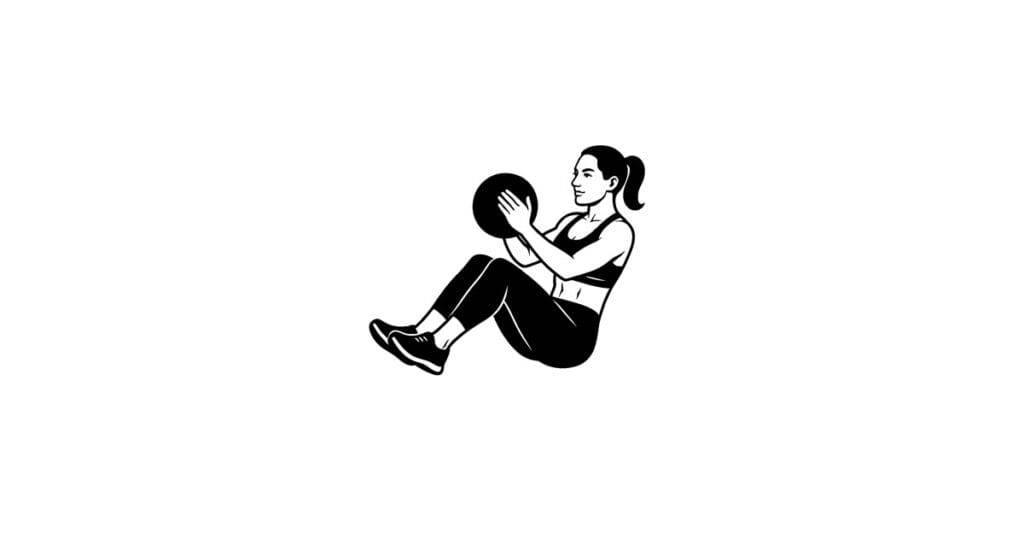
The exercise begins with the lifter lying on their back with knees bent, holding the medicine ball either at the chest for stability or extended upward for increased difficulty. As the torso lifts off the ground, the added resistance increases tension and demands greater muscular control. The movement stays small and precise, emphasizing quality of contraction over height. This encourages superior core isolation and strengthens the mind-muscle connection.

Maintaining a slow, controlled tempo helps prevent momentum-based compensation and ensures the abdominals are doing the work. Over time, this also helps reinforce posture and spinal stability by strengthening the muscles that support proper alignment. The Medicine Ball Crunch can be used to elevate training intensity within ab circuits, conditioning sessions, or full-body strength programs. Its versatility makes it suitable for beginners, who can start light, and advanced lifters who can increase load as needed.

With consistent practice, this exercise helps build stronger, more defined abs, enhances aesthetic development, and improves functional core strength. Whether performed as a standalone movement or paired with other abdominal exercises, the Medicine Ball Crunch is an excellent addition to any training routine focused on developing a strong, stable, and resilient midsection.

Primary Muscle
Abs/Core
Secondary Muscles
Hip FlexorsObliques
Equipment
Medicine Ball
Difficulty
Beginner
1

Setup Instructions

  • Lie on your back with your knees bent and feet flat on the floor.
  • Hold a medicine ball against your chest or extend it straight above your chest with both hands.
  • Engage your core and keep your lower back lightly pressed into the floor.
  • Position your head and neck in a neutral alignment.
2

Coaching Cues

  • Lift with your abs, not by pulling your head or neck forward.
  • Keep the movement small and controlled for maximum muscle engagement.
  • Exhale as you crunch upward to increase core activation.
  • Avoid letting your lower back arch off the floor.
  • Keep the medicine ball steady and do not use momentum.
3

Execution Steps

  • Begin the movement by curling your upper torso off the floor, lifting your shoulders while keeping the medicine ball stable.
  • Exhale as you contract your abs and raise your chest toward your knees.
  • Pause briefly at the top while maintaining tension through your core.
  • Slowly lower your torso back down with control, keeping your head and neck supported in a neutral position.
  • Repeat for the desired number of repetitions.
4

Common Mistakes

  • Pulling the head or neck forward instead of using core strength.
  • Using momentum rather than slow, controlled movement.
  • Letting the lower back lift excessively off the ground.
  • Raising the torso too high, turning it into a sit-up instead of a crunch.
  • Holding the ball too far overhead, causing unnecessary shoulder strain.
5

Safety Notes

  • Choose a medicine ball weight that allows full control without straining the neck or shoulders.
  • Avoid jerking movements, especially when lifting the upper body.
  • Keep your core engaged to protect your spine throughout the exercise.
  • Stop if you feel pain in your lower back or neck.
  • Maintain smooth breathing to avoid unnecessary tension or dizziness.
6

Also Known As

  • Med Ball Crunch
  • Weighted Crunch

This website uses cookies to enhance your browsing experience and ensure the site functions properly. By continuing to use this site, you acknowledge and accept our use of cookies.

Accept All Accept Required Only