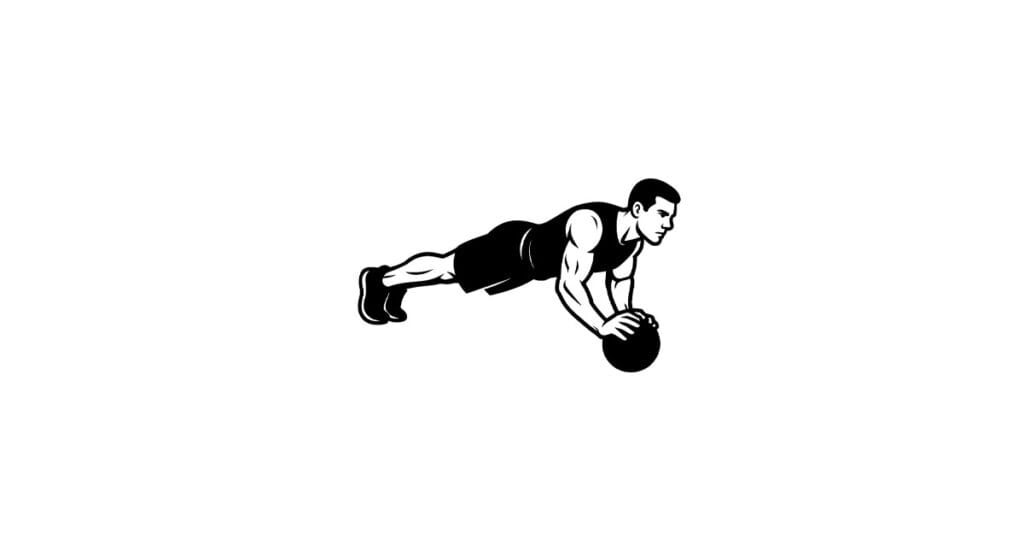
The Flat-Side BOSU Push-Up is an advanced bodyweight exercise that increases the difficulty of a traditional push-up by introducing an unstable surface. In this variation, the BOSU trainer is placed with the dome against the floor and the flat platform facing upward, while your hands grip the edges of the platform throughout the movement. The instability created by the BOSU forces the chest, shoulders, triceps, and core to work harder to maintain control, making this exercise highly effective for developing upper-body strength, shoulder stability, coordination, and functional fitness.
The primary muscle group targeted during the Flat-Side BOSU Push-Up is the chest. The pectoral muscles generate the force needed to press your body away from the BOSU during each repetition. Because the unstable platform constantly shifts beneath your hands, the chest remains engaged not only during the pressing phase but also while helping stabilize the movement throughout the entire range of motion.
Several secondary muscle groups play important supporting roles. The anterior deltoids assist with shoulder flexion and help stabilize the shoulder joint, while the triceps extend the elbows during the pressing phase. The abs and core work continuously to maintain a rigid plank position and prevent the hips from sagging or rotating. The glutes and spinal stabilizers help maintain a neutral pelvis and proper spinal alignment, creating a full-body exercise that develops strength and stability simultaneously.
One of the greatest benefits of the Flat-Side BOSU Push-Up is the increased demand placed on the body’s stabilizing muscles. Unlike a standard push-up performed on the floor, the unstable BOSU platform requires constant adjustments through the shoulders, wrists, and core to maintain balance. This improves neuromuscular coordination, joint stability, and overall body control while increasing muscular activation throughout the exercise.
Another key benefit is improved shoulder stability. The stabilizing muscles surrounding the shoulder joint remain highly active throughout every repetition as they work to control the movement of the BOSU. This increased activation can help improve shoulder strength, control, and resilience when combined with proper technique and progressive training.
The Flat-Side BOSU Push-Up also enhances functional core strength. Maintaining a stable plank position on an unstable surface requires continuous engagement of the deep abdominal muscles and glutes. This develops anti-extension stability and improves the body’s ability to transfer force efficiently between the upper and lower body during athletic movements and everyday activities.
To perform the Flat-Side BOSU Push-Up, place the BOSU trainer with the dome against the floor and the flat platform facing upward. Grip the edges of the platform with your hands slightly wider than shoulder-width apart and extend your legs behind you into a high plank. Position your shoulders directly over your wrists, brace your core, squeeze your glutes, and maintain a straight line from your head to your heels. Lower your chest toward the platform by bending your elbows under control until your chest approaches the BOSU or your elbows reach approximately 90 degrees. Press evenly through both hands to return to the starting position while keeping the BOSU as stable as possible.
Proper technique is essential for maximizing the benefits of this exercise. Focus on maintaining a rigid plank throughout every repetition while moving slowly and under control. Keep your elbows at roughly a 30 to 45-degree angle from your torso rather than flaring them excessively. Your shoulders, hips, and ankles should remain aligned from start to finish, and the BOSU should stay as steady as possible throughout the movement.
Common mistakes include allowing the hips to sag, raising the hips too high, flaring the elbows excessively, or permitting the BOSU to wobble due to poor control. Many people also rush the repetitions, sacrificing stability for speed. Slowing the movement and emphasizing control significantly improves muscle activation while reducing unnecessary stress on the shoulders and lower back.
From a safety perspective, ensure the BOSU is placed on a stable, non-slip surface before beginning the exercise. If maintaining balance or proper alignment becomes difficult, reduce the range of motion or return to standard floor push-ups until sufficient strength and stability are developed. Individuals with wrist or shoulder discomfort may also benefit from limiting the depth of each repetition or using an easier variation while building strength.
Overall, the Flat-Side BOSU Push-Up is an excellent progression from the traditional push-up for individuals looking to build upper-body strength while improving shoulder stability, core control, balance, and functional movement quality. Its combination of pressing strength and instability training makes it a valuable addition to advanced bodyweight workouts, athletic conditioning, and functional strength programs.