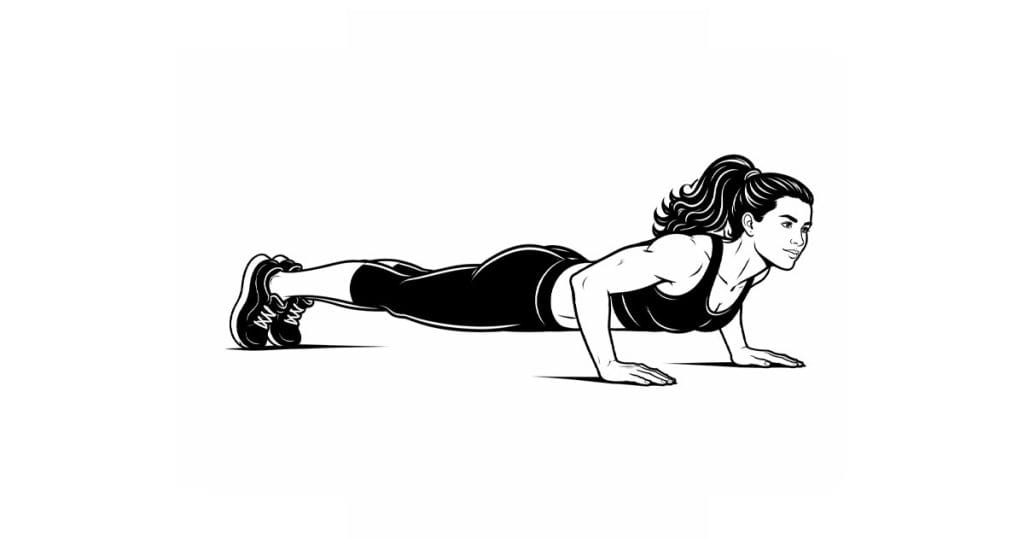
The Stability Ball Feet-Elevated Push-Up is an advanced upper-body exercise that combines the increased loading of a decline push-up with the instability of a stability ball. Elevating the feet shifts a greater percentage of body weight onto the upper body, increasing the demand placed on the chest, shoulders, and triceps. At the same time, the unstable support surface requires the core and stabilizing muscles to work continuously to maintain proper body alignment. This combination makes the exercise highly effective for developing upper-body strength, core stability, balance, and muscular coordination.
The primary muscle group targeted during the Stability Ball Feet-Elevated Push-Up is the chest. The pectoralis major generates the force required to press the body away from the floor during each repetition. Because the feet are elevated, more body weight is supported by the upper body than during a standard push-up, placing greater emphasis on the upper portion of the chest and increasing the overall strength demand.
Several secondary muscle groups assist throughout the movement. The shoulders, particularly the anterior deltoids, stabilize and flex the shoulder joint while supporting the increased load created by the elevated foot position. The triceps extend the elbows during the pressing phase, while the abs and core contract isometrically to maintain a rigid plank and prevent excessive movement of the spine. The muscles surrounding the shoulder blades and rotator cuff also remain highly active to stabilize the upper body throughout the exercise.
One of the greatest benefits of the Stability Ball Feet-Elevated Push-Up is increased upper-body pressing strength. The decline angle shifts additional body weight onto the arms and chest, making the exercise more challenging than a standard push-up. This increased resistance helps build strength that transfers well to pressing movements such as the bench press, overhead press, and athletic pushing actions.
Another major benefit is enhanced core stability and balance. The instability of the stability ball forces the abdominal muscles, glutes, and spinal stabilizers to remain engaged throughout every repetition. These muscles resist unwanted rotation and spinal movement while helping maintain proper body alignment, improving functional core strength and total-body control.
The exercise also develops shoulder stability and coordination. Because the feet rest on an unstable surface, the upper body must constantly make small adjustments to maintain balance. This continuous stabilization strengthens the shoulder stabilizers, improves neuromuscular coordination, and enhances movement efficiency during sports and resistance training.
To perform the Stability Ball Feet-Elevated Push-Up, begin in a high plank position with your hands placed slightly wider than shoulder-width apart on the floor. Position your feet or shins securely on top of a stability ball and align your body in a straight line from your head to your heels. Brace your core, squeeze your glutes, and maintain a neutral neck position before beginning the movement.
Slowly bend your elbows to lower your chest toward the floor while maintaining full-body tension. Keep your elbows angled approximately 30 to 45 degrees away from your torso as you descend. Lower until your chest is just above the floor, then press through your palms to return to the starting position while maintaining a rigid plank throughout the movement.
Proper technique is essential for maximizing results. Keep your core engaged throughout every repetition, avoid excessive movement of the stability ball, and maintain a straight body position from head to heels. Exhale as you press away from the floor and inhale as you lower yourself to reinforce proper breathing and improve stability.
Common mistakes include allowing the hips to sag, lifting the hips too high, flaring the elbows excessively, allowing the stability ball to roll uncontrollably, shortening the range of motion, or relying on momentum. These errors reduce muscle activation and increase unnecessary stress on the shoulders and lower back. Slow, controlled repetitions with proper alignment produce the greatest benefit.
From a safety standpoint, the Stability Ball Feet-Elevated Push-Up is best suited for intermediate and advanced individuals who have already mastered both the standard push-up and decline push-up. Beginners should first develop sufficient upper-body and core strength before progressing to this unstable variation. If maintaining proper form becomes difficult, return to a standard push-up or a feet-elevated push-up on a stable surface until adequate control is developed.
Overall, the Stability Ball Feet-Elevated Push-Up is an excellent exercise for strengthening the chest, shoulders, triceps, and core while improving shoulder stability, balance, and total-body control. Its combination of increased upper-body loading and instability makes it an outstanding progression for building functional strength, muscular endurance, and athletic performance.