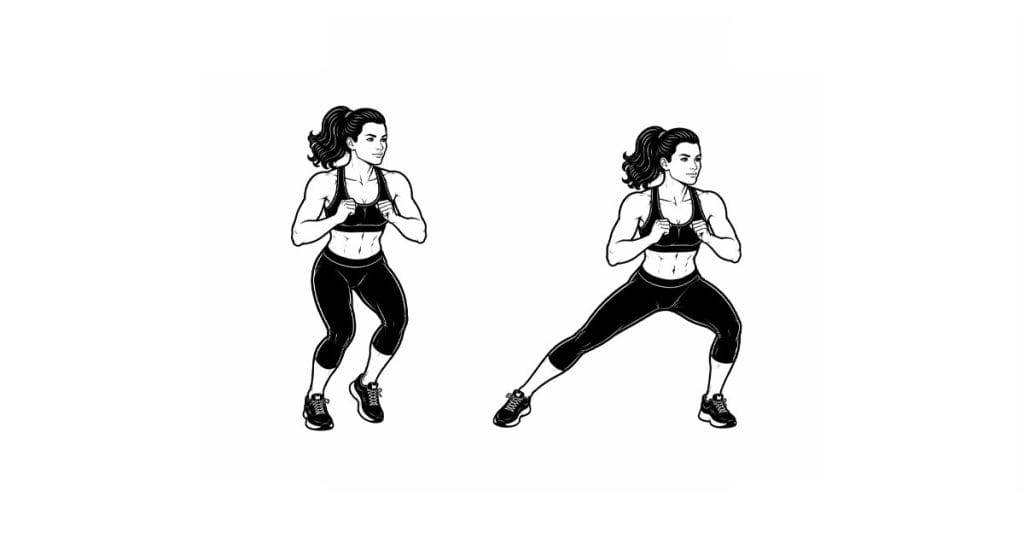
The Cable Leg Abduction is a lower-body isolation exercise designed to strengthen the hip abductors while improving hip stability and pelvic control. Performed standing with a low cable pulley and ankle attachment, this movement provides consistent resistance throughout the entire range of motion, making it an effective option for targeting the outer hip muscles.
The primary muscles worked during the cable leg abduction are the hip abductors, which are responsible for moving the leg away from the midline of the body. The glute muscles assist by stabilizing and controlling the hip, while the core muscles help maintain balance and upright posture throughout the exercise. This combination makes the movement beneficial for both strength and stability development.
One of the key advantages of the cable leg abduction is constant tension. Unlike bodyweight or band-based variations, the cable maintains consistent resistance through both the lifting and lowering phases. This continuous load increases time under tension and allows for precise control of resistance, making the exercise suitable for a wide range of training levels.
Proper setup plays a major role in maximizing effectiveness. Positioning the pulley at the lowest setting ensures the line of resistance aligns with the lateral movement of the leg. Standing sideways to the machine allows the working leg to move freely without interference from the cable. Holding onto a stable support improves balance and allows greater focus on controlled hip movement rather than stability demands.
During execution, the movement should originate from the hip joint. The leg moves outward while the torso remains upright and stable. Keeping the toes facing forward helps ensure the hip abductors remain the primary muscles involved. Rotating the foot outward often shifts emphasis away from the target muscles and reduces effectiveness.
At the top of the movement, briefly pausing reinforces muscle engagement and improves control. The leg does not need to travel excessively high to be effective. A controlled range of motion with proper alignment produces better results than forcing additional height.
The return phase is just as important as the lift. Lowering the leg slowly and under control strengthens the muscles eccentrically and improves joint stability. Allowing the cable to pull the leg back too quickly reduces muscle engagement and increases the risk of losing balance.
The cable leg abduction is especially useful for improving hip stability, which plays a critical role in overall lower-body mechanics. Strong abductors help support proper knee tracking, pelvic alignment, and balance during walking, squatting, and single-leg movements.
Because the exercise emphasizes control and isolation, lighter to moderate resistance is often more effective than heavy loading. Excessive weight can lead to torso leaning, swinging, or compensation through the lower back. Controlled movement ensures the hips remain the primary driver of the exercise.
The standing position also challenges balance and coordination, requiring the core to remain engaged throughout the set. This added stability demand reinforces proper posture and body awareness during lower-body training.
Overall, the Cable Leg Abduction is a simple yet effective exercise for strengthening the outer hips and improving lower-body stability. When performed with proper alignment, controlled tempo, and appropriate resistance, it supports stronger hips, better balance, and improved movement quality.