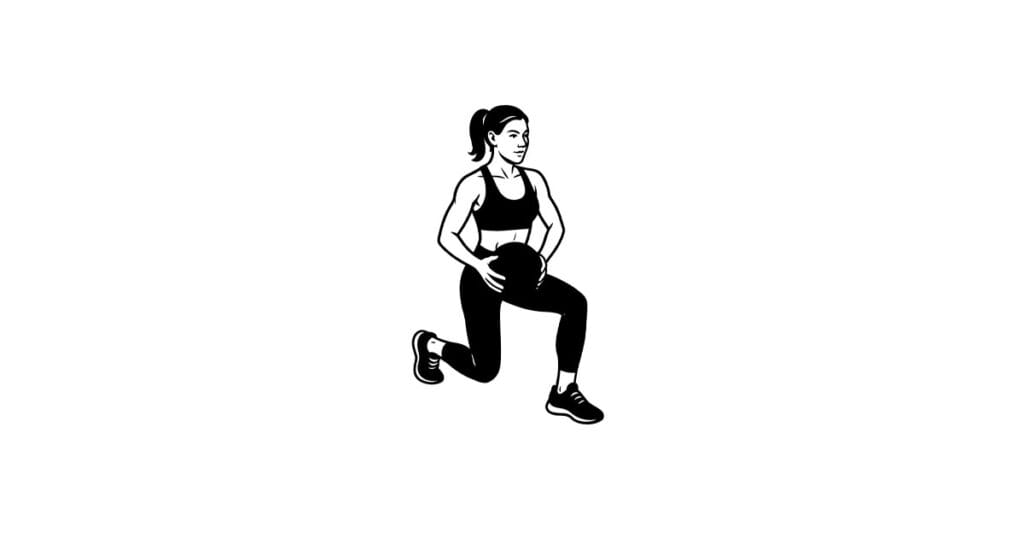
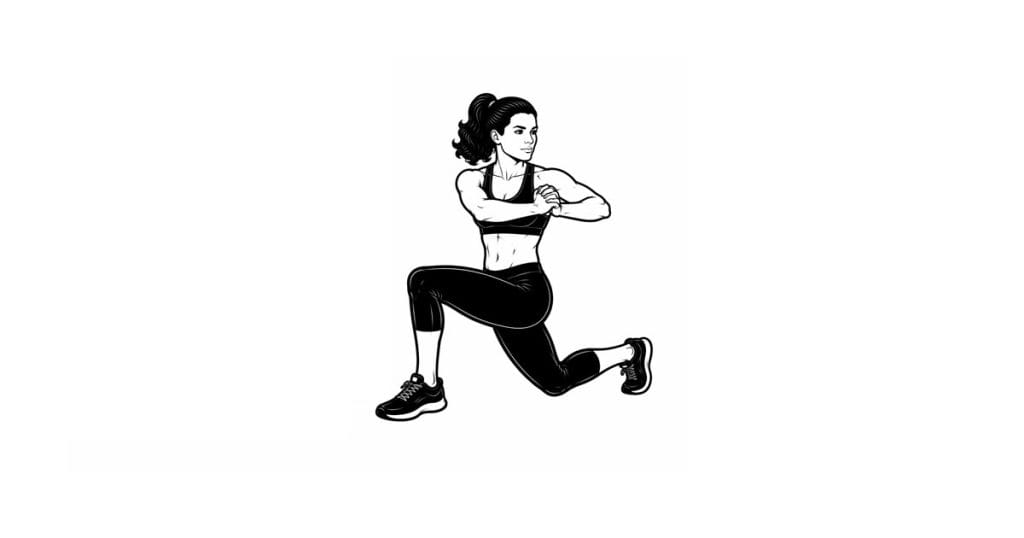
The BOSU Lunge is a functional lower-body exercise that combines the traditional lunge with the instability of a BOSU trainer to improve strength, balance, coordination, and joint stability. Placing the front foot on the BOSU creates an unstable base that forces the body to recruit additional stabilizing muscles throughout the ankles, knees, hips, and core. Compared to a standard lunge, this variation places greater emphasis on balance and neuromuscular control while still strengthening the major muscles of the lower body.
The primary muscle group targeted during the BOSU Lunge is the quads. The quadriceps control the lowering phase of the lunge and generate the force needed to extend the knee and return to the starting position. Because the front foot remains on the unstable BOSU, the quads stay highly active throughout the movement.
Secondary muscles include the glutes, hamstrings, calves, and abs/core. The gluteus maximus drives hip extension as you rise from the lunge, while the hamstrings assist with hip stability and movement control. The calves continuously stabilize the ankle on the BOSU, and the core muscles brace the torso to maintain proper posture and resist unnecessary movement. Smaller stabilizing muscles around the hips and ankles also work throughout the exercise to maintain balance.
One of the primary benefits of the BOSU Lunge is improved balance and proprioception. The unstable surface forces the body to make constant adjustments, improving joint awareness, coordination, and neuromuscular control that transfers well to sports and everyday activities.
Another key benefit is enhanced unilateral strength. Since each leg works independently, the exercise helps identify and correct strength imbalances while improving single-leg stability and lower-body control. This can contribute to better movement mechanics and reduced injury risk.
The BOSU Lunge also strengthens the core and stabilizing muscles. Maintaining an upright posture on the unstable surface requires continuous engagement of the abdominal muscles and deep core stabilizers, making the exercise more functional than a traditional stationary lunge.
To perform the exercise, place the BOSU dome-side up on a stable surface and step onto the center of the dome with one foot. Position your opposite foot behind you in a comfortable split stance. Stand tall with your chest lifted, shoulders relaxed, and core engaged.
Slowly bend both knees to lower into a controlled lunge while maintaining your balance. Lower until your front thigh approaches parallel to the floor or as far as your mobility allows while keeping proper alignment. Press firmly through your front foot to return to the starting position, completing all repetitions before switching sides.
Proper technique is essential for maximizing results. Keep your front knee aligned with your toes, maintain an upright torso, and move straight up and down without excessive side-to-side shifting. Perform each repetition slowly and under control to fully benefit from the BOSU’s instability.
Common mistakes include allowing the front knee to collapse inward, leaning too far forward, relying too heavily on the back leg, standing too close or too far from the BOSU, and rushing through repetitions. These errors reduce stability, decrease muscle activation, and increase stress on the joints.
From a safety perspective, begin with bodyweight until you can confidently maintain balance and proper alignment. Perform the exercise on a stable, non-slip surface and focus on controlled movement rather than depth. If needed, use a nearby support while learning the exercise or reduce the range of motion until stability improves.
Overall, the BOSU Lunge is an excellent exercise for developing lower-body strength, balance, coordination, and core stability. Its combination of unilateral strength training and instability makes it a valuable progression from traditional lunges for functional fitness, athletic performance, and injury prevention.