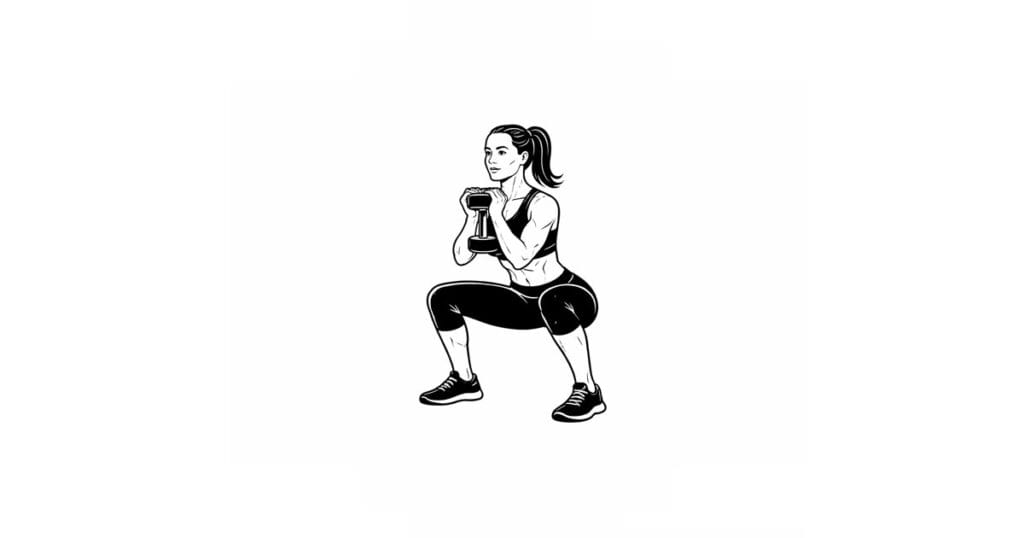
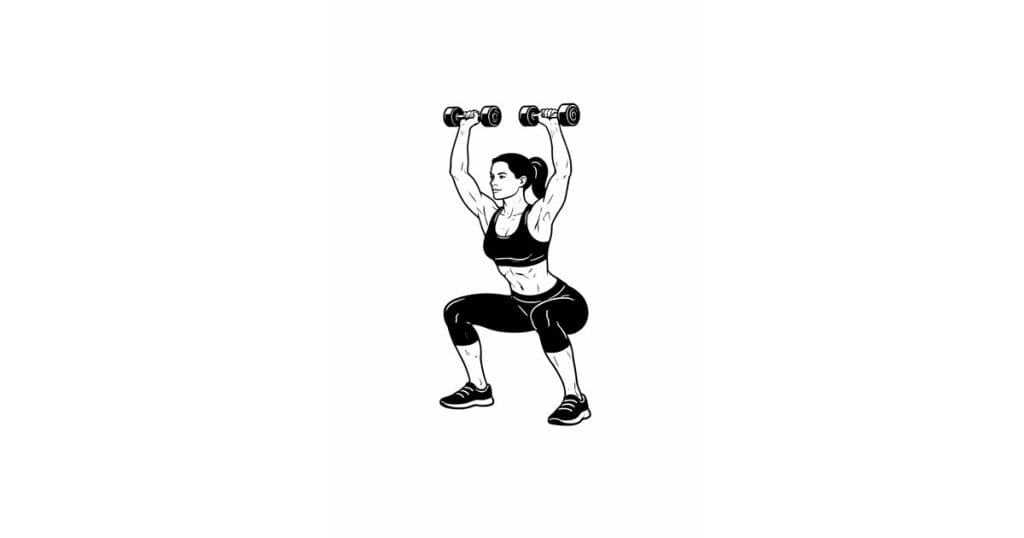
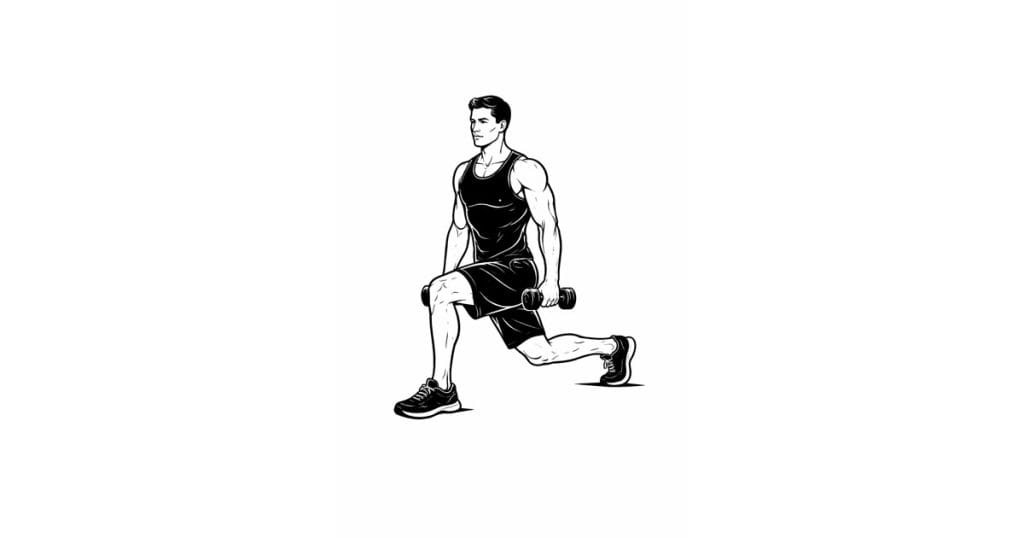
The Two-Handed Kettlebell Overhead Step-Up is a lower-body strength exercise performed while holding one kettlebell overhead with both hands. The movement primarily targets the quadriceps while engaging the glutes, hamstrings, calves, shoulders, triceps, upper back, and core. By combining a controlled step-up with a two-handed overhead hold, the exercise develops lower-body strength, balance, shoulder stability, and full-body coordination. Maintaining the kettlebell overhead also challenges posture and trunk control throughout the movement.
Unlike a traditional step-up performed with weights at the sides, the Two-Handed Kettlebell Overhead Step-Up requires the kettlebell to remain centered above the head. Both hands hold the same kettlebell, creating a symmetrical overhead load that requires coordinated shoulder and core stability. The exercise combines unilateral lower-body movement with bilateral upper-body stabilization, making proper technique important for maintaining balance and control.
To perform the Two-Handed Kettlebell Overhead Step-Up, begin by positioning a stable box or step on a flat surface. Select a height that allows you to step onto the platform without excessive forward leaning or loss of balance. Stand facing the box with your feet approximately hip-width apart. Hold one kettlebell securely with both hands around the sides of its handle.
Carefully raise the kettlebell overhead until your arms reach a comfortable extended position. Keep your wrists relatively straight and position the kettlebell above your head. Maintain stable shoulders and engage your abdominal muscles. Your ribs should remain aligned over your pelvis to prevent excessive lower-back extension.
Begin the movement by lifting one foot and placing it firmly on top of the box. Position your entire foot on the platform to establish a stable base. Keep your knee aligned in the same general direction as your toes. Avoid placing only the front portion of your foot on the box, as this can reduce stability and make the upward movement more difficult to control.
Shift your body weight onto the elevated leg and push firmly through that foot. Extend your knee and hip to raise your body onto the box. Focus on generating force through the elevated leg rather than pushing excessively from the foot remaining on the floor. Maintain a stable overhead position as your body rises.
Continue stepping upward until your supporting leg reaches a comfortable extended position. Bring your trailing foot onto the box and stand tall with both feet supported. Keep your arms extended and the kettlebell centered overhead. Avoid leaning backward or allowing the weight to drift excessively forward.
To return to the starting position, step backward with one foot and lower your body toward the floor. Control the descent through the supporting leg while maintaining abdominal tension. Once the descending foot reaches the floor, transfer your weight carefully and bring the other foot down. Keep the kettlebell stable overhead throughout the movement.
The quadriceps are the primary muscles responsible for extending the knee as the body rises onto the box. They also help control knee flexion during the lowering phase. The glutes contribute to hip extension and assist with maintaining pelvic stability, particularly when the body is supported primarily by one leg.
The hamstrings assist with hip movement and lower-body stabilization. The calves contribute to ankle stability and help maintain balanced pressure through the supporting foot. Together, these muscles support controlled stepping and efficient force production during both the upward and downward phases.
The shoulders, triceps, traps, and upper-back muscles help maintain the overhead kettlebell position. The shoulders stabilize the arms, while the triceps help maintain elbow extension. The upper-back muscles support shoulder blade positioning, and the forearms maintain a secure grip on the kettlebell handle.
The core muscles play an important role in stabilizing the torso against the overhead load. Maintaining abdominal tension helps prevent excessive backward leaning, rib flaring, and unnecessary spinal movement. Proper trunk stability allows the lower body to perform the step-up without compromising the overhead position.
One common mistake is using excessive momentum to step onto the box. Pushing forcefully from the trailing foot can reduce the contribution of the elevated leg. Instead, focus on transferring your weight onto the supporting foot and extending the knee and hip with control.
Another common mistake is allowing the kettlebell to drift forward during the step-up. This can shift the body’s center of mass and make balance more difficult. Keep the kettlebell centered overhead and maintain stable shoulder positioning throughout the movement.
Choosing a box that is too high can also compromise technique. Excessive height may cause forward leaning, hip rotation, or difficulty maintaining knee alignment. Select a height that allows controlled stepping without sacrificing overhead stability or lower-body positioning.
The Two-Handed Kettlebell Overhead Step-Up differs from the Kettlebell Front Rack Step-Up because the weight remains overhead rather than resting near the chest. It also differs from the Single-Arm Kettlebell Overhead Step-Up because both hands support one kettlebell, creating a more symmetrical overhead load.
Overall, the Two-Handed Kettlebell Overhead Step-Up is an effective exercise for developing quadriceps strength, glute strength, unilateral balance, shoulder stability, and core control. When performed with one appropriately weighted kettlebell held securely in both hands, a stable platform, controlled stepping mechanics, and consistent overhead alignment, it provides a challenging combination of lower-body strength and full-body stability.