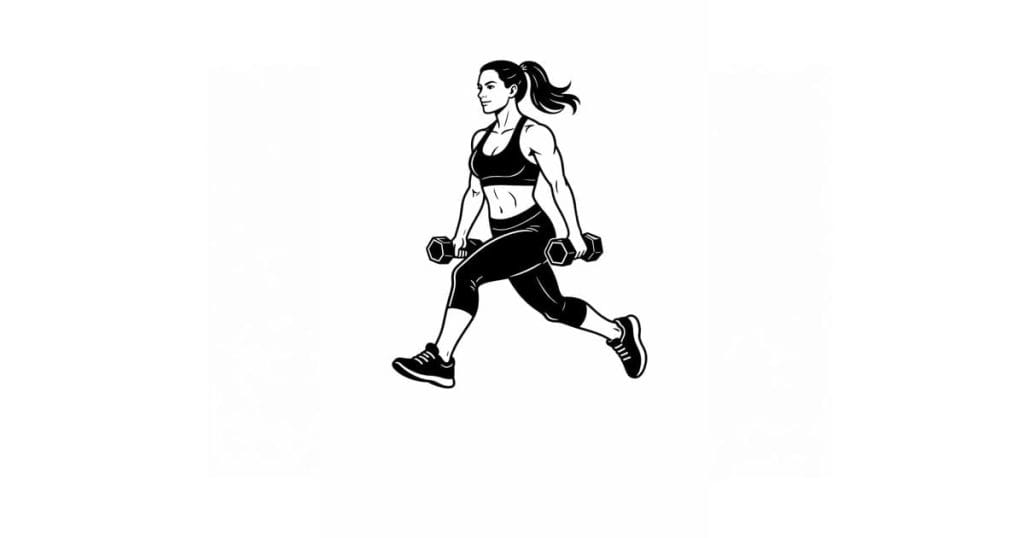
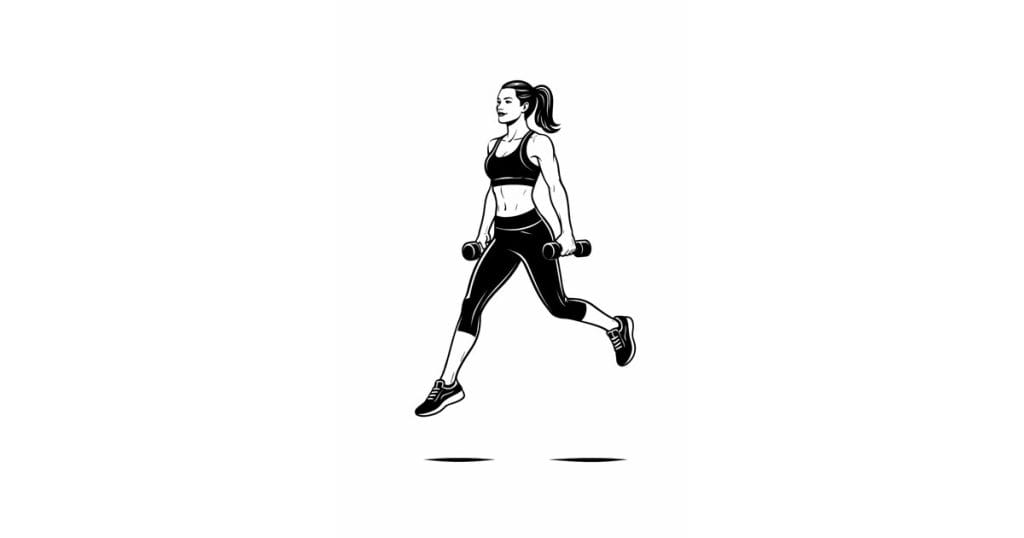
The Kettlebell Lunge to Front Kick is a dynamic lower-body strength exercise that combines a reverse lunge with a controlled forward kick. The movement primarily targets the quadriceps while engaging the glutes, hamstrings, hip flexors, calves, adductors, core, and forearms. By combining unilateral leg training with a kicking movement, the exercise develops lower-body strength, balance, coordination, and muscular control while challenging the body’s ability to transition between stable and dynamic positions.
The Kettlebell Lunge to Front Kick begins with a reverse lunge followed by a front kick using the leg that steps backward. This sequence allows the supporting leg to produce force during the upward phase while the moving leg transitions into hip flexion and knee extension. The kettlebells provide additional resistance during the lunge and increase the demand on the muscles responsible for maintaining balance and torso stability.
To perform the Kettlebell Lunge to Front Kick, stand tall with your feet approximately hip-width apart. Hold one kettlebell in each hand with your arms resting naturally at your sides. Keep your palms facing inward, shoulders relaxed, and abdominal muscles engaged. Establish a stable standing position before beginning the movement.
Take a controlled step backward with your right leg while keeping your left foot planted. Bend both knees to lower your body into a reverse lunge. Your front knee should track in the same general direction as your toes, while your rear knee moves toward the floor. Maintain a comfortable lunge depth and keep your torso controlled throughout the descent.
From the bottom of the lunge, push firmly through your left foot to extend your front knee and hip. As your body rises, bring your right leg forward without immediately placing it on the floor. Lift your right knee toward your chest while maintaining balance on your left leg.
Once your knee is raised, extend your right leg forward to perform a controlled front kick. The kick should travel primarily forward rather than upward, although the exact height will depend on individual mobility and control. Avoid forcefully locking the knee or using excessive momentum to increase kicking height.
After extending the kicking leg, bend your knee to retract your lower leg toward your body. Lower your right foot to the floor with control and regain a stable standing position. Repeat the movement on the same side or alternate legs while maintaining consistent technique and balance.
The quadriceps are the primary muscles involved in the exercise. During the lunge, they control knee flexion as the body lowers and produce knee extension during the upward phase. During the front kick, the quadriceps of the kicking leg extend the knee to move the lower leg forward. This combination challenges the quadriceps through both weight-bearing and open-chain movements.
The glutes contribute to hip extension as the body rises from the lunge and help stabilize the pelvis while balancing on one leg. The hamstrings assist with hip control and help decelerate the kicking leg during the extension and retraction phases. The adductors contribute to hip stability and help maintain proper lower-body alignment.
The hip flexors play an important role during the kicking movement. They lift the thigh forward as the knee rises toward the chest and help position the leg before knee extension. The ability to coordinate hip flexion with knee extension is important for performing a smooth and controlled front kick.
The calves assist with ankle stability during the lunge and single-leg balance phase. As the body transitions from the reverse lunge into the kick, the supporting ankle must remain stable while the center of mass changes. Maintaining balanced pressure through the supporting foot helps control unnecessary movement.
The core muscles help stabilize the torso throughout the exercise. Because the body moves from a split stance into a single-leg position, the abdominal muscles must resist excessive leaning and rotation. Keeping the core engaged helps maintain an upright posture and allows the kicking leg to move independently without pulling the torso out of position.
The forearms and hands contribute by maintaining a secure grip on the kettlebells. The weights should remain relatively steady at the sides rather than swinging during the lunge or kick. Excessive kettlebell movement can shift the body’s balance and make the transition between positions more difficult.
One common mistake is using excessive kicking height. Attempting to kick higher than your available mobility allows can cause backward leaning, loss of balance, or uncontrolled knee extension. Focus on lifting the knee, extending the leg smoothly, and maintaining a stable torso rather than maximizing the height of the kick.
Another common mistake is rushing the transition from the lunge into the front kick. Moving too quickly without establishing balance can cause the supporting foot to shift or the torso to rotate. Drive upward with control, stabilize on the supporting leg, and then perform the kick deliberately.
The Kettlebell Lunge to Front Kick differs from a traditional Kettlebell Lunge because it adds a dynamic single-leg kicking movement after the lunge. It also differs from a standard front kick because the supporting leg must first produce force to rise from a loaded lunge position. This combination increases the coordination and balance demands of the exercise.
Overall, the Kettlebell Lunge to Front Kick is an effective exercise for developing quadriceps strength, hip flexor control, unilateral balance, and lower-body coordination. When performed with appropriate resistance, stable knee alignment, controlled kicking mechanics, and a deliberate transition between movements, it provides a challenging variation of the traditional kettlebell lunge.