The Barbell Sumo Deadlift is a powerful compound movement that targets the glutes, hamstrings, and adductors while reducing lower back strain compared to the conventional deadlift. Characterized by a wide stance and a narrow, inside grip, this variation allows for a more upright torso position, making it ideal for lifters with hip or lower back mobility limitations. The wider stance shortens the range of motion, enabling heavier lifts and greater hip and leg engagement, while still strengthening the entire posterior chain.
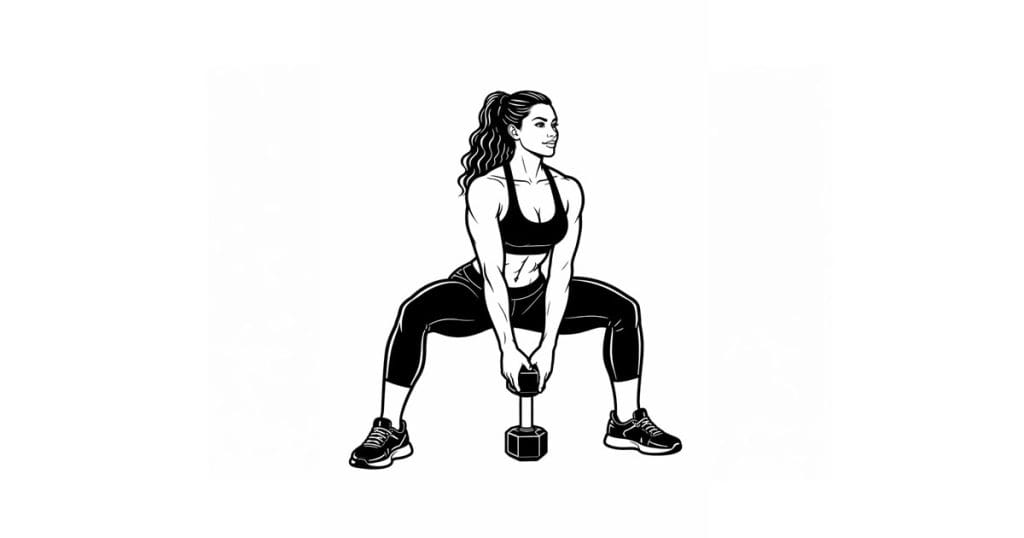
To perform the movement, the lifter positions their feet wide with toes slightly turned out, grips the bar between the legs, and keeps the chest tall and back flat. Driving through the heels and extending the hips and knees together brings the bar upward in a smooth, controlled motion. Proper form requires keeping the bar close to the body, engaging the lats, and pushing the knees outward to maintain alignment. The sumo setup shifts more demand to the hips and glutes while minimizing lower back load, making it an effective and safer alternative for many lifters.
The Barbell Sumo Deadlift is particularly beneficial for developing hip drive, core stability, and overall lower-body strength. It enhances athletic performance, supports balanced muscular development, and improves pulling mechanics for other strength movements. Common errors include rounding the back, lifting the hips too quickly, or allowing the bar to drift away from the body. By maintaining proper technique and gradually increasing load, lifters can safely build strength and power.
When performed correctly, the Barbell Sumo Deadlift enhances posterior chain development, improves mobility, and reinforces hip-dominant strength patterns. It remains a cornerstone movement for intermediate and advanced lifters seeking to increase lifting capacity, build muscle, and develop functional, powerful lower-body strength.