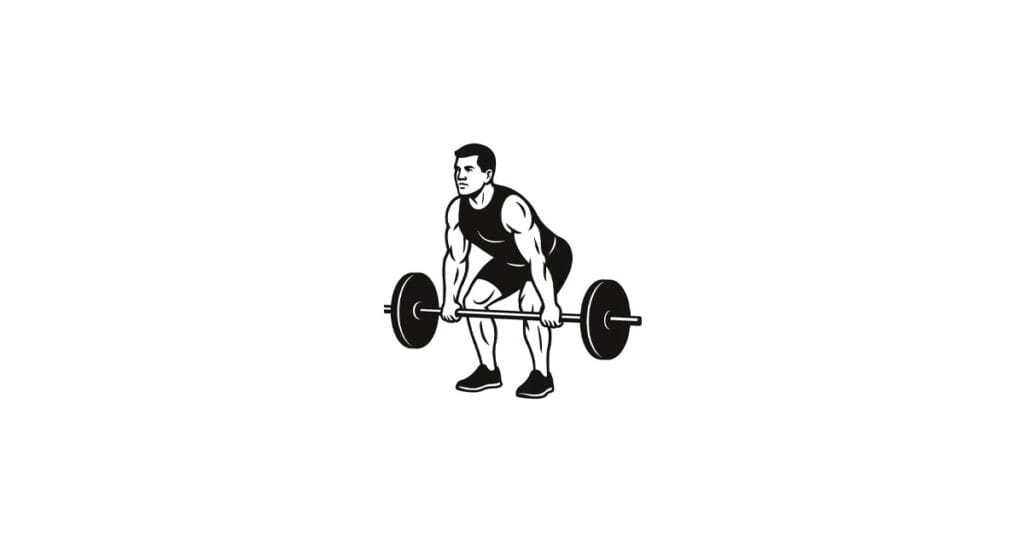
Barbell Deadlift

Muscle Hamstrings
0:00
/
0:00

How to do the Barbell Deadlift

The Barbell Deadlift is one of the most fundamental and effective strength-training exercises, targeting the hamstrings, glutes, lower back, and core while also engaging the traps, forearms, and quads. As a compound hinge movement, it mimics the act of lifting heavy objects from the ground and is widely regarded as a cornerstone for building strength, athletic performance, and functional fitness.

To perform the deadlift, position the barbell over the midfoot, hinge at the hips, and grip the bar with both hands while keeping a neutral spine and braced core. Drive through the heels to stand tall, extending the hips and knees simultaneously while keeping the bar close to the body. Lower the bar back to the ground by hinging at the hips and bending the knees in a controlled manner. Proper execution ensures efficient muscle recruitment and minimizes stress on the lower back.

The deadlift is considered a true test of total-body strength, as it recruits multiple large muscle groups and demands stability, coordination, and grip strength. When performed with correct technique, it builds raw power, improves posture, and enhances everyday movement patterns that involve lifting and carrying. Beginners are encouraged to master the hip hinge and core bracing with lighter loads before progressing to heavier weights.

For advanced lifters, the barbell deadlift develops explosive pulling power, strengthens the posterior chain, and carries over to sports performance and other compound lifts. However, poor technique—such as rounding the spine, jerking the bar off the floor, or letting the bar drift away from the body—can increase injury risk. Maintaining spinal alignment, engaging the core, and using progressive overload safely are critical for long-term success.

The Barbell Deadlift remains a foundational exercise that belongs in nearly every well-rounded strength program. Its unmatched benefits in strength, hypertrophy, and functional performance make it essential for athletes, powerlifters, and fitness enthusiasts striving to build a strong and resilient body.
Primary Muscle
Hamstrings
Secondary Muscles
ForearmsGlutesLower BackQuadsTraps
Equipment
BarbellPlate
Difficulty
Intermediate
1

Setup Instructions

  • Place a loaded barbell on the floor in front of you.
  • Stand with feet about hip-width apart, toes pointed slightly outward.
  • Position the barbell over the midfoot and hinge at the hips to grip the bar just outside your knees.
  • Keep your back straight, chest lifted, and shoulders slightly ahead of the bar.
  • Engage your core and brace before lifting.
2

Coaching Cues

  • Keep the barbell close to your shins throughout the lift.
  • Engage your lats to stabilize the bar path.
  • Brace your core and avoid rounding your back.
  • Push the floor away rather than pulling with your arms.
  • Finish with full hip extension at the top.
3

Execution Steps

  • Drive through your heels to lift the barbell from the ground.
  • Extend your hips and knees simultaneously while keeping the bar close to your body.
  • Stand tall at the top with chest lifted and shoulders back.
  • Lower the bar under control by hinging at the hips and bending your knees.
  • Return the bar to the floor and reset before the next rep.
4

Common Mistakes

  • Rounding the lower back during the lift.
  • Starting with hips too high or too low.
  • Allowing the bar to drift away from the body.
  • Jerking the bar off the floor instead of controlled tension.
  • Overextending the back at the top.
5

Safety Notes

  • Always use proper bracing to protect the spine.
  • Begin with manageable weight to learn technique.
  • Use a flat, stable surface to avoid slipping.
  • Consider lifting straps or chalk if grip strength limits performance.
  • Avoid bouncing the bar off the floor between reps.
6

Also Known As

  • Conventional Deadlift
  • Standard Deadlift

This website uses cookies to enhance your browsing experience and ensure the site functions properly. By continuing to use this site, you acknowledge and accept our use of cookies.

Accept All Accept Required Only