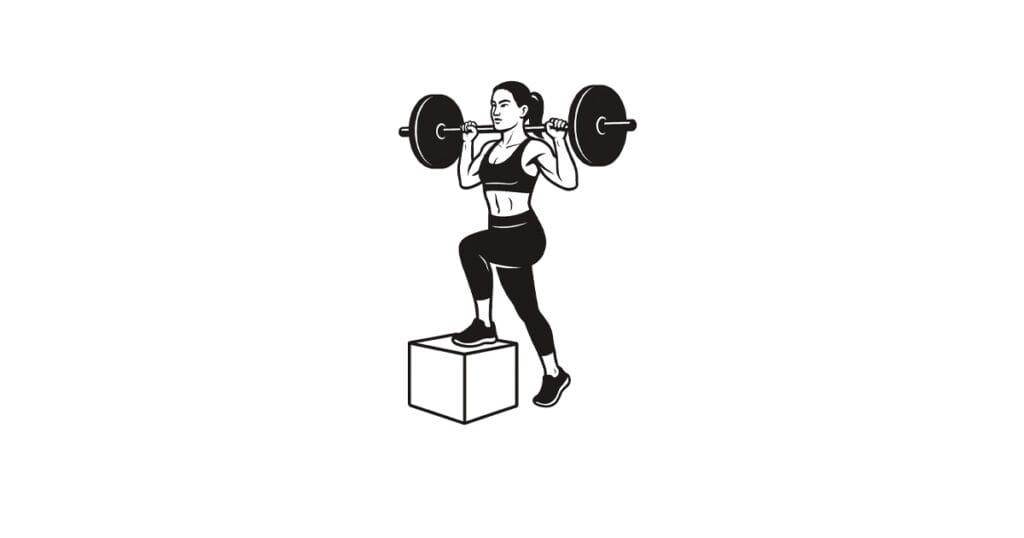
The Barbell Curtsy Lunge is a unilateral lower body exercise that targets the glutes, quads, and hamstrings while also engaging the adductors and core for stability. Performed with a barbell positioned across the upper back, this variation involves stepping one leg diagonally behind the other into a curtsy-like stance before lowering into a lunge. The diagonal step introduces a unique challenge for balance and coordination, making it more dynamic than a traditional forward or reverse lunge.
This exercise places particular emphasis on the gluteus medius and minimus, muscles responsible for hip stability and lateral strength. The adductors are also heavily activated due to the crossover motion, providing additional benefits for balanced leg development and hip mobility. Core engagement is critical throughout the movement to keep the torso upright and prevent rotation as the rear leg crosses behind.
Beyond strength and hypertrophy, the Barbell Curtsy Lunge is effective for addressing muscular imbalances between legs and improving functional movement patterns relevant to athletics and daily activities. Its ability to train stability and coordination makes it especially valuable for athletes who rely on lateral and diagonal movements.
Common mistakes include stepping too far behind, leaning the torso forward, or failing to maintain knee alignment over the front foot. These errors reduce effectiveness and increase the risk of strain on the knees or hips. To maximize results, lifters should use a controlled tempo, focus on range of motion, and prioritize posture over heavy loading.
The Barbell Curtsy Lunge is best suited for intermediate lifters, as it requires balance, body control, and proper squat/lunge mechanics before adding significant resistance. When executed consistently with proper form, it strengthens the glutes and thighs, improves coordination, and contributes to balanced lower body development, making it a valuable addition to any leg training routine.