The Stability Ball Back Extension is a bodyweight posterior chain exercise that strengthens the lower back, glutes, hamstrings, and core while improving spinal stability and hip extension. Performed by lying face down over a stability ball and lifting the torso through controlled extension, this exercise develops muscular endurance and postural strength while the unstable surface increases the demand on the stabilizing muscles. It is an effective exercise for improving back health, posture, and functional movement.
The primary muscle group targeted during the Stability Ball Back Extension is the lower back, specifically the erector spinae. These muscles extend the spine and maintain an upright posture throughout the movement. As you lift your torso from the flexed position, the erector spinae contract to raise the upper body while stabilizing the spine. Regular training can improve lower back endurance, posture, and movement efficiency.
Secondary muscles include the glutes, hamstrings, and abs/core. The gluteus maximus assists with hip extension and stabilizes the pelvis, while the hamstrings support hip extension and help control the movement. The abdominal muscles contract isometrically throughout the exercise to brace the spine and prevent excessive lumbar motion, creating balanced core stability during every repetition.
One of the primary benefits of the Stability Ball Back Extension is improved posterior chain strength. Strengthening the muscles along the back of the body helps counteract the effects of prolonged sitting, improves posture, and enhances performance in exercises such as squats, deadlifts, and other hip-dominant movements.
Another major benefit is enhanced core stability and balance. Because the stability ball creates an unstable surface, the core and hip stabilizers must continuously make small adjustments to maintain alignment. This increases neuromuscular coordination and improves overall trunk stability.
The exercise also promotes better hip extension mechanics. Rather than relying solely on the lower back, proper technique teaches the glutes and hips to contribute to extension, helping distribute forces more efficiently and reducing unnecessary stress on the lumbar spine.
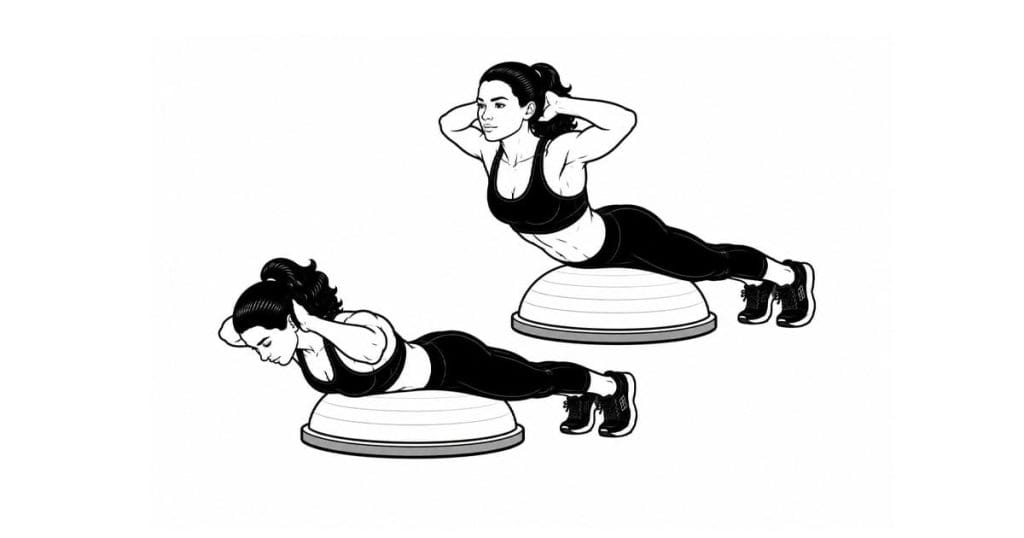
To perform the Stability Ball Back Extension, place a stability ball on a flat, non-slip surface and lie face down so your hips rest on the center of the ball. Secure your feet against a wall or position them wide apart on the floor for stability. Begin with your torso slightly flexed over the ball while maintaining a neutral spine. Brace your core, then lift your chest by extending through the hips and lower back until your body forms a straight line from your shoulders to your heels.
Pause briefly at the top while squeezing your glutes and maintaining a neutral spine. Slowly lower your torso back to the starting position under control. Every repetition should be smooth and deliberate without bouncing or using momentum.
Proper technique is essential for maximizing results. Focus on reaching a neutral body position rather than hyperextending your back at the top. Keep your head aligned with your spine, maintain steady core engagement, and allow the glutes and lower back to work together throughout the movement.
Common mistakes include lifting too high, excessively arching the lower back, using momentum to raise the torso, looking upward and straining the neck, or positioning the stability ball too far forward or backward. These errors reduce muscle activation and may increase stress on the spine. Controlled movement and proper setup produce the best results.
From a safety perspective, perform the exercise on a stable, non-slip surface and keep your movements slow and controlled. Beginners should start with bodyweight only before progressing to more challenging arm positions or light external resistance. If discomfort occurs in the lower back, reduce the range of motion and focus on maintaining proper hip extension mechanics.
Overall, the Stability Ball Back Extension is an excellent exercise for strengthening the lower back, glutes, hamstrings, and core while improving posture, spinal stability, and functional movement. Its combination of posterior chain strengthening and instability training makes it a valuable addition to rehabilitation programs, athletic training, and general fitness routines.