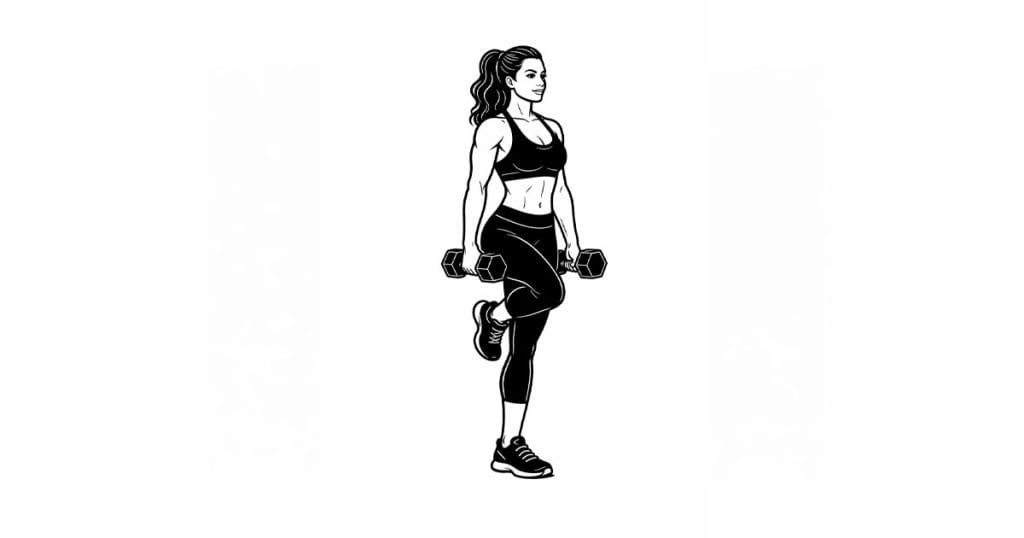
The single-leg balance with multi-directional reach is an effective exercise designed to improve balance, coordination, and lower body stability. This movement challenges the body’s ability to maintain control on one leg while reaching in various directions, making it a valuable addition to balance training, injury prevention routines, and functional fitness programs. It is commonly used in both general fitness and rehabilitation settings due to its ability to enhance proprioception and joint stability.
The primary focus of this exercise is balance. By standing on one leg and performing controlled reaching movements, the body must continuously adjust to maintain stability. This activates a wide range of stabilizing muscles and improves neuromuscular coordination, which is essential for efficient movement and injury prevention.
Several secondary muscle groups contribute to the effectiveness of this exercise. The glutes play a key role in stabilizing the hip and maintaining alignment, while the quadriceps support the knee joint. The hamstrings assist in controlling movement and maintaining balance, and the core muscles help stabilize the torso throughout the exercise. Additionally, the muscles around the ankle work continuously to maintain proper foot positioning and prevent wobbling.
One of the main benefits of the single-leg balance with multi-directional reach is improved proprioception. Proprioception refers to the body’s ability to sense its position in space. Enhancing this ability can lead to better coordination, improved athletic performance, and a reduced risk of injury.
This exercise is also highly functional. Many daily activities and sports movements require balance on one leg, such as walking, running, and changing direction. Training with multi-directional reaches helps prepare the body for these real-world demands by improving control and stability in various planes of motion.
Another advantage is its versatility. The exercise can be easily modified by adjusting the range of motion, speed, or number of directions. Beginners can start with smaller, controlled reaches, while more advanced individuals can increase the distance and complexity of the movement.
To perform the exercise, stand on one leg with a slight bend in the knee and reach the opposite leg in different directions, such as forward, sideways, and backward. Return to the starting position after each reach while maintaining balance and control.
Proper technique is essential for maximizing the benefits of this movement. Focus on keeping your torso upright, your hips level, and your movements controlled. Avoid leaning excessively or using momentum, as this can reduce effectiveness and increase the risk of losing balance.
Common mistakes include locking the standing knee, allowing the hips to rotate, and rushing through the movement. These errors can compromise stability and reduce the overall effectiveness of the exercise.
From a safety perspective, it is important to perform this exercise in a controlled manner. Using a wall or stable object for support can help beginners maintain balance while developing confidence and control.
Overall, the single-leg balance with multi-directional reach is a highly effective exercise for improving balance, coordination, and lower body stability. Its functional nature and adaptability make it a valuable addition to any fitness or rehabilitation routine.