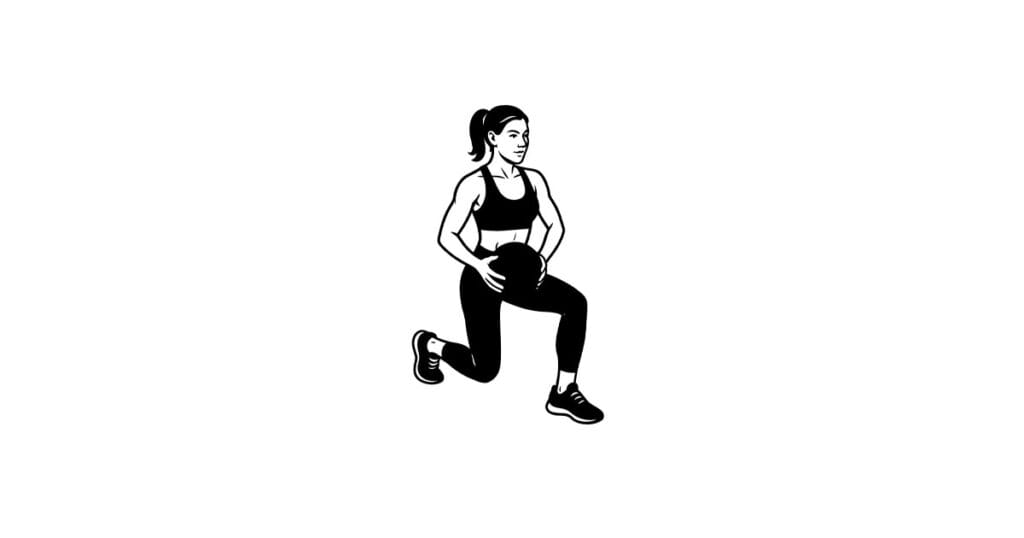
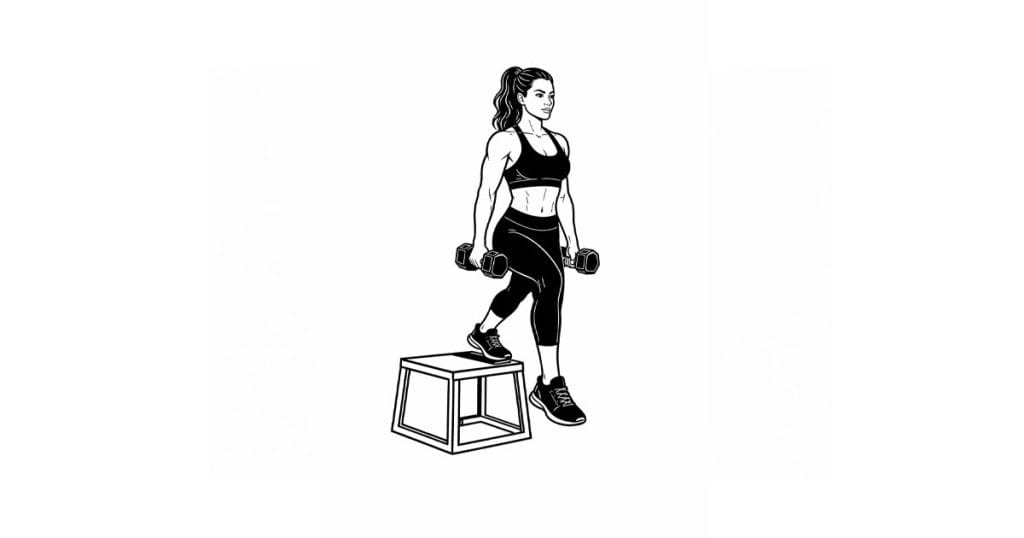
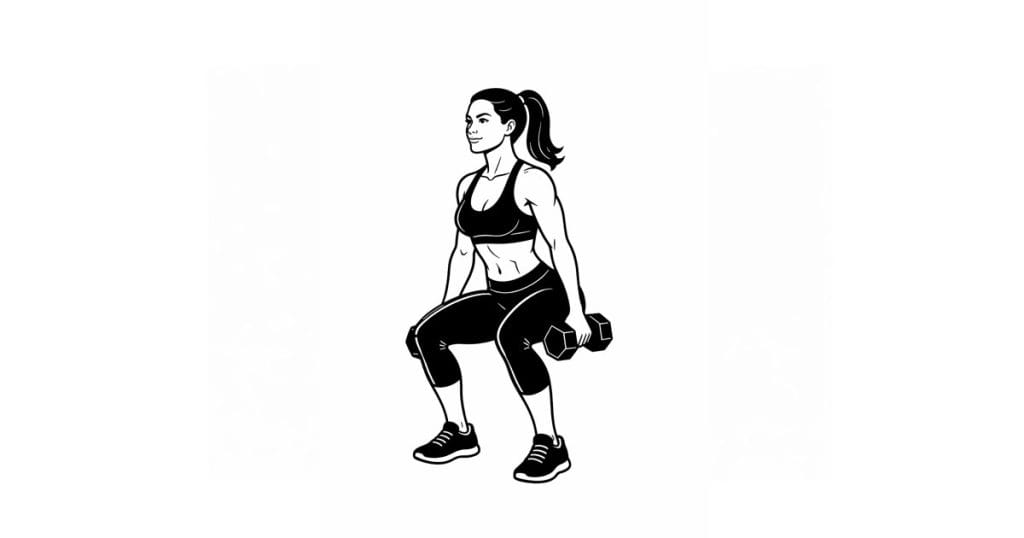
The Single-Arm Kettlebell Overhead Squat is an advanced lower-body strength exercise that combines a squat with unilateral overhead stability. The movement primarily targets the quadriceps while engaging the glutes, hamstrings, shoulders, upper back, core, and obliques. By holding a kettlebell overhead with one arm while performing a squat, the exercise challenges lower-body strength, shoulder stability, balance, mobility, and full-body coordination.
Unlike a traditional kettlebell goblet squat, the Single-Arm Kettlebell Overhead Squat requires the weight to remain above the shoulder throughout the movement. This overhead position creates additional stability demands and requires coordinated movement between the shoulders, spine, hips, knees, and ankles. Because the kettlebell is held on only one side, the abdominal muscles must also resist excessive leaning and rotation.
To perform the Single-Arm Kettlebell Overhead Squat, begin standing with your feet approximately shoulder-width apart or slightly wider. Hold a kettlebell in one hand and bring it into the rack position near your shoulder. Press the kettlebell overhead until your working arm reaches a comfortable extended position. Keep your wrist relatively straight and position the kettlebell above your shoulder.
Engage your abdominal muscles and maintain balanced pressure through both feet. Your free arm can extend slightly forward or outward to assist with balance. Keep your shoulders stable and your torso upright without excessively arching your lower back. Establish a secure overhead position before beginning the squat.
Initiate the movement by bending your hips and knees simultaneously. Lower your hips between your legs while keeping your chest lifted and your spine controlled. Allow your knees to travel naturally in the same general direction as your toes. Maintain contact between your heels and the floor throughout the descent.
As you lower into the squat, keep the kettlebell balanced above your shoulder. Your working arm should remain extended while your shoulder blade moves naturally to support the overhead position. Avoid allowing the kettlebell to drift excessively forward or backward. Small adjustments in torso angle may be necessary to maintain balance, but excessive leaning or twisting should be avoided.
Continue descending until you reach the deepest squat position you can control while maintaining stable overhead alignment. The appropriate depth depends on your hip mobility, ankle mobility, shoulder flexibility, and ability to maintain spinal stability. Avoid forcing additional depth if your heels lift, your lower back rounds excessively, or your overhead arm loses position.
At the bottom of the squat, maintain abdominal tension and balanced pressure through your feet. Keep your knees aligned with your toes and your working shoulder stable. Pause briefly if you can maintain control without allowing the kettlebell to shift away from its balanced position.
To return to standing, push firmly through your feet and extend your knees and hips. Keep the kettlebell balanced overhead as your body rises. Maintain a stable torso and avoid allowing the weight to pull you sideways. Finish standing tall with your hips and knees extended before beginning another repetition.
The quadriceps are the primary muscles responsible for extending the knees during the upward phase. They also help control knee flexion as the body descends. The glutes contribute to hip extension and assist with maintaining pelvic stability throughout the squat. The hamstrings and adductors support coordinated hip and knee movement.
The shoulders, traps, and upper-back muscles play an important role in maintaining the overhead position. These muscles help stabilize the arm and shoulder blade while the lower body moves underneath the kettlebell. The forearms contribute to grip strength and wrist stability, helping maintain control of the weight.
The core and obliques are especially important because the kettlebell creates an uneven load. This unilateral resistance encourages the torso to lean or rotate, requiring the abdominal muscles to maintain alignment. Proper core engagement helps stabilize the spine and supports controlled movement during both the descending and ascending phases.
One common mistake is allowing the kettlebell to drift forward during the squat. This can shift the center of mass and make balance more difficult. Focus on maintaining the kettlebell above your shoulder while adjusting your squat depth to preserve stable overhead positioning.
Another common mistake is leaning excessively toward the unloaded side. Although some natural torso adjustment may occur, excessive sideways movement reduces stability. Maintain abdominal tension, keep your feet firmly planted, and avoid using torso rotation to compensate for limited shoulder mobility.
Limited ankle, hip, or shoulder mobility can also affect technique. If you cannot maintain a stable overhead position while squatting, reduce the depth or resistance rather than forcing the movement. Controlled range of motion is more important than achieving maximum squat depth.
The Single-Arm Kettlebell Overhead Squat differs from the Double Kettlebell Overhead Squat because only one arm supports the overhead load. This creates greater unilateral stability demands. It also differs from the Kettlebell Goblet Squat because the weight remains overhead instead of being held close to the chest.
Overall, the Single-Arm Kettlebell Overhead Squat is an effective exercise for developing quadriceps strength, shoulder stability, core control, and coordinated mobility. When performed with appropriate resistance, controlled squat mechanics, and stable overhead positioning, it provides a challenging combination of lower-body strength and full-body stability.