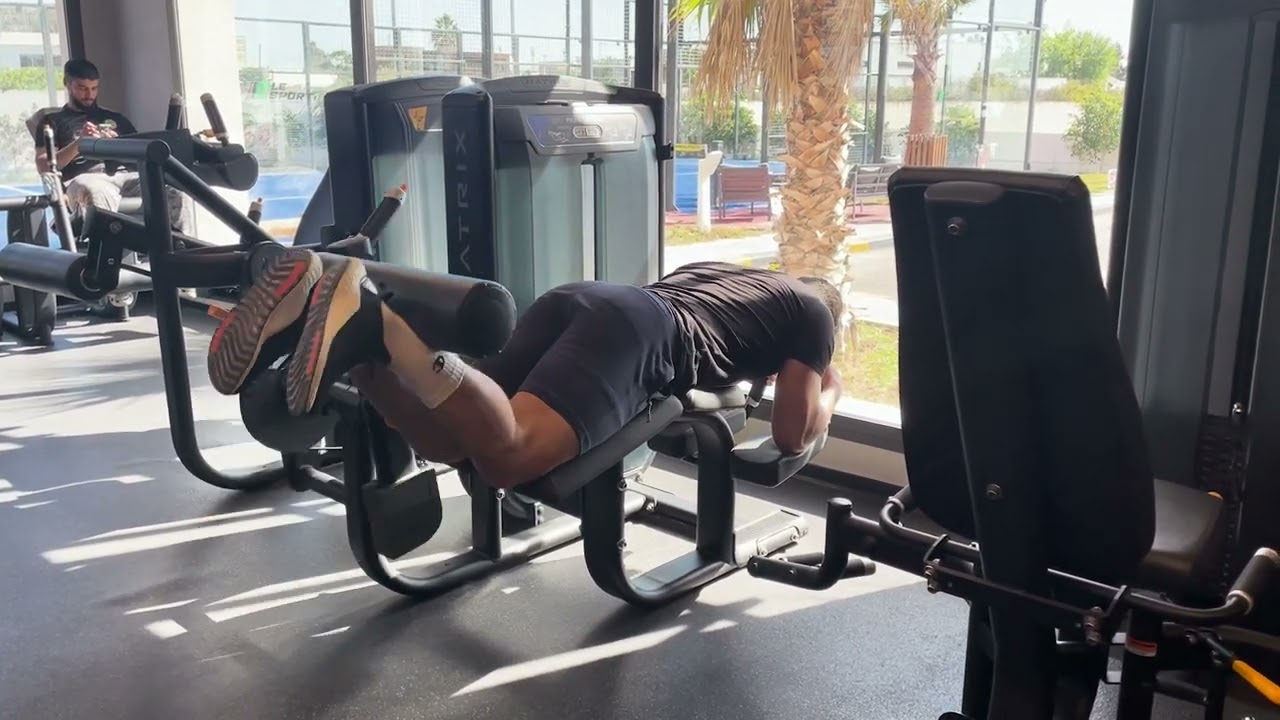
Prone Hamstring Curl

  • MuscleHamstrings
  • EquipmentMachine
  • LevelBeginner

Muscles worked

Prone Hamstring Curl
ChestObliquesAbsBicepsTricepsNeckFront deltsAdductorsQuadsCalvesForearms
Front
TrapsRear deltsUpper backTricepsLower backForearmsGlutesHip abductorsHamstringsCalvesCalvesCalves
Back
PrimarySecondary
Exercise guide

How to do the Prone Hamstring Curl

The Prone Hamstring Curl is a machine-based isolation exercise that primarily targets the hamstring muscles through controlled knee flexion. Performed while lying face down on a leg curl machine, the movement involves bending the knees to bring the heels toward the glutes against external resistance. It is commonly used in lower-body strength programs, bodybuilding routines, and hamstring-focused training sessions because it provides a direct way to strengthen the muscles responsible for bending the knee.

Unlike compound lower-body exercises such as deadlifts, squats, and lunges, the Prone Hamstring Curl focuses primarily on movement at the knee joint. This allows the hamstrings to be trained without requiring significant hip extension or spinal loading. The machine supports the torso and thighs, reducing balance demands and making the exercise accessible to beginners and experienced lifters alike.

To perform the exercise, begin by selecting an appropriate weight on the prone leg curl machine. Adjust the machine so that its rotational axis aligns approximately with your knee joints. Position the padded roller against the backs of your lower legs just above your heels. Lie face down with your torso and thighs supported by the bench, and grip the machine’s handles to maintain stability.

Keep your hips in contact with the padding and maintain a neutral lower-back position. Begin with your knees extended to the machine’s comfortable starting position. Brace your abdominal muscles gently to prevent excessive pelvic movement. Your legs should remain aligned with the machine’s intended movement path throughout the exercise.

Initiate the movement by contracting your hamstrings and bending your knees. Pull your heels upward toward your glutes while keeping your thighs supported against the bench. The lower legs should move through a smooth arc around the knee joints. Avoid lifting your hips or excessively arching your lower back to assist the movement.

Continue curling until you reach a comfortable end range. Pause briefly at the top while maintaining tension through your hamstrings. Slowly extend your knees to lower the resistance back toward the starting position. Control the weight throughout the eccentric phase rather than allowing the machine to pull your legs downward rapidly. Repeat the movement for the desired number of repetitions.

The hamstrings consist of the biceps femoris, semitendinosus, and semimembranosus. These muscles are located along the back of the thigh and contribute to knee flexion. Most of the hamstring muscles also assist with hip extension, although the short head of the biceps femoris crosses only the knee joint. The Prone Hamstring Curl directly trains their knee-flexion function.

During the upward phase, the hamstrings contract concentrically to bend the knees against resistance. During the lowering phase, they lengthen under tension to control knee extension. This combination of concentric and eccentric muscle action makes the exercise useful for developing hamstring strength and muscular control.

The gastrocnemius, one of the primary calf muscles, also contributes to knee flexion because it crosses the knee joint. Its contribution is secondary to the hamstrings. The glutes primarily assist with maintaining pelvic positioning rather than generating the curling movement, since the hips remain relatively stationary against the bench.

One advantage of the Prone Hamstring Curl is its ability to isolate knee-flexion strength. Many posterior-chain exercises, including Romanian deadlifts and good mornings, emphasize hip extension while the knees remain relatively fixed. The prone leg curl complements these movements by training the hamstrings through a different joint action.

The exercise is also useful for developing balanced lower-body strength. Programs that emphasize squats, leg presses, and other quadriceps-dominant movements may benefit from including direct hamstring work. Strengthening the knee flexors alongside the knee extensors supports comprehensive lower-body development, although no single exercise can guarantee injury prevention.

Another benefit is the machine’s stability. Because the torso and thighs are supported, the athlete can concentrate on controlled hamstring contractions without needing to balance external weights. This makes the movement suitable for targeted accessory training after compound exercises or as part of a dedicated hamstring workout.

A common mistake is allowing the hips to rise off the bench during the curling phase. This compensation may occur when the resistance is too heavy or the athlete attempts to achieve a greater range of motion than their current mobility allows. Keep your hips supported against the padding and reduce the weight if you cannot maintain a stable position.

Another common mistake is using momentum to swing the weight upward. Rapid, uncontrolled repetitions can reduce the effectiveness of the exercise and place unnecessary stress on the knees and surrounding tissues. Focus on smooth knee flexion, a brief controlled contraction at the top, and a deliberate lowering phase.

Improper machine adjustment can also affect comfort and performance. If the knee joints are not aligned with the machine’s rotational axis, the movement may feel awkward or create unnecessary pressure. Similarly, placing the ankle roller too high on the calves or directly against the Achilles tendons can reduce comfort. Adjust the machine before beginning each set.

The Prone Hamstring Curl differs from the Seated Hamstring Curl primarily in hip position. In the prone variation, the hips are relatively extended while the athlete lies face down. In the seated variation, the hips are flexed, placing the hamstrings at a longer starting muscle length. Both exercises train knee flexion, but the different hip positions can influence muscle length and training adaptations.

It also differs from the Standing Hamstring Curl, which typically trains one leg at a time while the athlete remains upright. The prone variation generally allows both legs to work simultaneously while the machine provides substantial torso support. This can make it easier to focus on bilateral hamstring contractions without additional balance demands.

For beginners, light resistance and a controlled tempo provide an appropriate starting point. The goal should be to learn proper machine positioning, maintain stable hips, and perform knee flexion through a comfortable range of motion. As strength improves, resistance can be increased gradually without sacrificing technique.

More experienced individuals can incorporate the Prone Hamstring Curl into hypertrophy-focused workouts, posterior-chain training, or accessory sessions. The exercise can be performed using moderate or higher repetitions depending on training goals. Controlled eccentric phases and consistent range of motion are particularly valuable for maintaining muscular tension.

Overall, the Prone Hamstring Curl is an effective isolation exercise for strengthening the hamstrings through knee flexion. When performed with proper machine adjustment, stable hip positioning, controlled repetitions, and appropriate resistance, it provides a practical way to develop hamstring strength and complement compound lower-body exercises.

About this guide
Written byTeam Exercise Library
Reviewed byDr. Jaime Alnassim
Updated
01

Setup

20
  • Select a prone leg curl machine with adjustable resistance and a padded ankle roller.
  • Choose a light to moderate starting weight that allows controlled knee flexion through a comfortable range of motion.
  • Adjust the machine so that its rotational axis aligns approximately with the center of your knee joints.
  • Position the ankle roller against the back of your lower legs, just above your heels and near the lower portion of your calves.
  • Adjust the roller position to prevent pressure directly against the Achilles tendons.
  • Ensure the machine's thigh and torso pads provide stable support throughout the exercise.
  • Lie face down on the machine with your torso supported by the bench.
  • Position your hips comfortably against the padding without excessive pressure.
  • Align both knees with the machine's pivot points.
  • Extend your legs behind you with a slight natural bend at the knees if required by the machine.
  • Keep your knees approximately hip-width apart or aligned with the machine's designated leg positions.
  • Position your ankles comfortably beneath the roller pad.
  • Keep your feet relaxed or slightly dorsiflexed according to comfort and the intended muscle emphasis.
  • Grip the machine's handles securely to stabilize your upper body.
  • Keep your shoulders relaxed and your chest supported against the bench.
  • Brace your abdominal muscles gently to maintain pelvic stability.
  • Maintain a neutral lower-back position without excessively arching your spine.
  • Keep your hips in contact with the machine's padding.
  • Confirm that both legs can move freely without the roller pad slipping.
  • Ensure the weight stack is properly engaged and the machine is adjusted before beginning the first repetition.
02

Execution steps

27
  1. Begin lying face down on the prone leg curl machine with your torso and thighs supported by the padding.
  2. Position the ankle roller securely against the backs of your lower legs just above your heels.
  3. Grip the machine's handles and maintain a stable upper-body position.
  4. Keep your hips pressed comfortably against the bench.
  5. Brace your abdominal muscles gently to prevent excessive lower-back movement.
  6. Begin with your knees extended to the machine's comfortable starting position.
  7. Initiate the movement by contracting your hamstrings.
  8. Bend both knees simultaneously to pull your heels upward toward your glutes.
  9. Keep your thighs and hips stable against the machine's padding.
  10. Allow your lower legs to move through a controlled arc around the knee joints.
  11. Avoid lifting your hips or arching your lower back to assist the movement.
  12. Continue curling until you reach the machine's comfortable end range or your available knee-flexion range.
  13. Keep the movement smooth rather than using momentum to accelerate the weight.
  14. Maintain even pressure through both legs against the roller pad.
  15. Pause briefly at the top while contracting your hamstrings.
  16. Avoid forcing your heels closer to your glutes if doing so causes knee discomfort or pelvic movement.
  17. Begin the lowering phase by slowly extending your knees.
  18. Resist the weight as your lower legs return toward the starting position.
  19. Maintain tension through your hamstrings throughout the eccentric phase.
  20. Keep your hips and torso supported against the machine.
  21. Avoid allowing the weight stack to drop suddenly.
  22. Continue lowering until your knees approach the starting position without forcing hyperextension.
  23. Maintain control at the bottom rather than allowing the resistance to rest completely between repetitions.
  24. Repeat the curling movement for the desired number of repetitions.
  25. Maintain consistent tempo, knee alignment, and range of motion throughout the set.
  26. After completing the final repetition, lower the weight under control until the machine returns to its resting position.
  27. Release the handles and carefully exit the machine once the resistance is fully supported.
03

Coaching cues

22
  • Align your knees with the machine's pivot points.
  • Keep the ankle roller just above your heels.
  • Lie comfortably against the bench.
  • Keep your hips down throughout the movement.
  • Brace your core gently.
  • Maintain a neutral lower back.
  • Curl your heels toward your glutes.
  • Initiate the movement with your hamstrings.
  • Keep your thighs supported against the padding.
  • Move through the knee joints rather than the hips.
  • Keep both legs moving evenly.
  • Avoid swinging the weight.
  • Use a smooth, controlled curling motion.
  • Squeeze your hamstrings at the top.
  • Pause briefly without forcing the range of motion.
  • Lower the weight slowly.
  • Control the eccentric phase.
  • Avoid snapping your knees into extension.
  • Maintain consistent tension throughout the set.
  • Keep your shoulders relaxed.
  • Use a weight that allows full control.
  • Prioritize technique over resistance.
04

Common mistakes

22
  • Using excessive resistance that prevents controlled knee flexion.
  • Failing to align the knee joints with the machine's rotational axis.
  • Positioning the ankle roller too high on the calves.
  • Positioning the roller directly against the Achilles tendons.
  • Allowing the hips to lift off the bench.
  • Excessively arching the lower back during the curling phase.
  • Using momentum to swing the weight upward.
  • Performing repetitions too quickly.
  • Failing to control the lowering phase.
  • Allowing the weight stack to slam between repetitions.
  • Using an unnecessarily short range of motion.
  • Forcing the heels toward the glutes beyond a comfortable knee-flexion range.
  • Allowing one leg to perform more work than the other.
  • Rotating the knees excessively inward or outward.
  • Allowing the ankles to move into an uncomfortable position.
  • Gripping the handles excessively tightly and creating unnecessary upper-body tension.
  • Lifting the chest or torso away from the bench.
  • Holding the breath throughout the entire set.
  • Relaxing completely at the bottom of each repetition.
  • Hyperextending the knees at the bottom.
  • Continuing repetitions after fatigue causes uncontrolled pelvic movement.
  • Using an improperly adjusted machine.
05

Safety notes

21
  • Adjust the machine before beginning the exercise to ensure proper knee and ankle alignment.
  • Align the knee joints approximately with the machine's pivot points to minimize unnecessary joint stress.
  • Position the roller pad just above the heels without placing excessive pressure on the Achilles tendons.
  • Begin with light resistance and gradually increase the weight as strength and technique improve.
  • Maintain stable contact between your hips and the bench.
  • Avoid excessively arching your lower back during the curling phase.
  • Keep your abdominal muscles gently engaged to support pelvic stability.
  • Move through a comfortable knee-flexion range without forcing the heels toward the glutes.
  • Avoid snapping the knees into full extension at the bottom.
  • Control the weight during both the lifting and lowering phases.
  • Do not use momentum or sudden jerking movements.
  • Keep both knees aligned with the machine's intended movement path.
  • Avoid excessive inward or outward rotation of the lower legs.
  • Reduce resistance if you experience repeated hamstring cramping or cannot maintain controlled movement.
  • Stop if you experience sharp pain in the knees, hamstrings, calves, or lower back.
  • Individuals recovering from hamstring strains or knee injuries should follow appropriate rehabilitation guidance before performing loaded leg curls.
  • Avoid forcing the movement through painful ranges of motion.
  • Ensure the machine's weight stack and adjustment mechanisms are functioning correctly.
  • Keep hands and fingers away from moving machine components.
  • Allow the weight stack to return fully to its resting position before exiting the machine.
  • Use a controlled tempo and avoid excessive resistance when fatigued.

This article is for general education, not medical advice. If you have pain or an injury, check with a doctor or physical therapist before starting a new exercise.

Also known as
Prone Leg CurlLying Hamstring CurlLying Leg CurlProne Machine Leg CurlLying Machine Hamstring CurlProne Knee Flexion Curl

This website uses cookies to enhance your browsing experience and ensure the site functions properly. By continuing to use this site, you acknowledge and accept our use of cookies.

Accept All Accept Required Only