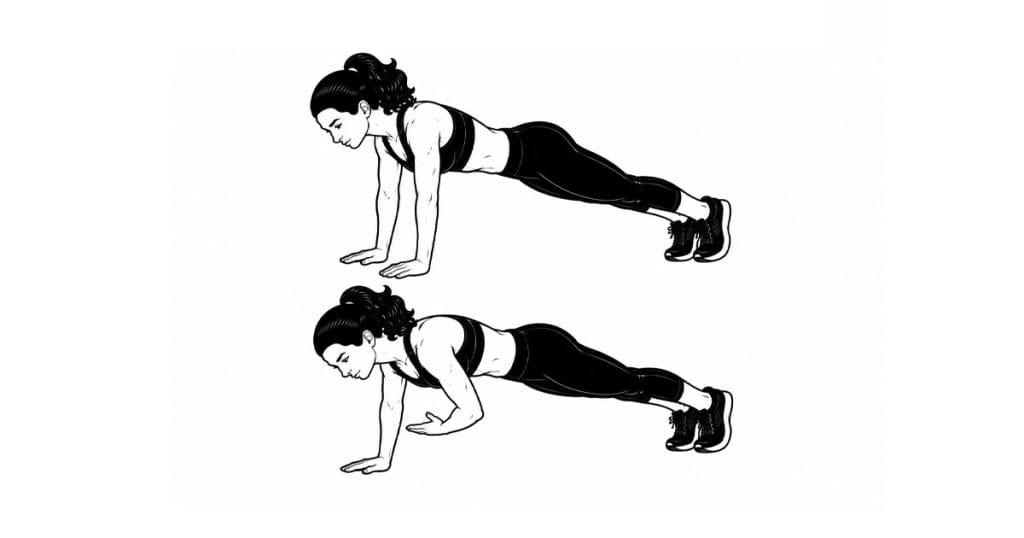
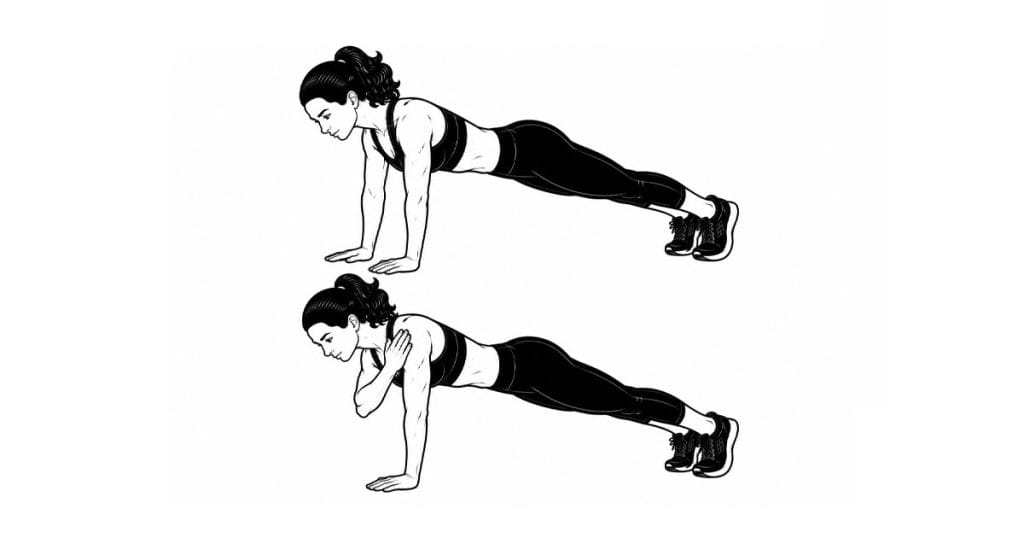
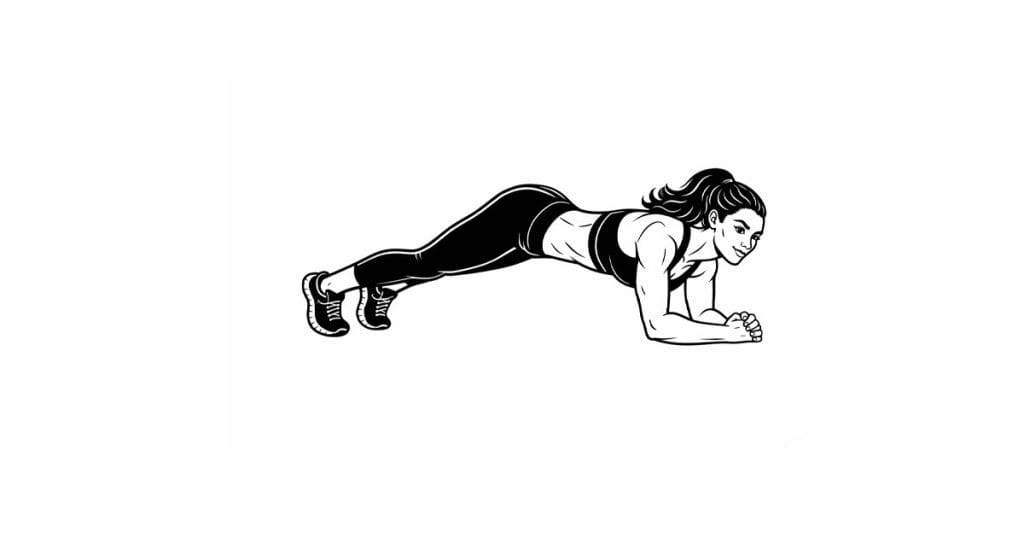
Mountain climber toe taps are a dynamic core and cardio exercise that combines the traditional mountain climber movement with a cross-body rotation. This variation increases the demand on the obliques while maintaining the cardiovascular benefits of the standard exercise. By driving the knee diagonally toward the opposite side, mountain climber toe taps engage the core more deeply, improve coordination, and enhance overall movement efficiency. This exercise is commonly used in high-intensity workouts, core training routines, and athletic conditioning programs.
The primary muscle group targeted during mountain climber toe taps is the core, particularly the abdominal muscles. The rectus abdominis works to stabilize the torso, while the obliques are heavily engaged during the cross-body motion. Each repetition requires the core to resist excessive rotation while still allowing controlled movement, making this exercise highly effective for building both strength and stability.
Secondary muscles contribute significantly to the movement. The shoulders and upper body muscles support the plank position, maintaining stability through the arms and upper torso. The hip flexors are responsible for driving the knees forward, while the quadriceps assist in extending and controlling the legs. This coordinated effort creates a full-body exercise that challenges multiple muscle groups simultaneously.
One of the primary benefits of mountain climber toe taps is improved core strength with a rotational component. Many core exercises focus on forward flexion, but this variation adds a diagonal movement pattern that enhances functional strength and better mimics real-world motion. This makes it especially useful for sports and activities that require twisting and dynamic stability.
Another key benefit is increased cardiovascular endurance. The continuous, alternating movement elevates the heart rate, making this exercise an effective option for combining strength and cardio training. It can be performed at different speeds depending on the goal, allowing for versatility in intensity.
Mountain climber toe taps also improve coordination and body awareness. The cross-body pattern requires timing and control, helping develop better movement efficiency and neuromuscular coordination. Over time, this can lead to improved athletic performance and overall movement quality.
To perform the exercise, begin in a high plank position and alternate driving each knee across your body toward the opposite elbow. Focus on maintaining a stable upper body while controlling the movement of your legs. The motion should be deliberate and controlled, even when performed at a faster pace.
Proper technique is essential for maximizing effectiveness. Keep your core engaged, your hips level, and your shoulders stable. Avoid bouncing or rushing through repetitions, as this can reduce muscle activation and increase the risk of injury.
Common mistakes include allowing the hips to rise too high, failing to bring the knee across the body, and using momentum instead of control. These errors can decrease the effectiveness of the exercise and place unnecessary strain on the lower back and shoulders.
From a safety perspective, it is important to maintain proper alignment and control throughout the movement. Keep your spine neutral and your core engaged to protect the lower back. If needed, slow the pace or reduce the range of motion to maintain proper form.
Overall, mountain climber toe taps are a highly effective exercise for strengthening the core, improving rotational control, and increasing cardiovascular fitness. Their dynamic nature and full-body engagement make them a valuable addition to any workout routine.