Medicine Ball Chest Pass

Chest

How to do the Medicine Ball Chest Pass

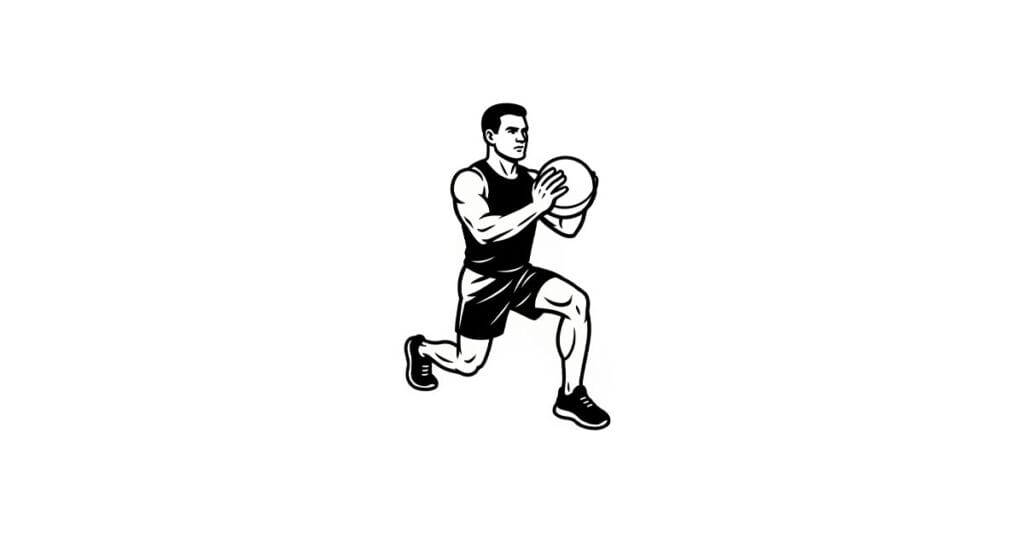
The Medicine Ball Chest Pass is a foundational power exercise that develops upper-body explosiveness, coordination, and functional strength. This movement mimics the mechanics of an athletic chest throw, making it valuable for sports performance, general fitness, and strength development. The exercise begins from a stable athletic stance with the ball held at chest level and the core braced. From this position, the ball is driven forward with a fast, powerful push generated by the chest, shoulders, and triceps.

Unlike slow, controlled pressing variations, the Medicine Ball Chest Pass emphasizes speed and force production, trains fast-twitch muscle fibers, and improves reaction time. This explosive pattern strengthens neuromuscular coordination required for powerful pushing movements while also challenging the core to stabilize the torso against the forward momentum of the throw.

The exercise can be performed against a wall for repeated solo work or with a partner to create dynamic variability. Because it is easy to learn and scale, by adjusting ball weight, distance, or throw speed, it is accessible to beginners while still offering meaningful performance benefits for advanced athletes. The Medicine Ball Chest Pass is frequently included in warm-ups, conditioning circuits, and power-focused training sessions.

When performed correctly, this movement enhances upper-body speed, improves throwing mechanics, and builds functional pushing strength that translates well to sports and daily activities. The repetitive cycle of explosive release and controlled catching further engages stabilizing muscles, promoting proper joint alignment and reducing injury risk. Whether integrated into a full-body routine or used as a standalone power drill, the Medicine Ball Chest Pass delivers a high-impact training stimulus in a simple and efficient format.
Primary Muscle
Chest
Secondary Muscles
ShouldersTriceps
Equipment
Medicine Ball
Difficulty
Beginner
Setup Instructions
  • Stand with your feet shoulder-width apart, knees slightly bent, and core engaged.
  • Hold the medicine ball at chest height with both hands, elbows tucked close to your torso.
  • Maintain an upright posture with your shoulders pulled back and down.
  • Face a wall or partner at an appropriate distance based on your throwing strength.
Coaching Cues
  • Drive the ball forward using your chest, shoulders, and triceps.
  • Keep your wrists firm and aligned with your forearms during the release.
  • Maintain a stable athletic stance to absorb the force when catching the ball.
  • Engage your core to prevent excessive torso movement.
  • Focus on speed and power rather than simply pushing the ball away.
Execution Steps
  • Begin by bracing your core and bringing the ball slightly toward your chest to preload the movement.
  • Forcefully extend your arms forward, pushing the ball straight out from your chest.
  • Release the ball explosively, maintaining control of your body alignment.
  • If using a wall, catch the rebounding ball. If working with a partner, prepare to receive the return pass.
  • Reset your stance and repeat the movement for the desired number of repetitions.
Common Mistakes
  • Allowing the elbows to flare excessively, reducing power and control.
  • Standing rigidly instead of using a stable, athletic stance.
  • Relying solely on arm strength rather than engaging the chest and core.
  • Throwing with slow, uncoordinated movement instead of an explosive push.
  • Letting the ball drop after the rebound rather than catching it cleanly.
Safety Notes
  • Use a medicine ball that is appropriately weighted to maintain control during fast movements.
  • Stand far enough from the wall or partner to avoid accidental impact.
  • Keep the core braced to protect the lower back during repetitive throws.
  • Avoid overextending the elbows during the release.
  • Ensure the training area is clear of obstacles to prevent tripping or collisions.

This website uses cookies to enhance your browsing experience and ensure the site functions properly. By continuing to use this site, you acknowledge and accept our use of cookies.

Accept All Accept Required Only