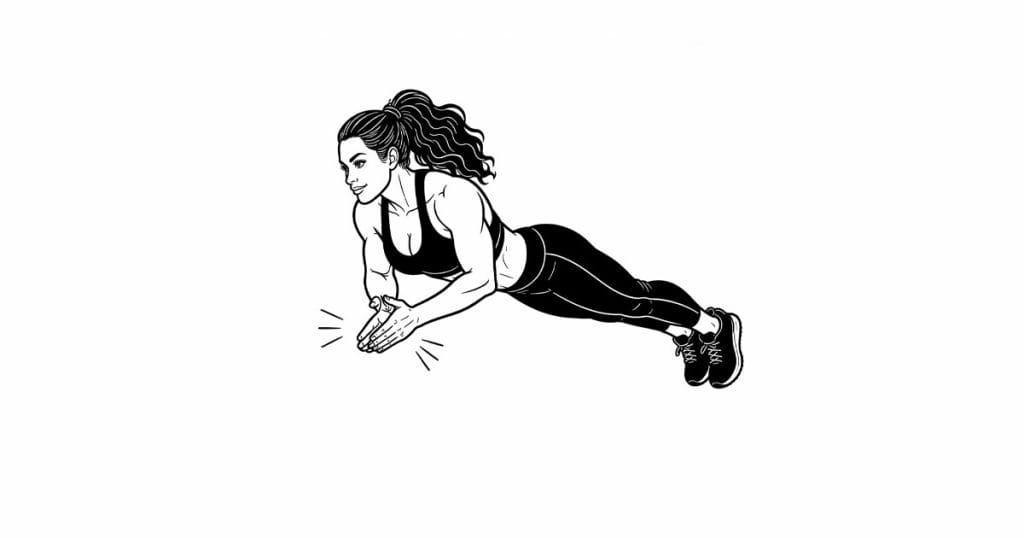
The Box Push-Up is a foundational upper body exercise that targets the chest, shoulders, and triceps while also engaging the core for stability. By elevating the hands on a box or platform, this variation reduces the amount of body weight being lifted compared to a standard push-up, making it an excellent option for beginners or those working on building strength and proper technique.
This exercise primarily targets the chest muscles, which are responsible for pushing movements and horizontal pressing strength. The shoulders assist in stabilizing and guiding the movement, while the triceps are heavily involved in extending the elbows as you push back to the starting position. The core muscles play an important role in maintaining a rigid body line, preventing the hips from sagging or rising during the exercise.
To perform the Box Push-Up, begin by placing your hands on a sturdy box with your feet extended behind you. Your body should form a straight line from head to heels. From this position, bend your elbows to lower your chest toward the box, then press through your hands to return to the starting position. The movement should be controlled and deliberate, with full range of motion on each repetition.
One of the main benefits of the Box Push-Up is its scalability. By adjusting the height of the box, you can make the exercise easier or more challenging. A higher surface reduces the load on the upper body, making it ideal for beginners or those recovering from injury. As strength improves, lowering the height increases the difficulty and prepares you for standard push-ups or more advanced variations.
The Box Push-Up is also effective for reinforcing proper push-up mechanics. It allows individuals to focus on maintaining a straight body line, controlling the descent, and using the correct muscle groups without being overwhelmed by the full body weight of a floor push-up. This makes it a valuable teaching tool for developing foundational strength and technique.
In addition to building upper body strength, the exercise improves core stability. Keeping the body aligned throughout the movement requires continuous engagement of the abdominal muscles, which helps develop better posture and control.
Proper technique is essential for maximizing results and minimizing injury risk. The elbows should remain at a slight angle rather than flaring out excessively, and the shoulders should stay stable throughout the movement. The core should remain engaged to prevent the hips from sagging or rising.
Common mistakes include allowing the hips to drop, which places stress on the lower back, or pushing the hips too high, which reduces the effectiveness of the exercise. Moving too quickly or not using full range of motion can also limit results.
Safety considerations include ensuring the box is stable and using a height appropriate for your current strength level. It is important to perform the exercise with control and to stop if any discomfort is felt in the shoulders or wrists.
The Box Push-Up can be progressed by lowering the box height, increasing repetitions, or adding tempo variations. It can also be modified by reducing the range of motion or using a higher surface.
Overall, the Box Push-Up is a versatile and effective exercise for building upper body strength, improving technique, and developing core stability. It serves as an excellent stepping stone toward more advanced pushing movements.