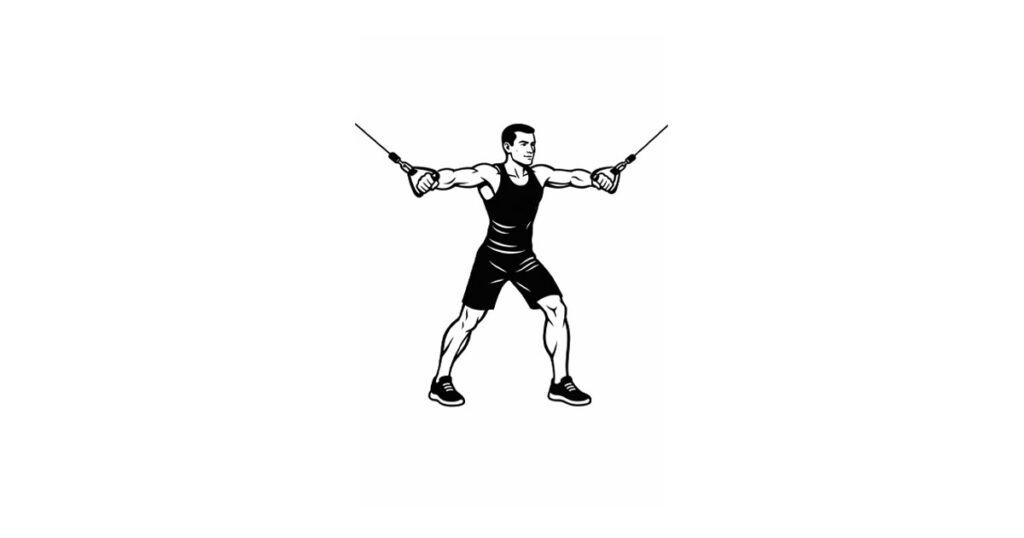
The Cable Low Fly is a chest-focused isolation exercise designed to emphasize the lower portion of the chest while maintaining constant tension throughout the movement. Performed using a dual-cable setup with the pulleys positioned low, this exercise guides the arms through a controlled upward arc, making it an effective option for developing chest strength, muscle definition, and movement control.
The primary muscle targeted during the cable low fly is the chest, particularly the lower pectoral fibers, which work to draw the arms inward and upward against resistance. The shoulders assist by stabilizing the arms, while the triceps contribute slightly to elbow extension and overall control. This coordinated effort allows the chest to remain the main driver of the movement without excessive assistance from surrounding muscles.
One of the key advantages of the cable low fly is constant resistance. Unlike dumbbell fly variations, where tension decreases at certain points due to gravity, the cable maintains load throughout both the lifting and lowering phases. This continuous tension increases time under tension and promotes consistent muscle activation across the full range of motion.
Proper setup is essential for maximizing effectiveness and minimizing strain. Positioning the pulleys at the lowest setting aligns the resistance with the upward arm path. Standing centered between the cable stacks allows for symmetrical movement and balanced loading, while a staggered stance improves stability and helps maintain an upright posture.
During execution, the arms should move in a wide, controlled arc rather than a straight line. Maintaining a slight bend in the elbows reduces stress on the joints and keeps tension focused on the chest. The movement should be smooth and deliberate, avoiding momentum or swinging.
At the top of the movement, the hands come together naturally in front of the torso, typically around chest to upper-chest height. Briefly pausing in this position reinforces chest contraction and improves mind-muscle connection. Pressing the handles too far forward should be avoided, as this can shift emphasis away from the chest and onto the shoulders.
The lowering phase is just as important as the lift. Allowing the arms to open back to the starting position under control increases eccentric loading, which supports strength development and shoulder stability. Letting the cable pull the arms back too quickly reduces effectiveness and increases the risk of strain.
The cable low fly is particularly useful for refining chest development and improving symmetry. Because each arm works independently, the exercise helps identify and address left-to-right strength imbalances while also enhancing shoulder stability and coordination.
Maintaining proper posture throughout the movement is critical. The chest should stay lifted, the shoulders down and back, and the core engaged. Allowing the shoulders to roll forward or the lower back to arch excessively can reduce chest engagement and increase joint stress.
Because this exercise emphasizes isolation and control, moderate resistance is typically more effective than heavy loading. Excessive weight often leads to poor form, shortened range of motion, or shoulder discomfort. Controlled repetitions with appropriate resistance produce better results while reducing injury risk.
Overall, the Cable Low Fly is an effective chest isolation exercise that emphasizes constant tension, controlled movement, and targeted muscle engagement. When performed with proper setup and technique, it supports improved chest strength, enhanced muscle definition, and balanced upper-body aesthetics.