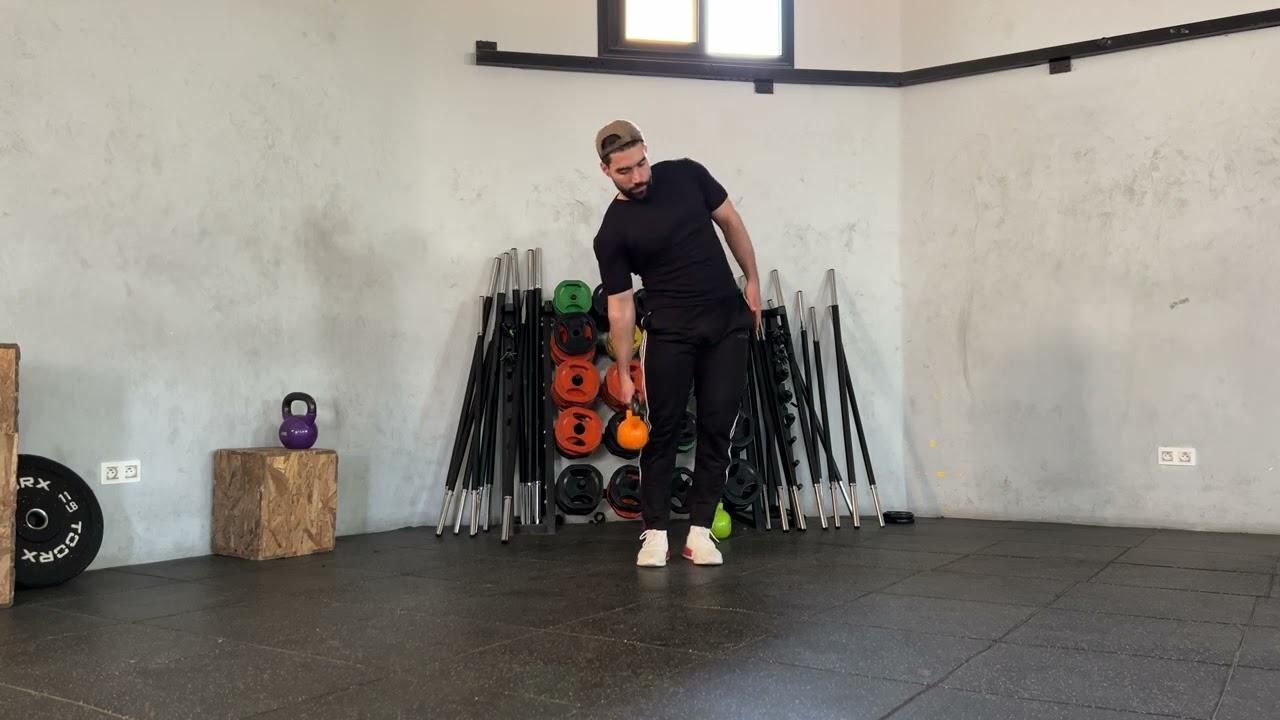
Kettlebell Side Bends

  • MuscleObliques
  • EquipmentKettlebell
  • LevelBeginner

Muscles worked

Kettlebell Side Bends
ChestObliquesAbsBicepsTricepsNeckFront deltsAdductorsQuadsCalvesForearms
Front
TrapsRear deltsUpper backTricepsLower backForearmsGlutesHip abductorsHamstringsCalvesCalvesCalves
Back
PrimarySecondary
Exercise guide

How to do the Kettlebell Side Bends

Kettlebell Side Bends are a standing core strengthening exercise that primarily targets the oblique muscles along the sides of the abdomen. Performed by holding a kettlebell in one hand and bending the torso sideways, the movement challenges the muscles responsible for lateral spinal flexion and trunk stabilization. The exercise also recruits the quadratus lumborum, spinal erectors, abdominal stabilizers, and forearm muscles. It provides a simple way to train controlled side bending using minimal equipment.

Unlike rotational core exercises such as the Kettlebell Russian Twist, Kettlebell Side Bends emphasize movement in the frontal plane. The torso bends toward the weighted side before returning to an upright position. The obliques and other lateral trunk muscles control this movement while helping prevent excessive twisting, forward bending, or backward leaning.

To perform Kettlebell Side Bends, begin by selecting a kettlebell that allows you to move slowly and comfortably. Stand with your feet approximately hip-width to shoulder-width apart and your toes pointing forward or slightly outward. Hold the kettlebell in one hand beside your thigh, allowing your arm to remain extended. Position your opposite hand on your hip or let it rest comfortably at your side.

Stand tall with your chest lifted, shoulders relaxed, and head aligned with your torso. Engage your abdominal muscles and maintain a stable pelvis. Your knees may remain slightly bent, but the movement should occur primarily through the torso rather than through repeated knee bending or hip shifting.

Initiate the exercise by slowly bending your torso toward the side holding the kettlebell. Allow the weight to travel downward along the outside of your leg while maintaining control of your spinal position. Keep your shoulders and hips facing forward, avoiding unnecessary rotation. Your weighted arm should remain relaxed and extended rather than actively lifting or pulling the kettlebell.

Continue lowering until you reach a comfortable range of lateral flexion. The appropriate depth depends on your individual mobility, strength, and ability to maintain control. There is no requirement for the kettlebell to reach your knee or travel below it. Forcing additional range can create unnecessary stress without improving the quality of the exercise.

At the bottom of the movement, pause briefly while maintaining abdominal tension. Return to standing by contracting the lateral trunk muscles, particularly those on the side opposite the kettlebell. These muscles help bring the torso back toward the midline against the downward pull of the weight. Finish in an upright position without leaning excessively toward the unloaded side.

The internal and external obliques are important muscles during Kettlebell Side Bends. Both contribute to lateral trunk flexion and help stabilize the spine during movement. When the kettlebell is held in the right hand, the left-side obliques and other left lateral trunk muscles work to control the descent and return the torso toward upright. The muscles on the weighted side also contribute to stabilization and coordination.

The quadratus lumborum is another significant contributor. Located deep in the posterior abdominal wall, this muscle assists with lateral spinal flexion and helps stabilize the lumbar region. Although it is not included as a separate muscle-group category in many exercise libraries, it plays an important role in the movement alongside the obliques and spinal erectors.

The rectus abdominis and transverse abdominis contribute to overall trunk stability, helping maintain abdominal tension as the torso bends sideways. The spinal erectors assist with posture and spinal control. The forearm muscles maintain grip strength while the shoulder stabilizers help support the hanging kettlebell.

One advantage of Kettlebell Side Bends is their straightforward setup. The exercise requires only a single kettlebell and enough space to stand comfortably. It can be performed in a gym or home training environment without specialized machines or cable systems. The resistance is easily adjusted by selecting a lighter or heavier kettlebell.

The movement also provides direct training for lateral trunk strength. Many abdominal exercises emphasize spinal flexion, rotation, or resistance to extension. Side bends introduce controlled lateral flexion, challenging the muscles that help manage side-to-side trunk movement. When programmed appropriately, they can complement other core exercises that emphasize different movement patterns.

A common mistake is using excessive weight. A kettlebell that is too heavy may cause the lifter to bend rapidly, twist the torso, or use momentum to return upright. These compensations reduce control and may place unnecessary stress on the spine. Select resistance that allows smooth movement through both phases of each repetition.

Another common mistake is leaning forward while attempting to bend sideways. This changes the movement into a combination of lateral flexion and forward bending. Keep your chest facing forward and imagine moving your shoulder toward the hip on the weighted side without rotating your torso.

Excessive hip shifting is another technique error. Some natural pelvic adjustment may occur, but dramatically pushing the hips in the opposite direction can change the intended mechanics. Maintain a stable stance and allow the movement to come primarily from controlled lateral flexion of the torso.

Kettlebell Side Bends differ from the Kettlebell Suitcase Carry because side bends involve repeated lateral spinal movement, whereas suitcase carries emphasize resisting lateral flexion while walking. Both challenge the lateral trunk muscles, but the suitcase carry develops anti-lateral-flexion stability while the side bend trains controlled movement through that plane.

They also differ from the Dumbbell Side Bend primarily in the resistance implement. A kettlebell has a different center of mass and handle configuration, which can influence grip comfort and how the weight hangs beside the body. However, the fundamental movement pattern and primary muscular demands remain similar.

For beginners, a light kettlebell and a limited range of motion are appropriate starting points. More experienced individuals can gradually increase resistance while maintaining consistent tempo and spinal control. The exercise should not be performed with aggressive stretching or forced end-range movement, particularly when the lower back is sensitive to loaded side bending.

Overall, Kettlebell Side Bends are a practical exercise for strengthening the obliques and developing controlled lateral trunk movement. When performed with stable foot positioning, a manageable kettlebell, deliberate side bending, and a controlled return to upright, they can complement a balanced core training program focused on abdominal strength and spinal stability.

About this guide
Written byTeam Exercise Library
Reviewed byDr. Jaime Alnassim
Updated
01

Setup

18
  • Select a light to moderate kettlebell that allows controlled side bending without twisting, leaning forward, or using momentum.
  • Stand on a flat, stable surface with sufficient space on both sides of your body.
  • Position your feet approximately hip-width to shoulder-width apart.
  • Keep your toes pointing forward or slightly outward according to your natural standing position.
  • Place the kettlebell beside one foot and bend your hips and knees to reach its handle.
  • Grip the kettlebell securely with one hand using a neutral grip.
  • Stand upright while allowing the kettlebell to hang naturally beside your thigh.
  • Keep your weighted arm extended with a slight natural bend at the elbow.
  • Position your opposite arm comfortably at your side, across your chest, or with your hand resting lightly on your hip.
  • Keep your shoulders approximately level before beginning the movement.
  • Maintain a neutral head position with your eyes looking forward.
  • Keep your chest lifted and your rib cage aligned above your pelvis.
  • Engage your abdominal muscles to establish a stable starting position.
  • Maintain a slight, comfortable bend in your knees without actively squatting.
  • Distribute your weight evenly across both feet.
  • Keep your hips facing forward and avoid rotating your pelvis.
  • Allow the kettlebell to hang close to the outside of your leg.
  • Establish a tall, balanced standing posture before initiating the first repetition.
02

Execution steps

22
  1. Begin standing upright with the kettlebell held in one hand beside your thigh.
  2. Position your feet approximately hip-width to shoulder-width apart and maintain stable contact with the floor.
  3. Brace your abdominal muscles and keep your shoulders relaxed.
  4. Maintain your hips and chest facing forward throughout the exercise.
  5. Initiate the movement by slowly bending your torso toward the side holding the kettlebell.
  6. Allow the kettlebell to travel downward along the outside of your thigh as your torso moves into lateral flexion.
  7. Keep your weighted arm extended and avoid pulling the kettlebell upward or outward.
  8. Maintain a relatively straight path through the side-bending movement without leaning forward or backward.
  9. Keep your pelvis relatively stable and avoid shifting your hips excessively in the opposite direction.
  10. Maintain balanced pressure through both feet.
  11. Continue lowering the kettlebell until you reach a comfortable range of lateral flexion.
  12. Avoid forcing the kettlebell toward your knee or lowering farther than your torso can comfortably control.
  13. Pause briefly at the bottom while maintaining abdominal tension.
  14. Initiate the upward phase by contracting the oblique muscles on the opposite side of your torso.
  15. Slowly return your torso to an upright position against the resistance of the kettlebell.
  16. Keep your shoulders and hips facing forward as you rise.
  17. Stop when your shoulders are approximately level and your rib cage is aligned above your pelvis.
  18. Avoid leaning past the upright position toward the unloaded side.
  19. Repeat the movement for the desired number of repetitions using a controlled tempo.
  20. After completing the repetitions, bend your hips and knees to place the kettlebell safely on the floor.
  21. Switch the kettlebell to your opposite hand and repeat the exercise on the other side.
  22. Perform an equal number of repetitions on each side unless your training program specifies otherwise.
03

Coaching cues

20
  • Stand tall with your feet firmly planted.
  • Keep your hips facing forward.
  • Brace your core before bending.
  • Keep the kettlebell close to your leg.
  • Bend sideways rather than forward.
  • Move through your torso, not your knees.
  • Keep your shoulders relaxed.
  • Maintain a neutral head position.
  • Avoid rotating your chest.
  • Keep your pelvis relatively stable.
  • Lower the kettlebell slowly.
  • Use a comfortable range of motion.
  • Feel the muscles along the sides of your waist controlling the movement.
  • Contract your opposite-side obliques to return upright.
  • Keep your rib cage stacked above your pelvis at the top.
  • Avoid leaning past the upright position.
  • Maintain balanced pressure through both feet.
  • Control both the lowering and lifting phases.
  • Avoid swinging the kettlebell.
  • Train both sides with consistent technique.
04

Common mistakes

20
  • Using a kettlebell that is too heavy to control.
  • Bending forward instead of moving directly sideways.
  • Rotating the torso while performing the side bend.
  • Allowing the pelvis to twist excessively.
  • Shifting the hips dramatically in the opposite direction.
  • Bending the knees to lower the kettlebell farther.
  • Swinging the kettlebell using momentum.
  • Lowering the weight too quickly.
  • Forcing the kettlebell toward the knee or below the available range of motion.
  • Leaning excessively toward the unloaded side at the top.
  • Shrugging the shoulder holding the kettlebell.
  • Pulling the kettlebell upward with the arm.
  • Allowing the kettlebell to drift far away from the body.
  • Rounding the shoulders and collapsing the chest.
  • Tilting or rotating the head excessively.
  • Holding the breath throughout the set.
  • Failing to maintain abdominal tension.
  • Shifting most of the body weight onto one foot.
  • Performing significantly different ranges of motion on each side.
  • Continuing repetitions after fatigue compromises spinal control.
05

Safety notes

20
  • Begin with a light kettlebell to establish controlled lateral flexion before increasing resistance.
  • Use a manageable range of motion rather than attempting to lower the kettlebell as far as possible.
  • Avoid sudden, jerky, or momentum-driven side bending.
  • Maintain a controlled spinal position throughout the exercise.
  • Avoid combining loaded side bending with excessive spinal rotation.
  • Keep your pelvis relatively stable and your hips facing forward.
  • Do not force your torso beyond its comfortable lateral range of motion.
  • Maintain abdominal tension to support trunk stability.
  • Keep your shoulders relaxed and avoid excessive shrugging.
  • Maintain a secure grip on the kettlebell.
  • Keep the kettlebell close to your body to avoid unnecessary leverage.
  • Avoid leaning backward or excessively extending your spine.
  • Maintain stable contact with the floor through both feet.
  • Reduce resistance if you cannot return to an upright position without using momentum.
  • Individuals with existing spinal conditions, particularly those aggravated by loaded lateral flexion, should seek appropriate professional guidance before performing this exercise.
  • Avoid continuing the exercise if you experience radiating pain, numbness, or tingling.
  • Stop if you experience sharp pain in your lower back, ribs, hips, or abdominal region.
  • Train both sides with appropriate resistance and controlled technique.
  • Return the kettlebell to the floor using a controlled hip and knee bend.
  • Stop the set before fatigue causes excessive leaning, twisting, or loss of balance.

This article is for general education, not medical advice. If you have pain or an injury, check with a doctor or physical therapist before starting a new exercise.

Also known as
Kettlebell Side BendStanding Kettlebell Side BendKettlebell Oblique Side BendSingle-Arm Kettlebell Side BendWeighted Kettlebell Side BendKettlebell Lateral Flexion

This website uses cookies to enhance your browsing experience and ensure the site functions properly. By continuing to use this site, you acknowledge and accept our use of cookies.

Accept All Accept Required Only