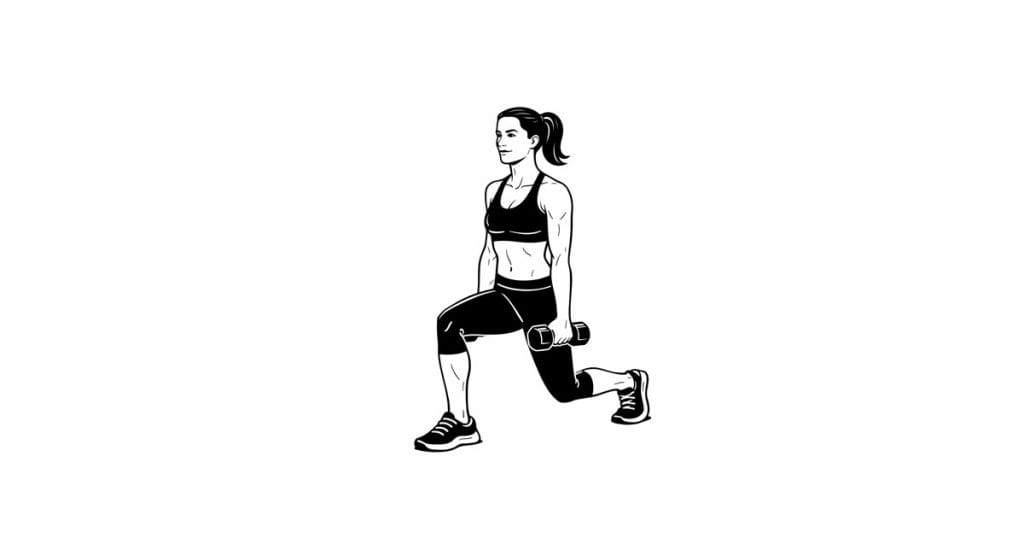
The Kettlebell Front Squat is a lower-body strength exercise performed while holding two kettlebells in the front rack position. The front-loaded resistance challenges the quads and glutes while requiring significant core and upper-back stability to maintain an upright torso. The hamstrings, adductors, shoulders, and forearms also contribute to controlling the kettlebells and maintaining proper squat mechanics. Compared with holding weights at the sides, the front rack position places the load in front of the body’s center of mass and increases the demand on postural control throughout each repetition.
To perform the Kettlebell Front Squat, begin with one kettlebell securely positioned on each side of your upper body. Each kettlebell should rest against the outside of the forearm and upper arm in a comfortable front rack position. Keep your wrists relatively neutral and your elbows close to your torso. The kettlebells should remain close to the body rather than being held forward with the arms.
Stand with your feet approximately shoulder-width apart. Your toes can point slightly outward based on your individual hip structure and preferred squat stance. Keep your entire foot in contact with the floor and establish balanced pressure through the heel, forefoot, and outside edge of each foot. Brace your abdominal muscles and maintain a tall torso before beginning the movement.
Initiate the squat by bending your knees and hips together. Lower your hips down between your legs while keeping the kettlebells securely racked. Allow your knees to travel naturally forward while keeping them aligned with the direction of your toes. Avoid intentionally forcing the knees outward or allowing them to collapse inward.
Continue descending while maintaining control of your torso and pelvis. Because the kettlebells are positioned in front of the body, your core and upper back must work continuously to prevent the torso from collapsing forward. Keep your chest controlled and your spine in a strong, comfortable position throughout the descent.
Squat as deeply as your mobility and control allow. Appropriate depth can vary between individuals based on hip structure, ankle mobility, stance, and experience. The goal is not to force a specific depth but to maintain stable feet, controlled knees, a braced torso, and secure kettlebell positioning throughout the available range of motion.
At the bottom of the squat, maintain muscular tension rather than relaxing into the position. Keep the kettlebells securely supported and prepare to drive upward. Push through your feet and extend your knees and hips together. Continue rising until you return to a tall standing position with your hips and knees extended.
The quads are heavily involved because they extend the knees as you rise from the bottom position. The glutes contribute to hip extension and help stabilize the pelvis throughout the squat. The hamstrings and adductors also assist with lower-body control, particularly as the hips move through deeper ranges of motion.
Core stability is especially important during the Kettlebell Front Squat. The forward position of the kettlebells creates a tendency for the torso to tip forward or the lower back to overextend. Brace your abdominal muscles and keep your rib cage controlled over your pelvis. Avoid compensating for the load by excessively arching your back or leaning backward.
The upper back and shoulders help maintain the front rack position. Keep the kettlebells close to your body and avoid allowing the elbows to drift excessively outward. Your wrists should remain relatively straight rather than bending sharply backward under the handles. A stable rack position allows the load to remain supported without unnecessary tension through the hands and arms.
A common mistake is allowing the heels to lift during the descent. Maintain full-foot pressure and avoid shifting excessively onto the toes. Another common error is allowing the knees to collapse inward, particularly when standing from the bottom. Keep the knees tracking in the same general direction as the toes throughout the repetition.
Excessive forward torso lean can also reduce control. Some forward inclination is normal and depends on individual proportions, but the kettlebells should not pull the upper body into a collapsed position. Maintain upper-back tension and keep the front rack stable as you descend and stand.
Breathing should support trunk stability without creating unnecessary tension. Establish a strong brace before descending and maintain abdominal control through the most demanding portion of the movement. Reset your posture and breathing as needed when you return to the standing position.
The Kettlebell Front Squat differs from the goblet squat because two kettlebells are held independently in the front rack rather than one kettlebell being held centrally in front of the chest. This increases the demands on upper-body positioning and allows each arm to stabilize its own kettlebell while the lower body performs the squat.
Overall, the Kettlebell Front Squat is an effective compound strength exercise for developing the quads, glutes, core, and supporting musculature of the upper and lower body. The front rack position adds a substantial postural challenge to the traditional squat pattern. When performed with stable feet, controlled knee alignment, a braced core, secure kettlebell positioning, and a comfortable range of motion, the Kettlebell Front Squat provides an effective way to develop lower-body strength and full-body stability.