The Kettlebell Jump Squat is an explosive lower-body exercise that combines a loaded squat with a vertical jump. The quads are the primary muscle group involved, while the glutes, hamstrings, calves, adductors, core, and forearms contribute to producing force, stabilizing the body, and controlling the kettlebell. By adding external resistance to a traditional squat jump, the exercise increases the demand on the lower body while challenging the athlete to produce force rapidly and maintain control during takeoff and landing.
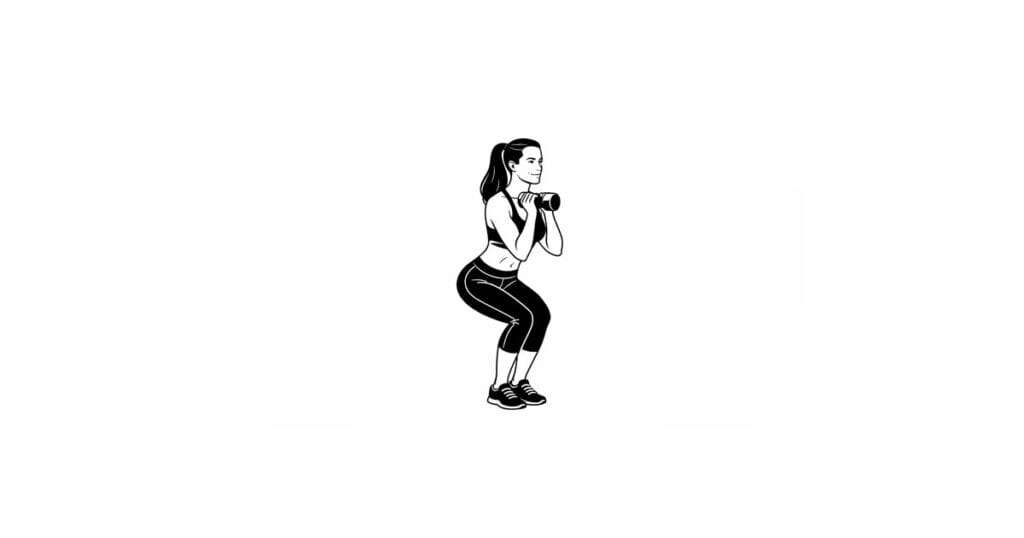
To perform the Kettlebell Jump Squat, stand with your feet approximately shoulder-width apart and hold one kettlebell securely with both hands in front of your body. Keep the kettlebell close rather than allowing it to hang or swing far away from your center of mass. Position your toes slightly outward if needed to accommodate a comfortable squat and maintain balanced pressure through both feet.
Brace your core and begin the movement by bending your hips and knees. Descend into a controlled squat while keeping your knees tracking in the same general direction as your toes. Your feet should remain planted as you load the lower body in preparation for the jump. The depth of the squat should allow you to maintain balance, control, and an effective position for producing force.
From the bottom of the squat, drive forcefully through the floor and rapidly extend your hips, knees, and ankles. This coordinated extension propels your body upward into a vertical jump. Keep the kettlebell secure and close to your body throughout the takeoff rather than using the arms to swing the weight upward.
While airborne, maintain control of the kettlebell and prepare for the landing. Contact the floor with both feet and immediately allow your hips, knees, and ankles to bend to absorb the impact. The landing should be quiet and controlled rather than stiff or heavy. Keep your knees aligned with your toes and maintain balance through the entire foot.
After landing, regain a stable position before beginning another repetition. The Kettlebell Jump Squat should remain an explosive movement, but speed should not come at the expense of landing mechanics or kettlebell control. Each repetition should include a powerful takeoff followed by a stable and deliberate landing.
The quads play a major role in extending the knees during takeoff and controlling knee flexion during the landing. The glutes contribute strongly to hip extension as the body accelerates upward and help stabilize the hips when returning to the floor. The hamstrings assist with hip extension and contribute to controlling the lower body during the squat and landing phases.
The calves contribute to the final portion of the jump by producing plantar flexion at the ankles. They also help control the ankle when the feet contact the floor. The adductors assist with hip stability and contribute to lower-body force production, while the core helps maintain torso control as the body moves rapidly through the squat and jump.
The forearms and hands maintain a secure grip on the kettlebell throughout the exercise. Because the body accelerates and decelerates quickly, the kettlebell should remain firmly controlled rather than bouncing or shifting unpredictably. Keeping the weight close to the body makes it easier to maintain balance during both the jump and landing.
One of the most common mistakes is using a kettlebell that is too heavy. The purpose of the exercise is to produce an explosive jump while maintaining proper mechanics. Excessive resistance can slow the movement, reduce jump quality, and make the landing more difficult to control. The kettlebell should allow rapid force production without compromising technique.
Another common mistake is allowing the knees to collapse inward during the squat, takeoff, or landing. Keep the knees tracking in line with the toes and maintain stable foot pressure. This is particularly important during landing, when the body must absorb the force created by returning to the floor.
Landing with stiff legs should also be avoided. Keeping the knees and hips nearly locked when contacting the floor increases impact and reduces the body’s ability to absorb force effectively. Instead, land softly and allow the hips, knees, and ankles to flex naturally while maintaining control of the torso and kettlebell.
The Kettlebell Jump Squat differs from the Kettlebell Goblet Squat Jump primarily in how the kettlebell is held. A goblet squat jump specifically uses a goblet position at the chest, while the broader Kettlebell Jump Squat may use another secure two-handed front-loaded position depending on the variation. In either case, the fundamental movement remains a loaded squat followed by explosive vertical extension.
Avoid intentionally swinging the kettlebell to create additional momentum. The lower body should generate the jump. Excessive movement of the kettlebell can shift the center of mass and make the landing less predictable. Maintain a firm grip and keep the load controlled throughout the repetition.
Overall, the Kettlebell Jump Squat is an effective power exercise for developing explosive lower-body strength, vertical force production, and landing control. When performed with an appropriate load, controlled squat, rapid hip and knee extension, secure kettlebell position, and soft balanced landing, it provides a dynamic way to train the quads, glutes, hamstrings, calves, and supporting core muscles.