The Kettlebell Bent-Over Row is an upper-body strength exercise performed from a hip-hinged position while rowing kettlebells toward the torso. The exercise primarily targets the lats while also working the upper back, biceps, forearms, traps, shoulders, lower back, and core. Because the torso remains unsupported throughout the movement, the muscles surrounding the spine and pelvis must work continuously to maintain posture while the upper body performs the rowing action. This makes the Kettlebell Bent-Over Row an effective compound exercise for developing back strength, pulling strength, grip strength, and postural control.
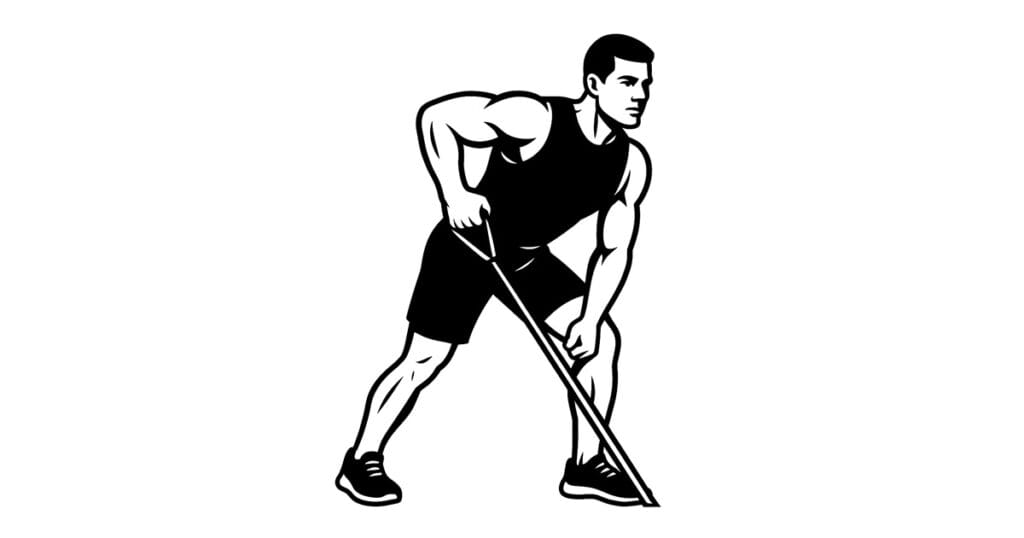
To perform the Kettlebell Bent-Over Row, stand with your feet approximately shoulder-width apart while holding a kettlebell in each hand. Keep your knees slightly bent and push your hips backward into a hip hinge. Lower your torso forward while maintaining a neutral spine. The exact torso angle can vary based on mobility and body proportions, but the position should allow the kettlebells to hang naturally beneath the shoulders without rounding the lower back.
Brace your abdominal muscles before beginning the row. Keep your neck aligned with the rest of your spine and allow your arms to extend toward the floor. The shoulders should remain controlled rather than aggressively reaching downward under the weight of the kettlebells. Maintain even pressure through both feet and keep your hips pushed backward throughout the exercise.
Begin the rowing movement by pulling both kettlebells upward toward the sides of your torso. Drive your elbows back and slightly toward your hips while keeping them relatively close to your body. Think about moving the upper arms through the action of the lats and upper back rather than simply curling the kettlebells with the biceps. The hands and forearms should maintain a secure grip while transferring force from the kettlebells to the pulling muscles.
Continue rowing until your elbows reach approximately the level of your torso or until you reach a comfortable end range. Briefly contract the muscles of the back at the top. Avoid pulling the kettlebells excessively high if doing so causes the shoulders to roll forward, the elbows to flare, or the torso to rotate or rise.
Lower both kettlebells slowly by extending your elbows and allowing the shoulder blades to move naturally. Continue until the arms are fully extended beneath the shoulders. Maintain the hip hinge and neutral spine throughout the descent. The torso should remain in approximately the same position from the beginning of the repetition until the kettlebells return to the bottom.
The hip hinge is an important part of proper Kettlebell Bent-Over Row technique. A common mistake is bending primarily through the spine instead of pushing the hips backward. The hips should move behind the body while the spine maintains a stable, neutral position. The knees remain slightly bent, but the exercise should not turn into a squat. This position allows the lower back, glutes, hamstrings, and core to stabilize the body while the upper body performs the row.
Torso stability is another major component of the exercise. As the kettlebells become challenging, there may be a tendency to stand up slightly or use the hips to generate momentum. This reduces the controlled demand on the back muscles. Keep the torso relatively stationary and allow the arms, shoulder blades, and back muscles to produce the rowing movement.
The elbow path also affects the movement. Driving the elbows back toward the hips helps maintain a strong pulling position and emphasizes the lats. Excessively flaring the elbows outward changes the mechanics and may shift more demand toward the shoulders and upper back. Keep the elbows relatively close to the torso while allowing the shoulder blades to move naturally.
Grip strength is challenged throughout the Kettlebell Bent-Over Row because each hand must independently control a kettlebell. Keep the wrists relatively neutral and maintain enough grip pressure to keep the handles secure. Avoid allowing the wrists to bend excessively as the kettlebells approach the torso.
Core engagement helps maintain the position of the pelvis and spine. Brace the abdominal muscles before each repetition and avoid excessive arching or rounding through the lower back. The lower back muscles work isometrically to help maintain the hinged position, but they should not be responsible for repeatedly moving the torso up and down.
The lowering phase should remain deliberate. Allowing the kettlebells to drop quickly can pull the shoulders and torso downward and reduce muscular control. Extend the elbows gradually and maintain tension through the back until the weights return to the starting position. This controlled descent helps maintain consistent technique throughout each repetition.
Compared with a supported row, the Kettlebell Bent-Over Row requires greater stabilization because neither hand is used to support the torso. Both sides of the back work simultaneously while the core and lower back maintain the hinged posture. This combination makes the exercise useful for developing upper-body pulling strength together with trunk stability and body control.
Overall, the Kettlebell Bent-Over Row is an effective strength exercise for developing the lats, upper back, biceps, forearms, and supporting postural muscles. The kettlebells allow each arm to control its own resistance while the unsupported hip-hinged position challenges the core and lower back. When performed with a neutral spine, stable hip hinge, controlled elbow path, braced core, and smooth lowering phase, the Kettlebell Bent-Over Row provides an effective way to build back strength, grip strength, and controlled upper-body pulling ability.