The Dumbbell Plank Rear Delt Raise is a challenging compound stability exercise that combines a high plank position with a rear deltoid raise. This movement targets the shoulders, particularly the posterior deltoids, while requiring the core to resist rotation and maintain a stable body position.
The primary muscle worked is the posterior deltoid, which is responsible for moving the arm outward and backward. The rhomboids and trapezius assist in stabilizing the shoulder and supporting the lift. At the same time, the core, including the abs and obliques, plays a critical role in preventing the torso from rotating as one arm lifts off the ground.
One of the key benefits of this exercise is its ability to train multiple muscle groups simultaneously. While the shoulder performs the lifting motion, the core must remain fully engaged to stabilize the body. This improves coordination, strength, and overall movement control.
The plank position adds a significant stability challenge. The glutes, lower back, and deep core muscles work together to keep the body aligned from head to heels. This full-body engagement makes the exercise highly functional and effective for building total body stability.
Another major advantage is improved anti-rotation strength. Because the body is supported on three points during the lift, any instability becomes immediately noticeable. This forces strict control and reinforces proper technique.
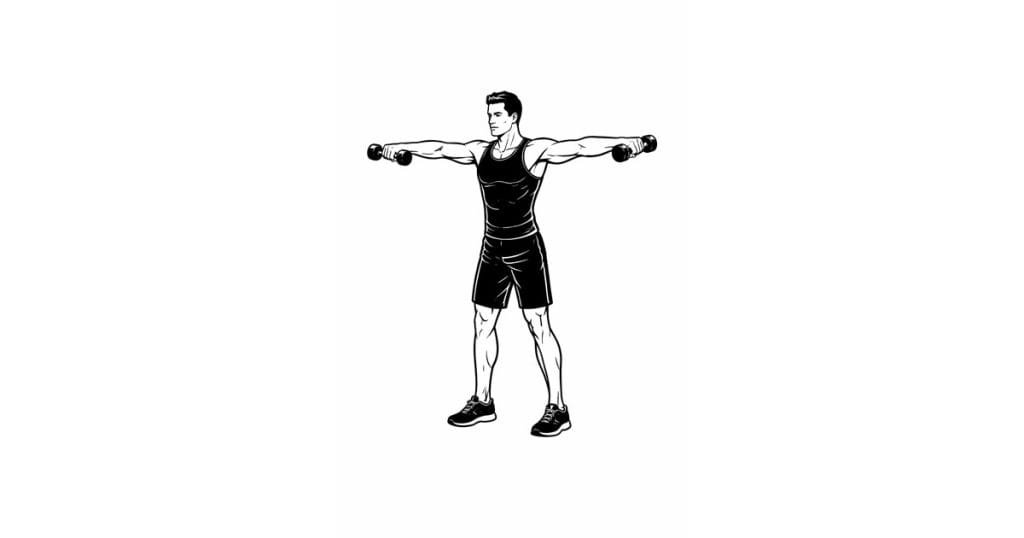
To perform the exercise, start in a high plank position with one hand holding a light dumbbell. Keep your feet slightly wider than shoulder-width for better stability. While maintaining a neutral spine and level hips, raise the dumbbell out to the side in a controlled motion. Lower it back down slowly and repeat.
Proper technique is essential. The hips should remain level, and the torso should not rotate during the lift. Only raise the arm as high as you can without losing stability. Keeping the core engaged and spine neutral will ensure safe and effective execution.
Common mistakes include rotating the hips, using momentum, and lifting the weight too high. These reduce effectiveness and increase the risk of injury.
Due to its complexity, this exercise is best suited for individuals with a solid foundation in both plank variations and shoulder training. Starting with light weights and focusing on control is key.
Overall, the Dumbbell Plank Rear Delt Raise is a powerful exercise for developing shoulder strength, improving core stability, and enhancing coordination. Its combination of strength and stability makes it a valuable addition to advanced training routines.