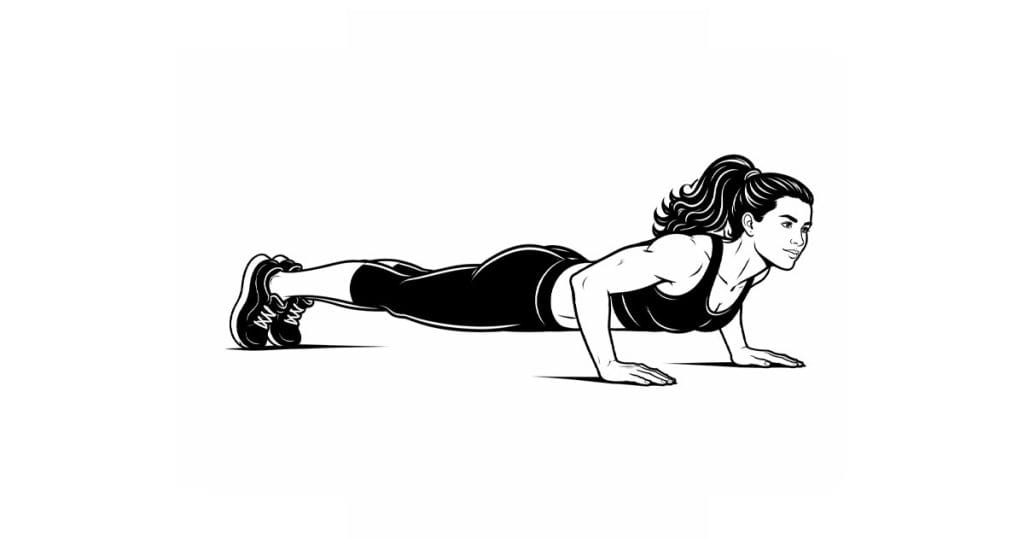
Clock push-ups are a dynamic variation of the traditional push-up that challenge upper body strength, coordination, and stability by introducing movement through multiple angles. Instead of keeping your hands fixed in one position, this exercise requires you to reposition your hands in different directions, mimicking the positions of a clock. This adds a unique stimulus to the chest, shoulders, triceps, and core while also improving proprioception and control.
The primary muscle group targeted during clock push-ups is the chest, which drives the pressing motion. Secondary muscles include the shoulders and triceps, which assist in stabilizing and extending the arms throughout each repetition. The core plays a critical role in maintaining alignment as the hands shift positions, helping prevent rotation or collapse of the torso.
One of the main benefits of clock push-ups is their ability to challenge the body in multiple planes of movement. Traditional push-ups are performed in a fixed position, but clock push-ups require the body to adapt to changing leverage and angles. This not only increases muscular demand but also enhances joint stability and coordination.
This exercise is particularly effective for improving shoulder stability. As the hands move into different positions, the shoulders must work harder to stabilize the body and control the movement. This can help build resilience in the shoulder joint and improve performance in other upper body exercises.
Another key advantage of clock push-ups is their ability to engage the core more intensely. Because the hands are constantly shifting, the body must resist rotation and maintain a stable plank position. This anti-rotation demand strengthens the abdominal muscles and improves overall core control.
Proper technique is essential for maximizing the benefits of clock push-ups. Maintaining a straight line from head to heels ensures that the core remains engaged and the movement stays efficient. The hands should move deliberately and with control between positions, avoiding sudden or jerky transitions that could compromise form.
Breathing should remain steady throughout the exercise. Exhaling during the push phase and inhaling during the lowering phase can help maintain rhythm and support core engagement. Consistent breathing also helps reduce unnecessary tension in the upper body.
Common mistakes include rushing through the hand transitions, losing body alignment, and performing shallow repetitions. These errors can reduce the effectiveness of the exercise and increase the risk of strain. Focusing on controlled, full-range movements ensures better muscle activation and safer execution.
From a safety perspective, it is important to progress gradually. Individuals should be comfortable performing standard push-ups before attempting clock push-ups. Adjusting foot width can help improve balance, and reducing the number of clock positions can make the exercise more manageable.
Clock push-ups can be used as part of a strength workout, a bodyweight circuit, or a functional training routine. Their versatility and ability to challenge multiple muscle groups make them a valuable addition to any program focused on building upper body strength and stability.
Overall, clock push-ups provide a unique and effective way to enhance traditional push-up training. By incorporating movement and directional changes, they improve strength, coordination, and control, making them an excellent choice for individuals looking to take their upper body training to the next level.