The Push-Up with Feet on Box, also known as the decline push-up, is a challenging upper body exercise that increases intensity by elevating the feet above the hands. This variation shifts more load onto the upper chest, shoulders, and triceps while requiring strong core engagement to maintain proper alignment throughout the movement. It is an effective progression from standard push-ups and helps build strength, muscle definition, and control.
The primary muscle group targeted in this exercise is the chest, particularly the upper portion due to the elevated foot position. As the angle increases, the shoulders take on a larger share of the load, making this variation highly effective for developing pressing strength. The triceps assist with elbow extension, while the core muscles stabilize the body and prevent excessive movement through the hips and lower back.
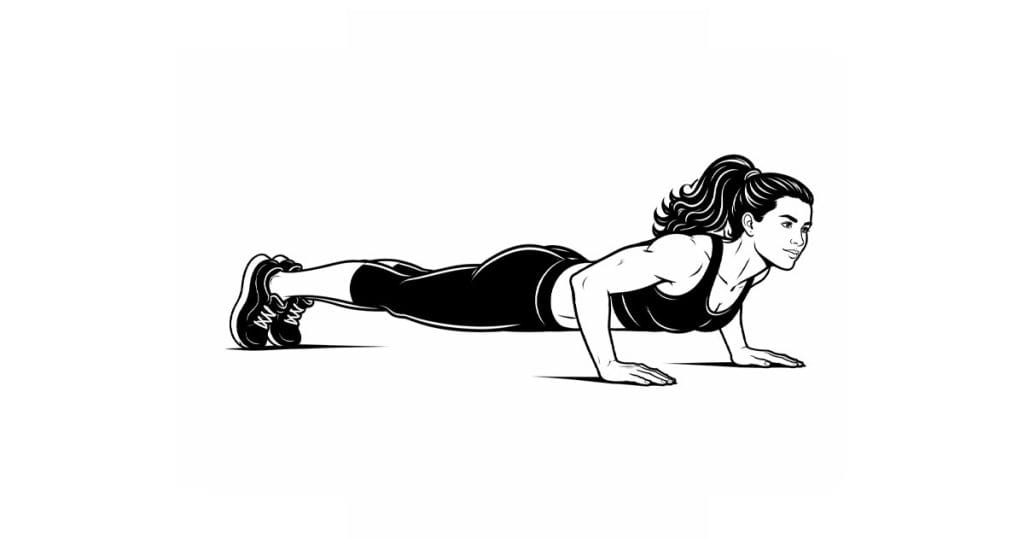
To perform the Push-Up with Feet on Box, begin by placing your feet on a stable box or elevated surface. Your hands should be positioned on the floor slightly wider than shoulder-width apart. Your body should form a straight line from head to heels, with your core and glutes engaged to maintain stability.
Lower your body by bending your elbows and bringing your chest toward the floor. Keep your elbows at a natural angle, avoiding excessive flaring. As you descend, maintain control and keep your body rigid. Once your chest is just above the ground, pause briefly before pushing through your palms to return to the starting position.
This exercise is particularly effective because it increases the load on the upper body compared to a standard push-up. Elevating the feet shifts the center of gravity forward, requiring more force from the chest and shoulders to complete each repetition. This makes it a valuable exercise for building upper body strength and progressing toward more advanced pressing movements.
In addition to strength development, the Push-Up with Feet on Box also enhances core stability. The elevated position challenges the core muscles to maintain proper alignment and resist sagging or arching of the lower back. This contributes to improved posture and better control during other compound movements.
Another benefit of this exercise is its versatility. The height of the box can be adjusted to increase or decrease the difficulty. A higher elevation increases the demand on the upper body, while a lower elevation makes the exercise more manageable. This allows individuals to tailor the movement to their current strength level.
Proper technique is essential to maximize the effectiveness of the exercise and reduce the risk of injury. The body should remain in a straight line, with no sagging or excessive arching in the lower back. The movement should be controlled, with a full range of motion to fully engage the target muscles.
Common mistakes include allowing the hips to drop, flaring the elbows too wide, and using momentum instead of controlled movement. These errors can reduce muscle activation and increase the risk of strain.
Safety considerations include ensuring the box is stable and positioned on a non-slip surface. It is also important to avoid pushing beyond your strength capacity and to stop the exercise if any discomfort is felt in the shoulders, wrists, or lower back.
Overall, the Push-Up with Feet on Box is a highly effective upper body exercise that builds strength, enhances stability, and provides a challenging progression from traditional push-ups.