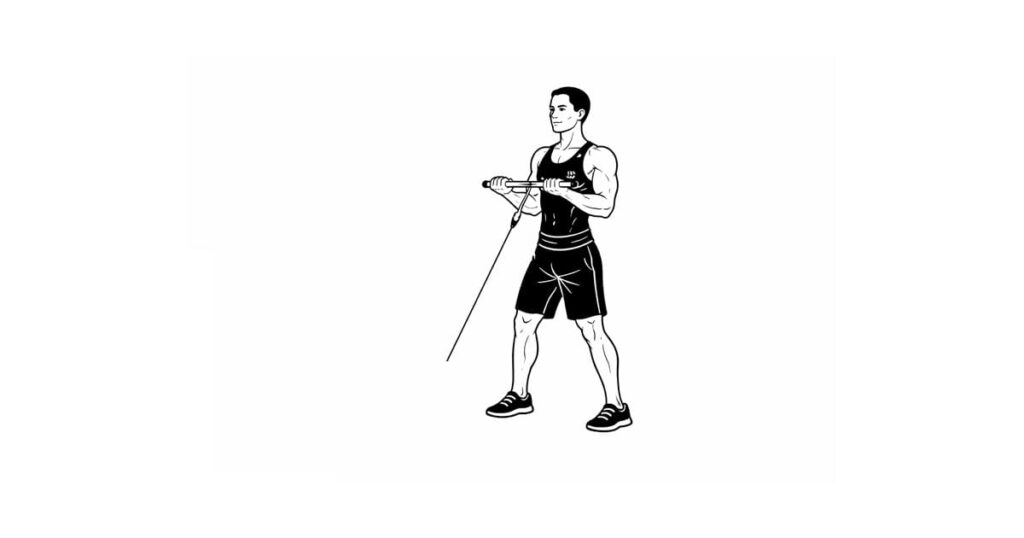
The Cable Cross Body Rope Curl is a unilateral arm exercise that targets the biceps while also engaging the forearms through a neutral grip and angled pulling path. Performed using a cable machine with a rope attachment, this curl variation emphasizes controlled elbow flexion while pulling the handle across the body, creating a distinct resistance angle compared to traditional straight curls.
This movement primarily focuses on the biceps, with additional forearm involvement due to the rope handle and neutral wrist position. Pulling across the body promotes balanced muscle activation and helps address side-to-side strength differences. Because each arm works independently, the exercise supports improved muscular symmetry and coordination.
One of the key benefits of the cable cross-body rope curl is constant tension. Unlike free-weight curls, the cable maintains resistance throughout the entire range of motion, including the bottom position where dumbbells often lose tension. This continuous load increases time under tension, which can enhance muscle growth and reinforce controlled execution.
Proper setup is essential for maximizing effectiveness. Standing sideways to the cable ensures the resistance pulls the arm inward, aligning naturally with the cross-body motion. Keeping the elbow close to the torso minimizes shoulder involvement and places emphasis directly on the biceps. A stable stance and braced core help prevent unnecessary body movement.
During execution, the curl should be smooth and deliberate. The rope should travel diagonally across the body toward the opposite shoulder rather than straight upward. This angled path alters the line of pull and encourages strong contraction through the mid to upper portion of the curl. Briefly pausing at the top can further improve mind-muscle connection and reinforce engagement.
The lowering phase is just as important as the lift itself. Slowly returning the rope to the starting position maintains tension and reinforces proper mechanics. Rushing the eccentric portion reduces effectiveness and can increase stress on the elbow joint. Maintaining a controlled tempo throughout the movement supports joint health and consistent muscle activation.
The neutral grip used in this exercise is often more comfortable for lifters who experience wrist or elbow discomfort with straight-bar curls. Keeping the palms facing inward allows the forearms to assist naturally without excessive strain, making it a practical option for building arm strength while minimizing joint stress.
Because the cable cross-body rope curl limits momentum, it encourages strict form and intentional movement. Using excessive weight often leads to torso rotation or elbow drift, which reduces biceps involvement. Selecting a manageable load ensures the arm muscles remain the primary drivers of the motion.
Overall, the Cable Cross Body Rope Curl is an effective and joint-friendly curl variation that promotes biceps and forearm development through constant tension and controlled movement. When performed with proper technique, it supports balanced arm growth, improved curl mechanics, and consistent muscle engagement across the full range of motion.