The BOSU Lateral Step-Overs are a functional lower-body exercise that combines lateral movement with the instability of a BOSU trainer to improve balance, coordination, and lower-body control. Unlike traditional forward stepping drills, this variation emphasizes side-to-side movement, requiring your body to stabilize with every weight transfer. Stepping onto and over the BOSU challenges the muscles of the legs and core while improving proprioception, agility, and functional movement patterns that carry over to sports and everyday activities.
The primary muscle group targeted during the BOSU Lateral Step-Overs is the quadriceps. These muscles extend the knees as you step onto and off the BOSU, controlling each weight transfer and helping you maintain stability throughout the exercise. Because every repetition requires balance on an unstable surface, the quadriceps remain active throughout the entire movement.
Several secondary muscle groups contribute to proper execution. The gluteus maximus and gluteus medius stabilize the hips and pelvis during each lateral transition, while the hamstrings assist with hip and knee control. The calves work continuously to stabilize the ankles as they adapt to the unstable BOSU surface. The abs and core, including the transverse abdominis, obliques, and rectus abdominis, remain engaged to stabilize the torso and minimize unnecessary side-to-side movement. Numerous smaller stabilizing muscles throughout the feet and ankles also work harder than they would during stepping exercises performed on stable ground.
One of the greatest benefits of the BOSU Lateral Step-Overs is improved dynamic balance. Every step requires the body to make constant adjustments to maintain stability, strengthening the muscles responsible for controlling movement and reducing excessive sway. This improved balance can enhance athletic performance and make everyday movements feel more controlled and efficient.
Another major benefit is increased proprioception, or the body’s awareness of joint position and movement. The unstable BOSU surface forces the ankles, knees, hips, and core to react continuously, improving neuromuscular coordination and helping develop better movement mechanics. This makes the exercise valuable for injury prevention, rehabilitation, and functional fitness.
The BOSU Lateral Step-Overs also strengthen the body in the frontal plane, an often undertrained direction of movement. Developing lateral strength and stability can improve agility, support better performance in sports involving side-to-side movement, and help reduce muscular imbalances created by training only forward and backward motions.
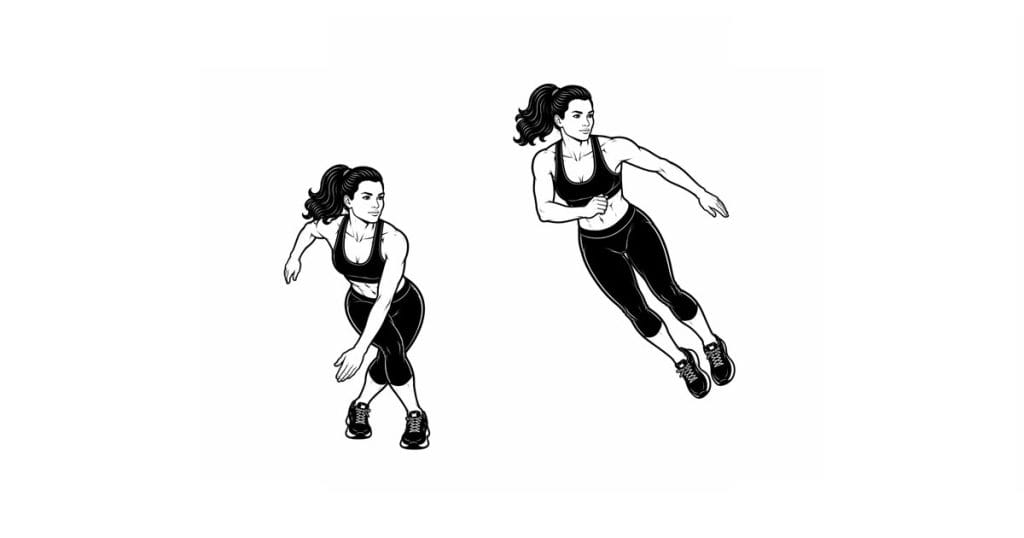
To perform the exercise, place the BOSU dome-side up on a flat, stable surface. Stand beside the BOSU with one foot on the floor. Step onto the center of the dome with the inside foot, transfer your weight under control, and step completely over to the opposite side with the trailing foot following. Reverse the movement by stepping back over the BOSU and continue alternating directions. Focus on smooth, deliberate weight shifts while maintaining balance throughout the exercise.
Proper technique is essential for maximizing results. Keep your chest upright, your core engaged, and your knees aligned with your toes throughout each repetition. Step onto the center of the BOSU rather than the edges, and prioritize controlled movement over speed. Each foot should land securely before initiating the next step.
Common mistakes include stepping too close to the edge of the BOSU, rushing through the movement, allowing the knees to collapse inward, or relying on momentum instead of controlled weight transfer. These errors reduce the balance challenge and can increase stress on the joints. Slowing the movement and maintaining proper alignment helps maximize both safety and effectiveness.
From a safety standpoint, beginners should start at a slow pace until they become comfortable balancing on the BOSU. Perform the exercise on a non-slip surface, keep your movements controlled, and avoid sacrificing balance for speed. As coordination improves, you can gradually increase the tempo or perform the movement continuously for longer periods.
Overall, the BOSU Lateral Step-Overs are an excellent exercise for strengthening the quadriceps, glutes, calves, and core while improving balance, coordination, proprioception, and lateral movement skills. Their combination of unstable-surface training and side-to-side movement makes them a valuable addition to lower-body workouts, athletic conditioning programs, rehabilitation routines, and functional fitness training.