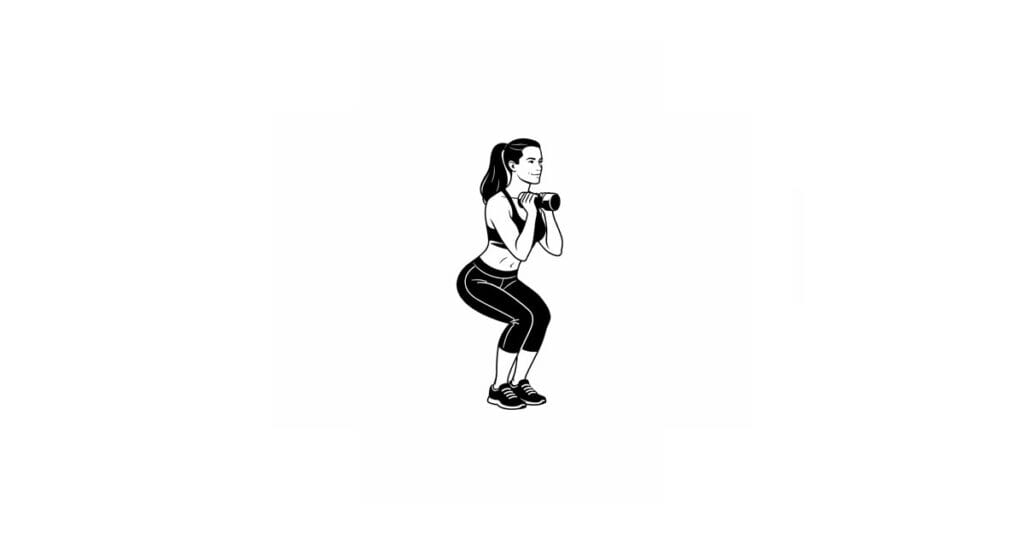
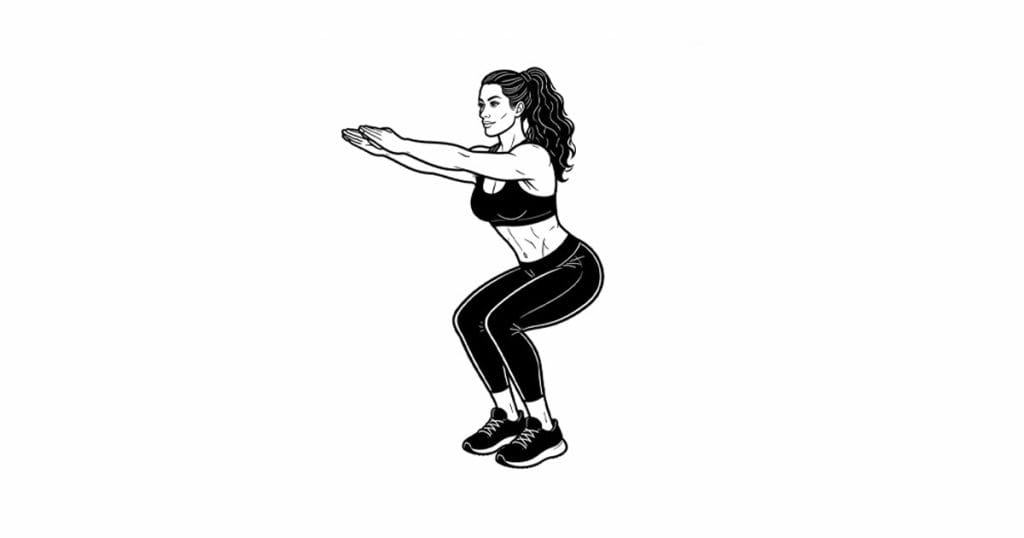
The bodyweight pulse squat is a lower body exercise that emphasizes constant muscle tension, control, and endurance by keeping the body in the most challenging portion of the squat. Instead of moving through a full range of motion, this variation focuses on small, controlled pulses near the bottom position, which increases time under tension and places greater demand on the quadriceps while still engaging the glutes, hamstrings, and core.
By maintaining a low squat position, the muscles are forced to stay active without rest, making this exercise particularly effective for building muscular endurance. The continuous tension challenges the legs to sustain effort over time, which can improve stamina and resilience in the lower body. The quadriceps take on most of the workload, while the glutes and hamstrings assist with stabilization and control.
This movement also enhances body awareness and squat mechanics. Spending extended time in the bottom position allows for better focus on alignment, including proper knee tracking and maintaining an upright torso. This can translate into improved technique in other squat variations and lower body exercises.
Core engagement plays a key role in maintaining stability throughout the movement. A strong core helps keep the torso upright and prevents excessive forward lean, ensuring that the lower body muscles remain the primary drivers of the exercise.
Proper form is essential for maximizing effectiveness. The chest should remain lifted, the spine neutral, and the heels firmly grounded. The pulses should be small and controlled, maintaining consistent tension rather than using momentum or rising too high between repetitions.
Common mistakes include coming up too high between pulses, allowing the knees to collapse inward, and rushing through the movement. These reduce muscle engagement and limit the benefits of the exercise while increasing the risk of strain.
From a safety perspective, the movement should be performed within a comfortable range of motion, especially for those with limited mobility or knee sensitivity. Adjusting depth and stance can help maintain proper form and reduce discomfort.
Overall, the bodyweight pulse squat is an efficient and accessible exercise for building lower body endurance, improving control, and reinforcing proper squat mechanics. Its focus on constant tension makes it a valuable addition to any training routine.